
Migrate your Twenty CRM data
The open-source Salesforce alternative. Modern UI, full data ownership, and a developer-friendly stack — free to self-host, no vendor lock-in.
Migrating to Twenty CRM? Jump to sources →

In its favor
Why people choose Twenty CRM
The signal that keeps Twenty CRM on the shortlist. Sourced from G2, Capterra, and customer scoping calls.
Top open-source CRM on GitHub with 40.6K stars, giving teams full source code access and infrastructure ownership without per-feature licensing surprises.
Free self-hosting under AGPL-3.0 means unlimited users and custom objects for the cost of cloud infrastructure alone, typically $20–100/month.
Pricing page explicitly mocks competitors for charging add-on fees for API access, webhooks, and workflows — transparency that resonates with RevOps teams burned by Salesforce.
Unlimited custom objects and fields with no price impact, letting teams shape the data model to their business rather than forcing business into rigid schemas.
Modern TypeScript/React/PostgreSQL stack means developer-led teams can extend, self-host, or integrate without fighting legacy architecture.
Recently reached v1.0 — the CTO deliberately held off promotion until now, meaning the platform has a shorter operational track record than established CRMs.
No native email sequencing or cadence tools, forcing teams to layer on third-party outreach platforms for any automated follow-up flows.
Self-hosting 'free' pricing ignores the reality of DevOps hours, infrastructure costs, and maintenance that make it a real investment.
Limited native integrations out of the box — no app marketplace ecosystem, meaning most connections require custom API or Zapier/Make work.
Workflow automation is functional but limited in complexity, according to early users who find it insufficient for multi-step sales motions.
Reasons to switch
Why people leave Twenty CRM
The recurring reasons buyers give for replacing Twenty CRM. Presented as facts, not knocks.
Platform scorecard
Strengths, weaknesses, and where Twenty CRM fits
Grades across six dimensions, plus a SWOT-style view of where the platform shines and where it falls short.
SWOT — strengths, weaknesses, and use-case fit
Strengths
Weaknesses
Where it works
Where it struggles
Pricing tiers
Twenty CRM pricing overview
Twenty offers a free self-hosted tier under AGPL-3.0 plus two cloud tiers at $9/user/month (Pro) and $19/user/month (Organization). Annual billing applies a ~25% discount. No feature add-ons are gated behind separate fees — API access, webhooks, workflows, and custom objects are included in their respective tiers. Self-hosting is 'free' in software cost but requires cloud infrastructure ($20–100/month) and ongoing admin time.
Self-Hosted (Free)
Tier 1 of 3
$0 software
What's included
Need help selecting your CRM?
Book a free 30 minute consultationPricing is informational. FlitStack AI does not bill on Twenty CRM's schedule — see our quote-based pricing →
What gets migrated
Twenty CRM object support
Object-by-object support for Twenty CRM migrations. Per-pair details surface during scoping.
People
Fully supportedPeople is the core contact object storing individuals with fields for name, email, phone, job title, and a companyId relation. We migrate People records using email as the unique reference key and preserve company associations via the companyId foreign key. Soft-deleted People records still count toward uniqueness checks during import.
Companies
Fully supportedCompanies stores business accounts with industry, size, location, and domain fields. Companies must be imported first because both People and Opportunities reference them via foreign keys. We use domain as the unique lookup when importing related records. Any deleted Company with the same domain will be restored on import.
Opportunities
Fully supportedOpportunities tracks deals with stage, amount, close date, and links to both a Company and a Person (or multiple Persons). We map stage names explicitly to avoid silent mismatches when source and destination use different pipeline stage naming conventions. Opportunities must be imported after Companies and People exist.
Tasks
Fully supportedTasks store to-dos linked to People, Companies, Opportunities, or other records with fields for title, due date, assignee, and completion status. We preserve the record-to-task relations by importing parent records before Tasks and referencing them by their unique identifier or email.
Notes
Fully supportedNotes are free-form text attachments that can be linked to any record. We migrate Notes by mapping their relational target to the corresponding record ID or email in the destination. Note body content transfers as-is; formatting fidelity depends on the source system exporting rich text or plain text.
Custom Objects
Mapping requiredCustom Objects are user-defined entities created to hold business-specific data (e.g., Subscriptions, Events, Rockets). Unlimited on Organization tier, capped at 10 on Pro. We map Custom Object schemas field-by-field, handling field type differences between source and destination. Custom objects with relations to standard objects must be imported last.
| Object | Support | Notes |
|---|---|---|
| People | Fully supported | People is the core contact object storing individuals with fields for name, email, phone, job title, and a companyId relation. We migrate People records using email as the unique reference key and preserve company associations via the companyId foreign key. Soft-deleted People records still count toward uniqueness checks during import. |
| Companies | Fully supported | Companies stores business accounts with industry, size, location, and domain fields. Companies must be imported first because both People and Opportunities reference them via foreign keys. We use domain as the unique lookup when importing related records. Any deleted Company with the same domain will be restored on import. |
| Opportunities | Fully supported | Opportunities tracks deals with stage, amount, close date, and links to both a Company and a Person (or multiple Persons). We map stage names explicitly to avoid silent mismatches when source and destination use different pipeline stage naming conventions. Opportunities must be imported after Companies and People exist. |
| Tasks | Fully supported | Tasks store to-dos linked to People, Companies, Opportunities, or other records with fields for title, due date, assignee, and completion status. We preserve the record-to-task relations by importing parent records before Tasks and referencing them by their unique identifier or email. |
| Notes | Fully supported | Notes are free-form text attachments that can be linked to any record. We migrate Notes by mapping their relational target to the corresponding record ID or email in the destination. Note body content transfers as-is; formatting fidelity depends on the source system exporting rich text or plain text. |
| Custom Objects | Mapping required | Custom Objects are user-defined entities created to hold business-specific data (e.g., Subscriptions, Events, Rockets). Unlimited on Organization tier, capped at 10 on Pro. We map Custom Object schemas field-by-field, handling field type differences between source and destination. Custom objects with relations to standard objects must be imported last. |
Gotchas
What to watch for in Twenty CRM migrations
Issues we've hit on past Twenty CRM migrations, tagged by severity. FlitStack AI handles every one — surfacing them up front because buyer engineering teams want to know.
Import order is enforced and critical
Export limited to 20,000 records and visible columns only
Soft-deleted records count toward uniqueness and trigger restores
API rate limits cap at 200 req/min on Organization tier
No native email sequences — follow-up cadences require external tools
| Severity | Issue |
|---|---|
| High | Import order is enforced and critical |
| High | Export limited to 20,000 records and visible columns only |
| Medium | Soft-deleted records count toward uniqueness and trigger restores |
| Medium | API rate limits cap at 200 req/min on Organization tier |
| Low | No native email sequences — follow-up cadences require external tools |
Leaving Twenty CRM?
Where Twenty CRM customers move next
11 destinations Twenty CRM can migrate to.











Coming to Twenty CRM?
Migrating in from another CRM
856 sources can migrate into Twenty CRM.
































































































































































































































































































































































































































































































































































































































































































































































































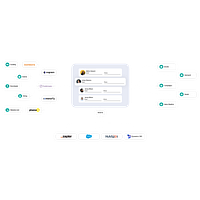
How a Twenty CRM migration works
Four steps, Twenty CRM-specific
Connect
Bearer token into Twenty CRM. Scopes limited to read-only on the data we move.
Map
We translate Twenty CRM-specific structures (custom fields, objects, value lists) to the destination's model.
Sample
Test with a 50–200 record subset to validate Twenty CRM quirks before production.
Migrate
Full migration with Twenty CRM rate-limit handling. Rollback available throughout.
FAQ
Twenty CRM migration FAQ
Answers to the questions buyers ask most during Twenty CRM migration scoping. Not seeing yours? Book a call.
Can't find your answer?
Walk through your Twenty CRM migration with a real engineer — 30 minutes, free, written quote within 24 hours.
Book a free 30 minute consultationOther CRMs we support
Ready when you are
Migrate Twenty CRM.
Without the rebuild.
Free scoping call with a migration engineer. Tell us about your Twenty CRM setup and destination — written quote back within a business day.