CRM migration
Field-level mapping, validation, and rollback between Empire SUITE and Twenty CRM. We move data and schema; workflows are rebuilt natively in Twenty CRM.
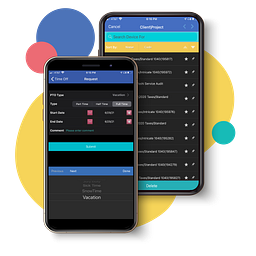
Empire SUITE
Source
Twenty CRM
Destination

Compatibility
12 of 12
objects map 1:1 between Empire SUITE and Twenty CRM.
Complexity
BStandard
Timeline
48–72 hours
Overview
Empire Suite and Twenty CRM occupy different positions on the customization-versus-simplicity spectrum. Empire Suite bundles CRM, project accounting, and time tracking in a single environment that scales through module stacking. Twenty CRM is a modern open-source CRM with a flexible data model, REST and GraphQL APIs, and a workflow engine that prioritizes developer extensibility. The migration carries standard records (contacts, companies, deals, activities, custom fields) via CSV export from Empire Suite, transformed to match Twenty's object schema, then bulk-imported through Twenty's Settings → Data Model import UI. Non-transferable elements — automations, permission hierarchies, report definitions, and integration connections — must be rebuilt after migration. FlitStack sequences the import in dependency order (Companies → People → Opportunities → Custom objects) and runs a sample migration with field-level diff before committing the full cutover, followed by a 24–48 hour delta-pickup window to capture in-flight records modified during the cutover window and ensure data completeness at go-live.
Every standard and custom field arrives verified.
AI proposes the map; you confirm before any record moves.
Parent–child, lookups, and ownership stay linked.
Calls, emails, meetings — with original timestamps.
Documents, uploads, and inline notes move with the record.
Why teams make this switch
Leaving
What's pushing teams away
Choosing
What's pulling them in
Object mapping
Each row shows how a Empire SUITE object lands in Twenty CRM, including any object-level transformations, lookup resolution, or schema-design dependencies.
Typical mapping — final map is confirmed during the sample migration step.
Empire SUITE
Contact / Person
Twenty CRM
People
1:1Empire Suite person records map to Twenty's People object. Email, phone, job title, and address fields migrate directly. If Empire Suite stores multiple email addresses per contact, the primary email maps to People.email and additional addresses are appended as text in a custom field.
Empire SUITE
Account / Organization
Twenty CRM
Companies
1:1Empire Suite company records map to Twenty's Companies object. Company name, domain/website, industry, employee count, and annual revenue migrate directly without requiring custom field creation. Parent-company relationships map to Companies' built-in relation field using the Twenty domainUnique rule to preserve organizational hierarchies.
Empire SUITE
Opportunity / Deal
Twenty CRM
Opportunities
1:1Empire Suite deal records map to Twenty's Opportunities object. Deal name, amount, stage, and expected close date migrate directly. Pipeline-to-stage mapping requires value-by-value mapping if Empire Suite uses custom stage names that don't match Twenty's default pipeline stages.
Empire SUITE
Contact Company Association
Twenty CRM
People → Companies relation
1:1Empire Suite's primary company assignment per contact maps to People.companyId lookup. If Empire Suite supports multiple company associations per contact, the primary association migrates as the People.companyId relation and secondary associations are stored as custom multi-select text to preserve the data.
Empire SUITE
Custom Entity / Custom Object
Twenty CRM
Custom Object
1:1Empire Suite custom entity types migrate to Twenty's Custom Objects. Before migration, each custom entity must be created in Settings → Data Model with equivalent field types. Relationships between custom entities and standard objects (People, Companies, Opportunities) map via Twenty's relation field type.
Empire SUITE
Activity Log / Engagement
Twenty CRM
Notes and Tasks
1:1Empire Suite activity records (call logs, email records, meeting notes) are flattened into Twenty's Notes object and linked to the parent People or Companies record via Twenty's relation field. Original timestamps and owner assignments are preserved as Note metadata fields.
Empire SUITE
User / Owner
Twenty CRM
Workspace Members
1:1Empire Suite user records migrate as Twenty Workspace Members. Before migration, all users must be invited and accept their invitations in Twenty — Twenty's import UI cannot resolve owner references without pre-existing user records. FlitStack flags unmatched owner IDs before migration runs.
Empire SUITE
Project / Case
Twenty CRM
Custom Object
1:1If Empire Suite stores project or case records as distinct entities, these migrate as a Twenty Custom Object named 'Projects' or 'Cases'. A relation field links each project record to its associated Companies and People records using the domain or email unique-key rule.
Empire SUITE
Invoice / Billing Record
Twenty CRM
Custom Object
1:1Empire Suite invoice and billing records have no native equivalent in Twenty CRM. These migrate as a Custom Object named 'Invoices' with relevant fields (invoice number, amount, date, status, linked company). Billing automation must be rebuilt in a dedicated accounting tool post-migration.
Empire SUITE
Report / Dashboard Definition
Twenty CRM
Not migrated
1:1Empire Suite report and dashboard configurations do not migrate. Their underlying data (opportunities, activities, custom objects) migrates fully, but report layouts and chart definitions must be rebuilt in Twenty's dashboard builder after migration. FlitStack provides a data integrity check to confirm all source data arrived correctly in Twenty.
Empire SUITE
Workflow / Automation Rule
Twenty CRM
Not migrated
1:1Empire Suite workflow rules (approval chains, conditional triggers, automated routing) do not migrate. They require manual rebuild in Twenty's workflow builder or via REST API. FlitStack exports workflow definitions as a JSON reference document for the rebuild phase.
Empire SUITE
Attachment / File
Twenty CRM
Notes attachment link
1:1Empire Suite file attachments on records migrate as Notes records in Twenty with a reference URL or embedded attachment. Twenty does not have a native file-storage object — files are re-hosted or the Notes record stores the source URL for retrieval.
| Empire SUITE | Twenty CRM | Compatibility | |
|---|---|---|---|
| Contact / Person | People1:1 | Fully supported | |
| Account / Organization | Companies1:1 | Fully supported | |
| Opportunity / Deal | Opportunities1:1 | Fully supported | |
| Contact Company Association | People → Companies relation1:1 | Fully supported | |
| Custom Entity / Custom Object | Custom Object1:1 | Fully supported | |
| Activity Log / Engagement | Notes and Tasks1:1 | Fully supported | |
| User / Owner | Workspace Members1:1 | Fully supported | |
| Project / Case | Custom Object1:1 | Fully supported | |
| Invoice / Billing Record | Custom Object1:1 | Fully supported | |
| Report / Dashboard Definition | Not migrated1:1 | Fully supported | |
| Workflow / Automation Rule | Not migrated1:1 | Fully supported | |
| Attachment / File | Notes attachment link1:1 | Fully supported |
Gotchas + challenges
Platform-specific issues from each side, plus the pair-specific challenges that don't show up on either platform's page on its own.
Empire SUITE gotchas
Custom Field-based Security Permissions vary by deployment
Empire TIME module may have isolated data stores
No public API documentation found in research
Twenty CRM gotchas
Import order is enforced and critical
Export limited to 20,000 records and visible columns only
Soft-deleted records count toward uniqueness and trigger restores
API rate limits cap at 200 req/min on Organization tier
No native email sequences — follow-up cadences require external tools
Pair-specific challenges
Migration approach
Audit Empire Suite schema and inventory
FlitStack connects to Empire Suite via its export API or CSV export module and inventories every object type, field, pick-list value, relationship, and custom entity. We generate a Schema Summary documenting which objects have standard equivalents in Twenty (People, Companies, Opportunities, Tasks, Notes), which require Custom Objects, and which have no equivalent in Twenty's CRM model. This audit forms the basis of the field-mapping spec and identifies Empire Suite modules (billing, project accounting) that will become Custom Objects or require post-migration manual rebuild.
Create Twenty workspace fields and objects
Based on the schema audit, FlitStack delivers a pre-migration checklist specifying every custom field and custom object to create in Twenty's Settings → Data Model before data lands. This includes field types, pick-list options, required/unique flags, and relation field configuration for custom objects that link back to People or Companies. We recommend creating these at least 48 hours before the migration window so any permission or visibility settings can be verified by the Twenty admin.
Invite all Empire Suite users to Twenty workspace
Twenty requires Workspace Members to exist before owner/assignee fields can resolve during import. FlitStack extracts all Empire Suite user records, maps them by email, and generates an invitation list for Twenty's Settings → Members page. We flag any Empire Suite user without a valid email address and recommend assigning their records to a fallback owner during migration. All users must accept their invitations before the migration step runs — we validate member acceptance as a gate before starting the import.
Run sample migration with field-level diff
A representative slice of Empire Suite data — typically 100–500 records spanning People, Companies, Opportunities, and at least one custom object — migrates first. FlitStack generates a field-level diff comparing source values against destination values for every mapped field, including pick-list value mappings, date formats, and owner resolution. The diff is reviewed with the customer before the full migration commits. Any field mapping errors, missing pick-list options, or data truncation issues discovered at this stage are corrected before the full run.
Execute full migration with delta-pickup window
The full Empire Suite dataset migrates in dependency order: Companies first, then People with companyId resolution, then Opportunities with stage and probability mapping, then custom objects and activity history last. After the bulk load, a 24–48 hour delta-pickup window monitors Empire Suite for any records created or modified during the cutover. All operations are logged in FlitStack's audit trail, and one-click rollback is available if reconciliation identifies missing or duplicated records.
Platform deep dives
Empire SUITE
Source
Strengths
Weaknesses
Twenty CRM
Destination
Strengths
Weaknesses
Complexity grading
Standard CRM migration. 2 of 8 objects need a mapping; the rest are 1:1.
Overall complexity
Standard migration
Derived from compatibility, mapping clarity, API constraints, and data volume across Empire SUITE and Twenty CRM.
Object compatibility
2 of 8 objects need a mapping; the rest are 1:1.
Field mapping clarity
Field mapping is derived from defaults — final spec confirmed during the sample migration.
Timeline complexity
8-object category — typical timelines run 2–7 days end-to-end.
API constraints
Empire SUITE: Not publicly documented..
Data volume sensitivity
Empire SUITE doesn't expose a bulk API — REST + parallelization used for high-volume runs.
Estimator
Rule-based pricing — no per-record fees, no manual quotes. Migrations over 2M records are scoped individually.
Step 1
Pick a category, then your source and destination platforms.
Category
FAQ
Answers to the questions buyers ask most during Empire SUITE to Twenty CRM migration scoping. Not seeing yours? Book a call.
Walk through your Empire SUITE to Twenty CRM migration with a real engineer — 30 minutes, free, written quote within 24 hours.
Book a free 30 minute consultationAdjacent paths
Other ways to leave Empire SUITE









Other ways to arrive at Twenty CRM









Popular CRM migrations


Ready when you are
Tell us record counts and timeline. We'll come back with a written quote inside 1 business day — no commitment, no sales pitch.
