
Migrate your Odoo CRM data
Open-source CRM that plays nicely with every other Odoo app. From your first deal to a 5,000-person ERP, it scales with you.
Migrating to Odoo CRM? Jump to sources →

In its favor
Why people choose Odoo CRM
The signal that keeps Odoo CRM on the shortlist. Sourced from G2, Capterra, and customer scoping calls.
Teams choose Odoo CRM for its modular architecture — one base install with one-click app additions means they can adopt CRM alone and add accounting, inventory, or sales later as the business grows.
Small businesses pick Odoo because the Community edition is free and open-source, with no per-user or contact limits, allowing full evaluation before committing to a paid Enterprise tier.
The drag-and-drop Kanban pipeline and AI lead scoring are highlighted across G2 reviews as concrete features that make lead management faster and more visual than spreadsheet-based workflows.
Odoo's native integration with email, live chat, SMS, VoIP, and WhatsApp means inbound leads from multiple channels feed into a single pipeline without third-party middleware.
Companies in retail, supply chain, and construction value that Odoo's CRM module shares the same PostgreSQL database and UI as its ERP modules, eliminating data silos between sales and operations.
Mail and Gmail integration is repeatedly cited on Reddit and G2 reviews as unreliable — email threads drop, conversations scatter across inboxes, and the sync between Odoo and Gmail breaks under common configurations.
Setup complexity grows with business size: reviews note that advanced features require additional configuration and customization, and costs rise steeply once multiple paid apps and users are stacked together.
Support response times frustrate Enterprise customers who encounter bugs during version upgrades, with some noting that critical issues go unresolved for weeks.
Some teams migrate away from Odoo toward modern CRMs like Attio because they want a slicker, more opinionated UX rather than Odoo's broad-but-configurable interface.
Companies leave Odoo.sh specifically when they want more control over their infrastructure — alternatives like udoocloud.pro target users who want direct shell access and no platform vendor lock-in.
Reasons to switch
Why people leave Odoo CRM
The recurring reasons buyers give for replacing Odoo CRM. Presented as facts, not knocks.
Platform scorecard
Strengths, weaknesses, and where Odoo CRM fits
Grades across six dimensions, plus a SWOT-style view of where the platform shines and where it falls short.
SWOT — strengths, weaknesses, and use-case fit
Strengths
Weaknesses
Where it works
Where it struggles
Pricing tiers
Odoo CRM pricing overview
Odoo Community is free and open-source; Odoo Online and Odoo.sh charge per user per month with separate per-user rates for each installed app, meaning a small team using CRM plus Accounting quickly reaches €30–50/user/month. Enterprise subscriptions include all apps under a single price tier but require annual contracts and scale in cost with user count.
Community
Tier 1 of 4
Free (self-hosted)
What's included
Need help selecting your CRM?
Book a free 30 minute consultationPricing is informational. FlitStack AI does not bill on Odoo CRM's schedule — see our quote-based pricing →
What gets migrated
Odoo CRM object support
Object-by-object support for Odoo CRM migrations. Per-pair details surface during scoping.
Contacts / Partners
Fully supportedContacts and Partners share the same res.partner model in Odoo. Standard fields (name, email, phone, address, company_id) are fully exportable via XML-RPC. We map res.partner records directly to the destination CRM's contact object, preserving the partner_id on any related records.
Leads
Fully supportedLeads (crm.lead) are the top-of-funnel records with fields including name, contact_name, email_from, phone, source_id, and stage_id. When a Lead is converted to an Opportunity, it creates a linked crm.lead record with type='opportunity'. We export both types and flag which records originated as Leads vs. converted Opportunities.
Opportunities
Fully supportedOpportunities are crm.lead records with type='opportunity', linked to pipeline Stages and Sales Teams via stage_id and team_id. Key fields include expected_revenue, probability, date_closed, and partner_id (the customer). We preserve the opportunity-to-contact linkage and the pipeline stage ordering.
Pipeline Stages
Fully supportedStages live in crm.stage and are ordered per team via crm.team.stage.rel. Custom stages added by the customer are included in the export. We sequence the stage order and map stage names to the destination CRM's pipeline stage definitions, flagging any stage that uses Automation rules that may not transfer.
Sales Teams
Fully supportedSales Teams (crm.team) group Opportunities and assign Leads to team members via user_id and member_ids. Each team has its own pipeline with independent stage configurations. We export team membership and map it to the destination's equivalent team or user assignment model.
Activities / Tasks
Mapping requiredActivities (mail.activity) are linked to crm.lead records and include type, date_deadline, user_id, and note. Activity history is a key migration concern because it is high-volume and loosely coupled — we export it after leads/opportunities and validate record counts before loading.
Custom Fields (on Leads/Opportunities)
Mapping requiredCustom fields defined via Odoo's Studio or in custom addons are stored as columns in crm.lead. These are fully exportable, but their field types (selection, many2one, many2many) may not map 1:1 to the destination CRM's custom field system. We flag field-type mismatches during the scoping call.
Attachments
Mapping requiredAttachments (ir.attachment) linked to crm.lead records are stored in the Odoo filestore. Large attachment volumes can bloat exports. We chunk the filestore export separately and remap ir.attachment.res_id/res_model references after target IDs are assigned, using the attachment.res_model + res_id linkage to re-attach them to the correct records in the destination.
Tags
Fully supportedTags (crm.tag) are applied to crm.lead records via a many2many field. Tag names are preserved as a flat list and mapped to the destination CRM's tagging or label system. Custom tags added by the customer are included in the export.
Lead Scoring Rules
Not in this platformOdoo's predictive lead scoring (crm.scoring.rule) is an Enterprise-only feature with a proprietary algorithm that depends on Odoo's AI infrastructure. We do not migrate scoring rules because they have no equivalent in most destination CRMs and the model cannot be reliably reverse-engineered.
Automation Rules (Server Actions)
Not in this platformCRM automation rules (base.action.rule and ir.actions.server scoped to CRM) are Enterprise-exclusive and tightly coupled to Odoo's action framework. These cannot be migrated to non-Odoo CRMs. We export a plain-English audit of which rules exist so the customer's implementation team can manually reproduce them.
Quotations / Sale Orders
Mapping requiredQuotations (sale.order) are linked to Opportunities via create_uid and Odoo-specific relational fields. They carry line items (sale.order.line), pricing, and taxes. We export quotations with their linked partner and opportunity, but note that the full sale.order data model includes accounting fields that may require the Accounting module to be active in the destination.
| Object | Support | Notes |
|---|---|---|
| Contacts / Partners | Fully supported | Contacts and Partners share the same res.partner model in Odoo. Standard fields (name, email, phone, address, company_id) are fully exportable via XML-RPC. We map res.partner records directly to the destination CRM's contact object, preserving the partner_id on any related records. |
| Leads | Fully supported | Leads (crm.lead) are the top-of-funnel records with fields including name, contact_name, email_from, phone, source_id, and stage_id. When a Lead is converted to an Opportunity, it creates a linked crm.lead record with type='opportunity'. We export both types and flag which records originated as Leads vs. converted Opportunities. |
| Opportunities | Fully supported | Opportunities are crm.lead records with type='opportunity', linked to pipeline Stages and Sales Teams via stage_id and team_id. Key fields include expected_revenue, probability, date_closed, and partner_id (the customer). We preserve the opportunity-to-contact linkage and the pipeline stage ordering. |
| Pipeline Stages | Fully supported | Stages live in crm.stage and are ordered per team via crm.team.stage.rel. Custom stages added by the customer are included in the export. We sequence the stage order and map stage names to the destination CRM's pipeline stage definitions, flagging any stage that uses Automation rules that may not transfer. |
| Sales Teams | Fully supported | Sales Teams (crm.team) group Opportunities and assign Leads to team members via user_id and member_ids. Each team has its own pipeline with independent stage configurations. We export team membership and map it to the destination's equivalent team or user assignment model. |
| Activities / Tasks | Mapping required | Activities (mail.activity) are linked to crm.lead records and include type, date_deadline, user_id, and note. Activity history is a key migration concern because it is high-volume and loosely coupled — we export it after leads/opportunities and validate record counts before loading. |
| Custom Fields (on Leads/Opportunities) | Mapping required | Custom fields defined via Odoo's Studio or in custom addons are stored as columns in crm.lead. These are fully exportable, but their field types (selection, many2one, many2many) may not map 1:1 to the destination CRM's custom field system. We flag field-type mismatches during the scoping call. |
| Attachments | Mapping required | Attachments (ir.attachment) linked to crm.lead records are stored in the Odoo filestore. Large attachment volumes can bloat exports. We chunk the filestore export separately and remap ir.attachment.res_id/res_model references after target IDs are assigned, using the attachment.res_model + res_id linkage to re-attach them to the correct records in the destination. |
| Tags | Fully supported | Tags (crm.tag) are applied to crm.lead records via a many2many field. Tag names are preserved as a flat list and mapped to the destination CRM's tagging or label system. Custom tags added by the customer are included in the export. |
| Lead Scoring Rules | Not in this platform | Odoo's predictive lead scoring (crm.scoring.rule) is an Enterprise-only feature with a proprietary algorithm that depends on Odoo's AI infrastructure. We do not migrate scoring rules because they have no equivalent in most destination CRMs and the model cannot be reliably reverse-engineered. |
| Automation Rules (Server Actions) | Not in this platform | CRM automation rules (base.action.rule and ir.actions.server scoped to CRM) are Enterprise-exclusive and tightly coupled to Odoo's action framework. These cannot be migrated to non-Odoo CRMs. We export a plain-English audit of which rules exist so the customer's implementation team can manually reproduce them. |
| Quotations / Sale Orders | Mapping required | Quotations (sale.order) are linked to Opportunities via create_uid and Odoo-specific relational fields. They carry line items (sale.order.line), pricing, and taxes. We export quotations with their linked partner and opportunity, but note that the full sale.order data model includes accounting fields that may require the Accounting module to be active in the destination. |
Gotchas
What to watch for in Odoo CRM migrations
Issues we've hit on past Odoo CRM migrations, tagged by severity. FlitStack AI handles every one — surfacing them up front because buyer engineering teams want to know.
Odoo.sh version gating blocks assisted migrations from trial
Enterprise modules fail to install on Community after database restore
Custom module view inheritance breaks between Odoo major versions
Custom fields risk losing their application context on Community
API access for Community is gated behind the Custom Plan
| Severity | Issue |
|---|---|
| High | Odoo.sh version gating blocks assisted migrations from trial |
| High | Enterprise modules fail to install on Community after database restore |
| Medium | Custom module view inheritance breaks between Odoo major versions |
| Medium | Custom fields risk losing their application context on Community |
| Low | API access for Community is gated behind the Custom Plan |
Leaving Odoo CRM?
Where Odoo CRM customers move next
11 destinations Odoo CRM can migrate to.











Coming to Odoo CRM?
Migrating in from another CRM
856 sources can migrate into Odoo CRM.
































































































































































































































































































































































































































































































































































































































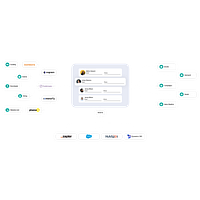
How a Odoo CRM migration works
Four steps, Odoo CRM-specific
Connect
XML-RPC with session authentication; API key available on Enterprise plans into Odoo CRM. Scopes limited to read-only on the data we move.
Map
We translate Odoo CRM-specific structures (custom fields, objects, value lists) to the destination's model.
Sample
Test with a 50–200 record subset to validate Odoo CRM quirks before production.
Migrate
Full migration with Odoo CRM rate-limit handling. Rollback available throughout.
FAQ
Odoo CRM migration FAQ
Answers to the questions buyers ask most during Odoo CRM migration scoping. Not seeing yours? Book a call.
Can't find your answer?
Walk through your Odoo CRM migration with a real engineer — 30 minutes, free, written quote within 24 hours.
Book a free 30 minute consultationReady when you are
Migrate Odoo CRM.
Without the rebuild.
Free scoping call with a migration engineer. Tell us about your Odoo CRM setup and destination — written quote back within a business day.