
Migrate your Salesforce Sales Cloud data
The world's #1 CRM. Endless customization, a 5,000+ app ecosystem, and the depth Fortune 500 sales teams need to close at scale.
Migrating to Salesforce Sales Cloud? Jump to sources →

In its favor
Why people choose Salesforce Sales Cloud
The signal that keeps Salesforce Sales Cloud on the shortlist. Sourced from G2, Capterra, and customer scoping calls.
The AppExchange marketplace with 5,000+ prebuilt apps gives enterprises integrations for nearly every business workflow without custom development.
Native Einstein AI for lead scoring, opportunity insights, and predictive forecasting adds intelligence without a separate platform purchase.
Territory management, multi-currency support, and advanced forecasting satisfy the needs of complex B2B sales organizations with structured revenue teams.
Slack, Tableau, and CPQ are deeply integrated into the core platform, keeping the sales stack unified for teams already in the Salesforce ecosystem.
Organizations with a large, established Salesforce implementation choose it because switching costs — integrations, custom code, trained admins — are prohibitive.
The sticker price is a fraction of the actual cost: storage overages run $125/GB, Agentforce conversations are $2 each, and annual uplift is 8–10% on renewal.
Admin configuration is non-trivial; teams without a dedicated Salesforce admin spend disproportionate time on maintenance and lose productivity on a platform that resists shortcuts.
Workflow Rules and Process Builder are retired features requiring mandatory migration to Flow before Salesforce decommissions them, creating a forced rework project.
Hidden costs accumulate: Sales Engagement, Sales Programs, Salesforce Maps, and other add-ons that enterprise teams need are not included in the base per-seat price.
Complexity and licensing cost drive mid-market companies to simpler CRMs with faster time-to-value and transparent pricing.
Reasons to switch
Why people leave Salesforce Sales Cloud
The recurring reasons buyers give for replacing Salesforce Sales Cloud. Presented as facts, not knocks.
Platform scorecard
Strengths, weaknesses, and where Salesforce Sales Cloud fits
Grades across six dimensions, plus a SWOT-style view of where the platform shines and where it falls short.
SWOT — strengths, weaknesses, and use-case fit
Strengths
Weaknesses
Where it works
Where it struggles
Pricing tiers
Salesforce Sales Cloud pricing overview
Salesforce Sales Cloud prices per user per month from $25 (Starter) to $550 (Agentforce 1 Sales), billed annually. Actual total cost is 30–40% higher than license fees alone due to storage overages ($125/GB), mandatory annual uplift (8–10%), and critical add-ons such as Sales Engagement, Sales Programs, and Salesforce Maps that are excluded from base tiers.
Starter Suite
Tier 1 of 5
$25/user/month
What's included
Need help selecting your CRM?
Book a free 30 minute consultationPricing is informational. FlitStack AI does not bill on Salesforce Sales Cloud's schedule — see our quote-based pricing →
What gets migrated
Salesforce Sales Cloud object support
Object-by-object support for Salesforce Sales Cloud migrations. Per-pair details surface during scoping.
Accounts
Fully supportedThe primary company/customer record in Salesforce. Standard fields (Name, Industry, Annual Revenue, Type) are stable and map cleanly. Parent-Account hierarchies must be sequenced — we import parent Accounts first, then children. Supports custom fields freely.
Contacts
Fully supportedPerson-level records linked to Accounts via a many-to-many Account Contact Relation junction object. We import Contacts after Accounts are committed and map the junction table as a second pass. Supports custom fields and direct Owner assignment.
Leads
Fully supportedUnqualified prospects tracked before conversion. Contains LeadSource, Status, Rating, and custom fields. Conversion creates an Account, Contact, and optionally an Opportunity — we handle both migrated Leads and their post-conversion artifacts.
Opportunities
Fully supportedThe core deal record with Stage, Amount, Close Date, and Probability. Multi-currency and negative Amounts are supported natively. We import after Accounts exist; Opportunity Contact Roles and Opportunity Team Members are separate passes.
Cases
Fully supportedSupport tickets with Status, Priority, Origin, and Contact/Account linkage. Supports custom fields and entitlement association. Cases with open Activities must have those Activities imported separately after the parent Case.
Campaigns
Fully supportedMarketing initiative containers with Budget, Status, and Type. Campaign Members track individual Contact or Lead responses. We import Campaigns first, then Campaign Members in batches against the Bulk API quota.
Contracts
Fully supportedLegal agreement records with Start Date, End Date, Contract Term, and Status. Linked to an Account and optionally to a primary Contact. Contract Line Items are a separate object and require separate mapping.
Orders
Mapping requiredOrder records exist on top of Opportunities and Contracts. Status, Effective Date, and Order Products must all map correctly. If the org uses Advanced Order Management or Revenue Cloud, order lineage and related asset creation require additional handling beyond a standard flat import.
Products (with Price Books)
Mapping requiredProducts are the catalog items; Price Book Entries link them to Price Books with pricing. Opportunity Line Items reference Price Book Entries. We map Products first, then Price Book Entries, then Opportunity Products — a three-pass sequence. Custom pricing on line items requires field-level mapping.
Quotes
Fully supportedQuote records linked to Opportunities, carrying line items and pricing. Quote Line Items reference Products and Price Book Entries. We import Quotes after Opportunities are in place and before finalizing order conversion.
Assets
Fully supportedPost-sale product ownership records linked to Accounts and Contacts. Serial Number, Status, Install Date, and Quantity map cleanly. Assets created automatically from Contracts or Orders require the parent records to exist first.
Custom Objects
Mapping requiredFully supported via the Metadata API for schema discovery and the Bulk API / Composite API for data migration. Each Custom Object may have its own dependency chain — we audit relationships before sequencing the import. Naming conventions (MyObject__c) are preserved in the destination.
Activities (Tasks and Events)
Mapping requiredTasks and Events are individual activity records linked to any Who or What object (Contact, Lead, Account, Opportunity). They do not exist in a hierarchy, but open Tasks against deleted parent records will fail to insert — we filter or flag these during validation.
Account Teams and Opportunity Teams
Mapping requiredTeam member junction records that assign User IDs to an Account or Opportunity with a specific role. We import these after the parent Account or Opportunity and after all relevant User records exist in the destination. Sequential ordering by Team Member ID is not guaranteed, so we batch and upsert by External ID.
| Object | Support | Notes |
|---|---|---|
| Accounts | Fully supported | The primary company/customer record in Salesforce. Standard fields (Name, Industry, Annual Revenue, Type) are stable and map cleanly. Parent-Account hierarchies must be sequenced — we import parent Accounts first, then children. Supports custom fields freely. |
| Contacts | Fully supported | Person-level records linked to Accounts via a many-to-many Account Contact Relation junction object. We import Contacts after Accounts are committed and map the junction table as a second pass. Supports custom fields and direct Owner assignment. |
| Leads | Fully supported | Unqualified prospects tracked before conversion. Contains LeadSource, Status, Rating, and custom fields. Conversion creates an Account, Contact, and optionally an Opportunity — we handle both migrated Leads and their post-conversion artifacts. |
| Opportunities | Fully supported | The core deal record with Stage, Amount, Close Date, and Probability. Multi-currency and negative Amounts are supported natively. We import after Accounts exist; Opportunity Contact Roles and Opportunity Team Members are separate passes. |
| Cases | Fully supported | Support tickets with Status, Priority, Origin, and Contact/Account linkage. Supports custom fields and entitlement association. Cases with open Activities must have those Activities imported separately after the parent Case. |
| Campaigns | Fully supported | Marketing initiative containers with Budget, Status, and Type. Campaign Members track individual Contact or Lead responses. We import Campaigns first, then Campaign Members in batches against the Bulk API quota. |
| Contracts | Fully supported | Legal agreement records with Start Date, End Date, Contract Term, and Status. Linked to an Account and optionally to a primary Contact. Contract Line Items are a separate object and require separate mapping. |
| Orders | Mapping required | Order records exist on top of Opportunities and Contracts. Status, Effective Date, and Order Products must all map correctly. If the org uses Advanced Order Management or Revenue Cloud, order lineage and related asset creation require additional handling beyond a standard flat import. |
| Products (with Price Books) | Mapping required | Products are the catalog items; Price Book Entries link them to Price Books with pricing. Opportunity Line Items reference Price Book Entries. We map Products first, then Price Book Entries, then Opportunity Products — a three-pass sequence. Custom pricing on line items requires field-level mapping. |
| Quotes | Fully supported | Quote records linked to Opportunities, carrying line items and pricing. Quote Line Items reference Products and Price Book Entries. We import Quotes after Opportunities are in place and before finalizing order conversion. |
| Assets | Fully supported | Post-sale product ownership records linked to Accounts and Contacts. Serial Number, Status, Install Date, and Quantity map cleanly. Assets created automatically from Contracts or Orders require the parent records to exist first. |
| Custom Objects | Mapping required | Fully supported via the Metadata API for schema discovery and the Bulk API / Composite API for data migration. Each Custom Object may have its own dependency chain — we audit relationships before sequencing the import. Naming conventions (MyObject__c) are preserved in the destination. |
| Activities (Tasks and Events) | Mapping required | Tasks and Events are individual activity records linked to any Who or What object (Contact, Lead, Account, Opportunity). They do not exist in a hierarchy, but open Tasks against deleted parent records will fail to insert — we filter or flag these during validation. |
| Account Teams and Opportunity Teams | Mapping required | Team member junction records that assign User IDs to an Account or Opportunity with a specific role. We import these after the parent Account or Opportunity and after all relevant User records exist in the destination. Sequential ordering by Team Member ID is not guaranteed, so we batch and upsert by External ID. |
Gotchas
What to watch for in Salesforce Sales Cloud migrations
Issues we've hit on past Salesforce Sales Cloud migrations, tagged by severity. FlitStack AI handles every one — surfacing them up front because buyer engineering teams want to know.
Workflow Rules and Process Builder are retired
Bulk API batch quota exhaustion during large imports
Storage overage billing is non-obvious
Account-Contact many-to-many relationship mapping
Territory and team member import ordering dependencies
| Severity | Issue |
|---|---|
| High | Workflow Rules and Process Builder are retired |
| High | Bulk API batch quota exhaustion during large imports |
| Medium | Storage overage billing is non-obvious |
| Medium | Account-Contact many-to-many relationship mapping |
| Low | Territory and team member import ordering dependencies |
Leaving Salesforce Sales Cloud?
Where Salesforce Sales Cloud customers move next
11 destinations Salesforce Sales Cloud can migrate to.











Coming to Salesforce Sales Cloud?
Migrating in from another CRM
856 sources can migrate into Salesforce Sales Cloud.




















































































































































































































































































































































































































































































































































































































































































































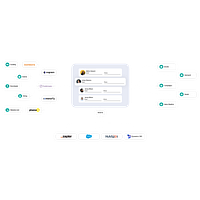
How a Salesforce Sales Cloud migration works
Four steps, Salesforce Sales Cloud-specific
Connect
OAuth 2.0 (Connected Apps, JWT, or Session ID) into Salesforce Sales Cloud. Scopes limited to read-only on the data we move.
Map
We translate Salesforce Sales Cloud-specific structures (custom fields, objects, value lists) to the destination's model.
Sample
Test with a 50–200 record subset to validate Salesforce Sales Cloud quirks before production.
Migrate
Full migration with Salesforce Sales Cloud rate-limit handling. Rollback available throughout.
FAQ
Salesforce Sales Cloud migration FAQ
Answers to the questions buyers ask most during Salesforce Sales Cloud migration scoping. Not seeing yours? Book a call.
Can't find your answer?
Walk through your Salesforce Sales Cloud migration with a real engineer — 30 minutes, free, written quote within 24 hours.
Book a free 30 minute consultationOther CRMs we support
Ready when you are
Migrate Salesforce Sales Cloud.
Without the rebuild.
Free scoping call with a migration engineer. Tell us about your Salesforce Sales Cloud setup and destination — written quote back within a business day.