CRM migration
Field-level mapping, validation, and rollback between Delta Sales CRM and Salesforce Sales Cloud. We move data and schema; workflows are rebuilt natively in Salesforce Sales Cloud.

Delta Sales CRM
Source
Salesforce Sales Cloud
Destination

Compatibility
9 of 13
objects map 1:1 between Delta Sales CRM and Salesforce Sales Cloud.
Complexity
BStandard
Timeline
3-5 weeks
Overview
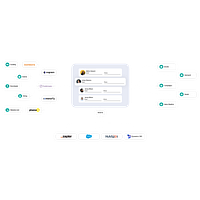
Moving from Delta Sales CRM to Salesforce is a CSV-based migration constrained by Delta's lack of a documented public API, which means we build a custom export pipeline from the web application's data layer rather than calling a REST or GraphQL endpoint. We sequence the migration in dependency order (Companies before Contacts, Accounts before Opportunities, Products before Line Items) and use Salesforce Bulk API 2.0 with chunking for activity history. Delta's Beat Plans (field rep route assignments) have no standard Salesforce equivalent and are rebuilt as a Custom Object. Delta's Attendance Records, GPS visit logs, and field-force metadata are not migrated as standalone CRM records. Workflows, automations, and the Delta mobile app's notification preferences do not migrate; we deliver a written inventory of these for the customer's admin to rebuild in Salesforce Flow.
Every standard and custom field arrives verified.
AI proposes the map; you confirm before any record moves.
Parent–child, lookups, and ownership stay linked.
Calls, emails, meetings — with original timestamps.
Documents, uploads, and inline notes move with the record.
Why teams make this switch
Leaving
What's pushing teams away
Choosing
What's pulling them in
Object mapping
Each row shows how a Delta Sales CRM object lands in Salesforce Sales Cloud, including any object-level transformations, lookup resolution, or schema-design dependencies.
Typical mapping — final map is confirmed during the sample migration step.
Delta Sales CRM
Contact
Salesforce Sales Cloud
Contact
1:1Delta Contacts map directly to Salesforce Contact. The standard fields (Name, Phone, Email, Mailing Address) align 1:1. We extract all custom fields on the Contact object and create matching custom fields in Salesforce before import. The contact-company linkage is preserved via the AccountId lookup resolved at import time from the Delta Company mapping.
Delta Sales CRM
Company
Salesforce Sales Cloud
Account
1:1Delta Companies map to Salesforce Account. The company name becomes the Account Name, website becomes the Website field, and any industry or type fields map to their Salesforce equivalents. Account is imported before Contact so that the AccountId lookup is satisfied at Contact insert time. Companies without a linked contact are migrated as Account-only records.
Delta Sales CRM
Lead
Salesforce Sales Cloud
Lead
1:1Delta Leads map to Salesforce Lead. Lead status, source, owner, and any custom fields migrate directly. If the customer's Delta account uses Leads primarily as an unqualified pipeline stage (rather than converting to deals), we discuss whether to import as Salesforce Lead or merge into Contact during scoping. Any lead score or qualification data stored in Delta custom fields migrates to custom fields on Salesforce Lead.
Delta Sales CRM
Deal
Salesforce Sales Cloud
Opportunity
1:1Delta Deals map to Salesforce Opportunity. Deal name becomes Opportunity Name, amount maps to Amount, close date maps to CloseDate, stage maps to StageName, and probability maps to Probability (rounded to Salesforce-allowed integer values). We resolve AccountId and OwnerId from the parent-company and owner mappings before Opportunity insert.
Delta Sales CRM
Pipeline
Salesforce Sales Cloud
Record Type + Sales Process
lossyEach Delta pipeline becomes a Salesforce Record Type on Opportunity, with a corresponding Sales Process that whitelists only the relevant stage values. Pipeline stage names map to Salesforce StageName values in the order defined in Delta. If Delta uses multiple pipelines for different business units, each pipeline maps to a distinct Record Type in Salesforce.
Delta Sales CRM
Activity (Tasks, Meetings, Calls, Reminders)
Salesforce Sales Cloud
Task and Event
1:1Delta Activities (Tasks, Meetings, Calls, and Reminders) map to Salesforce Task and Event objects. Call activities become Task with TaskSubtype=Call; meeting activities become Event with attendee relations; standard tasks remain Task. Activity date, assignee, status, and description migrate directly. We resolve WhoId (Contact or Lead lookup) and WhatId (Opportunity or Account lookup) from the parent-record mappings at migration time.
Delta Sales CRM
Product
Salesforce Sales Cloud
Product2
1:1Delta Products map to Salesforce Product2. Product name, SKU, description, and pricing fields migrate to Product2 Name, ProductCode, Description, and a custom price field. Standard Pricebook entries are created in Salesforce before Line Items are imported so that the Pricebook2 reference is satisfied at Line Item insert.
Delta Sales CRM
Invoice
Salesforce Sales Cloud
Custom Object (Delta_Invoice__c)
1:manyDelta Invoices have no direct Salesforce standard object equivalent in Sales Cloud Essentials or Professional without additional modules. We create a Delta_Invoice__c custom object with fields for invoice number, date, amount, status, and linked Contact and Account lookups. Invoice line items become child records of Delta_Invoice__c. If the customer has Salesforce Billing or a third-party invoicing tool, we discuss integrating the custom object with that module.
Delta Sales CRM
Payment
Salesforce Sales Cloud
Custom Object (Delta_Payment__c)
1:1Delta Payment records map to a Delta_Payment__c custom object linked to Delta_Invoice__c (the invoice object above). Payment amount, date, method, and status migrate to custom fields. If the customer uses Salesforce Opportunity with invoice-to-cash automation, payments can alternatively map to Opportunity as field updates, but the standard approach for Delta-sourced payment history is a custom object.
Delta Sales CRM
Custom Fields
Salesforce Sales Cloud
Custom Fields
lossyDelta custom fields across all objects map to Salesforce custom fields of equivalent data type. Text fields map to Text, number fields to Number, date fields to Date, picklist fields to Picklist. We create the Salesforce custom field schema before any data import so that the target fields exist and validation rules can be tested against migrated data. The customer confirms naming convention preference (display label vs API name) during scoping.
Delta Sales CRM
Beat Plan (Route Plan)
Salesforce Sales Cloud
Custom Object (Delta_Beat_Plan__c)
lossyDelta Beat Plans are field-force routing structures assigning route sequences to reps with customer visit order, scheduled dates, and visit status. There is no standard Salesforce equivalent. We create a Delta_Beat_Plan__c custom object with fields for plan name, rep owner (User lookup), scheduled date, and a child Delta_Beat_Visit__c object for individual visit records with customer lookup, visit order, planned time, actual time, and visit notes. The customer uses the standard Salesforce mobile app for visit logging post-migration.
Delta Sales CRM
Attachments (Documents)
Salesforce Sales Cloud
ContentDocument and ContentVersion
1:1Delta file attachments are exported as binary blobs with their associated record ID. We upload them to Salesforce as ContentVersion records linked via ContentDocumentLink to the parent Contact, Account, Opportunity, or custom object. Large attachment batches (over 5,000 files) require chunked upload with the Salesforce Content API to avoid batch size limits. We confirm file volume during scoping.
Delta Sales CRM
Owner (Users)
Salesforce Sales Cloud
User
1:1Delta users referenced on records (deal owner, task assignee, activity owner) are resolved by email match against the Salesforce destination org's User table during migration. Any Delta Owner without a matching Salesforce User goes to a reconciliation queue for the customer's admin to provision before record import resumes. We do not create Salesforce Users; that is an admin action gated by license assignment.
| Delta Sales CRM | Salesforce Sales Cloud | Compatibility | |
|---|---|---|---|
| Contact | Contact1:1 | Fully supported | |
| Company | Account1:1 | Fully supported | |
| Lead | Lead1:1 | Fully supported | |
| Deal | Opportunity1:1 | Fully supported | |
| Pipeline | Record Type + Sales Processlossy | Fully supported | |
| Activity (Tasks, Meetings, Calls, Reminders) | Task and Event1:1 | Fully supported | |
| Product | Product21:1 | Fully supported | |
| Invoice | Custom Object (Delta_Invoice__c)1:many | Fully supported | |
| Payment | Custom Object (Delta_Payment__c)1:1 | Fully supported | |
| Custom Fields | Custom Fieldslossy | Mapping required | |
| Beat Plan (Route Plan) | Custom Object (Delta_Beat_Plan__c)lossy | Fully supported | |
| Attachments (Documents) | ContentDocument and ContentVersion1:1 | Mapping required | |
| Owner (Users) | User1:1 | Fully supported |
Gotchas + challenges
Platform-specific issues from each side, plus the pair-specific challenges that don't show up on either platform's page on its own.
Delta Sales CRM gotchas
No public API confirmed — migration relies on CSV exports
Lifetime deal plans create migration urgency gaps
Offline-first sync can produce duplicate records on reconnect
Analytics gated behind an advanced module
Salesforce Sales Cloud gotchas
Workflow Rules and Process Builder are retired
Bulk API batch quota exhaustion during large imports
Storage overage billing is non-obvious
Account-Contact many-to-many relationship mapping
Territory and team member import ordering dependencies
Pair-specific challenges
Migration approach
Discovery and Delta environment audit
We audit the Delta Sales CRM account across plan tier (Standard, Premium, or Monthly), record counts per object (Contacts, Companies, Deals, Activities, Products, Invoices, Payments), custom field definitions per object, pipeline count and stage definitions, Beat Plan volume and structure, and any file attachment volume. We also confirm that all field devices are online and synced and that the customer has admin-level access to the Delta web application for CSV export. The discovery output is a written migration scope with record counts, a custom field inventory, and a CSV export plan that accounts for Delta's lack of a public API.
Custom export pipeline build and test
Because Delta has no documented public API, we build a custom CSV extraction pipeline from the web application's data layer. This pipeline exports Delta's structured data objects in dependency order (Companies, Contacts, Leads, Deals, Pipelines, Activities, Products, Invoices, Payments, Custom Fields, Attachments, Beat Plans) and produces sanitized CSV files ready for Salesforce import. We run the pipeline against a staging copy of the Delta data to confirm field coverage and catch any missing custom fields before the production export begins. This step typically takes 3-5 business days depending on data volume and the complexity of custom field structures.
Salesforce schema design and sandbox migration
We design the destination Salesforce schema including custom objects (Delta_Invoice__c, Delta_Payment__c, Delta_Beat_Plan__c, Delta_Beat_Visit__c), custom fields on standard objects, Record Types and Sales Processes per Delta pipeline, and validation rules. Schema is deployed to a Salesforce Sandbox (Full Copy or Partial Copy based on data volume) for validation before any production migration. The customer's Salesforce admin provisions any missing Users by email match to Delta owners and assigns appropriate license types (Salesforce platform, Field Service, etc.).
Owner reconciliation and User provisioning
We extract every distinct Delta user referenced on Contacts, Companies, Deals, Activities, and Beat Plans and match by email against the Salesforce destination org's User table. Any Delta Owner without a matching Salesforce User goes to a reconciliation queue. The customer's Salesforce admin provisions the missing Users and assigns licenses. This step is a hard gate — Opportunity and Task inserts require a valid OwnerId, so migration cannot proceed past record ownership until all referenced owners have a Salesforce User record.
Production migration in dependency order
We run production migration in record-dependency order: Accounts (from Delta Companies), Contacts (with AccountId resolved), Leads, Opportunities (with AccountId, OwnerId, and RecordTypeId resolved), Products and Pricebook entries, Line Items, Activity history (Tasks and Events via Salesforce Bulk API 2.0 with chunking and parent-record lookup resolution), Delta_Invoice__c and Delta_Payment__c custom objects, Beat Plan custom objects, Custom Fields on all objects, and Attachments (ContentDocument via Content API). Each phase emits a row-count reconciliation report before the next phase begins. Any duplicates identified during import are flagged for the customer's admin to resolve before proceeding.
Cutover, validation, and handoff
We freeze Delta writes during cutover (recommended 48-hour freeze to catch offline-sync records), run a final delta migration of any records modified during the migration window, then enable Salesforce as the system of record. We deliver a written inventory of Delta automations, notification rules, and any active beat-plan templates that require rebuild in Salesforce Flow or a field-service AppExchange app. We support a one-week hypercare window for reconciliation issues. We do not rebuild Delta's automations as Salesforce Flow inside the migration scope; that is a separate engagement or an internal admin task.
Platform deep dives
Delta Sales CRM
Source
Strengths
Weaknesses
Salesforce Sales Cloud
Destination
Strengths
Weaknesses
Complexity grading
Standard CRM migration. 2 of 8 objects need a mapping; the rest are 1:1.
Overall complexity
Standard migration
Derived from compatibility, mapping clarity, API constraints, and data volume across Delta Sales CRM and Salesforce Sales Cloud.
Object compatibility
2 of 8 objects need a mapping; the rest are 1:1.
Field mapping clarity
Field mapping is derived from defaults — final spec confirmed during the sample migration.
Timeline complexity
8-object category — typical timelines run 2–7 days end-to-end.
API constraints
Delta Sales CRM: Documented in API reference at apidocs.deltasalesapp.com — specific thresholds not stated publicly; confirmed during scoping.
Data volume sensitivity
Delta Sales CRM exposes a bulk API — large-volume migrations stream efficiently.
Estimator
Rule-based pricing — no per-record fees, no manual quotes. Migrations over 2M records are scoped individually.
Step 1
Pick a category, then your source and destination platforms.
Category
FAQ
Answers to the questions buyers ask most during Delta Sales CRM to Salesforce Sales Cloud migration scoping. Not seeing yours? Book a call.
Walk through your Delta Sales CRM to Salesforce Sales Cloud migration with a real engineer — 30 minutes, free, written quote within 24 hours.
Book a free 30 minute consultationAdjacent paths
Other ways to leave Delta Sales CRM









Other ways to arrive at Salesforce Sales Cloud






Popular CRM migrations


Ready when you are
Tell us record counts and timeline. We'll come back with a written quote inside 1 business day — no commitment, no sales pitch.
