CRM migration
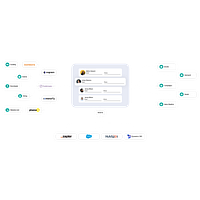
Field-level mapping, validation, and rollback between Nurture and Pipedrive. We move data and schema; workflows are rebuilt natively in Pipedrive.

Nurture
Source
Pipedrive
Destination

Compatibility
8 of 12
objects map 1:1 between Nurture and Pipedrive.
Complexity
CModerate
Timeline
2-3 weeks
Overview
Moving from Nurture to Pipedrive is a structural migration that resolves differences in object naming, field types, and pipeline stage semantics before any data moves. Nurture uses Contacts, Companies, Deals, and Activities in a flat hierarchy; Pipedrive uses People, Organizations, Deals, and Activities with a visual pipeline-driven model that expects Deals to link to an Organization. We sequence the import to create Organizations first, then People, then Deals, resolving the Organization-Contact foreign-key dependency at migration time. Activity history (calls, emails, meetings, tasks) migrates to Pipedrive Activities, with the original timestamps and owner assignments preserved. We do not migrate Nurture Workflows or automated follow-up sequences; we deliver a written inventory of every active automation for your admin to rebuild in Pipedrive's Automation engine post-migration. Custom fields on Nurture Contacts, Companies, and Deals migrate as Pipedrive custom fields with type-appropriate handling for picklists, dates, numbers, and text.
Every standard and custom field arrives verified.
AI proposes the map; you confirm before any record moves.
Parent–child, lookups, and ownership stay linked.
Calls, emails, meetings — with original timestamps.
Documents, uploads, and inline notes move with the record.
Why teams make this switch
Leaving
What's pushing teams away
Choosing
What's pulling them in
Object mapping
Each row shows how a Nurture object lands in Pipedrive, including any object-level transformations, lookup resolution, or schema-design dependencies.
Typical mapping — final map is confirmed during the sample migration step.
Nurture
Company
Pipedrive
Organization
1:1Nurture Company records map to Pipedrive Organization. The Company name field maps to Organization name. Website, phone, address, and industry fields map to their Pipedrive equivalents. We use Organization name as the dedupe key during import. Organization is imported first because Pipedrive Deals require an Organization link, and Pipedrive People require an Organization link when a company relationship exists.
Nurture
Contact
Pipedrive
Person
1:1Nurture Contact records map to Pipedrive Person. Name, email, phone, title, and address fields migrate to their Pipedrive equivalents. We resolve the Organization link by matching the Nurture Contact's parent Company name to the Pipedrive Organization name created in the prior step. If a Contact has no associated Company in Nurture, the Person is imported without an Organization link.
Nurture
Contact custom fields
Pipedrive
Person custom fields
lossyNurture custom fields on Contacts migrate to Pipedrive Person custom fields. We handle type mapping: Nurture date pickers become Pipedrive date fields, Nurture number fields become Pipedrive number fields, Nurture text fields become Pipedrive text fields, and Nurture single-select or multi-select fields become Pipedrive dropdown or multi-select fields respectively.
Nurture
Company custom fields
Pipedrive
Organization custom fields
lossyNurture custom fields on Companies migrate to Pipedrive Organization custom fields using the same type-mapping logic as Person custom fields. All Organization custom fields must be created in Pipedrive before the Organization import begins.
Nurture
Deal
Pipedrive
Deal
1:1Nurture Deal records map to Pipedrive Deal. Deal name, value, expected close date, stage, and owner map to their Pipedrive equivalents. We resolve the Organization link by matching the Nurture Deal's associated Company name to the Pipedrive Organization name. The Deal owner maps via email lookup to the Pipedrive User. Nurture Deal stage names map to Pipedrive Stage names within the configured pipeline.
Nurture
Deal custom fields
Pipedrive
Deal custom fields
lossyNurture custom fields on Deals migrate to Pipedrive Deal custom fields. Pipedrive requires that all custom fields exist before Deals are imported. We create the custom fields during the schema setup phase and then map field values during the Deal import phase using the correct Pipedrive field API names.
Nurture
Pipeline
Pipedrive
Pipeline
lossyNurture pipeline stages migrate to Pipedrive Pipeline stages. If Nurture has a single pipeline with multiple stages, we create a matching Pipedrive Pipeline with stages named to mirror Nurture's stage labels. Stage probability weights from Nurture migrate to Pipedrive Stage probability values. If Nurture has multiple pipelines, we create multiple Pipedrive Pipelines and map each to its corresponding Deal set.
Nurture
Activity: Call
Pipedrive
Activity (type: call)
1:1Nurture call activities map to Pipedrive Activity with type = call. Duration, disposition, and notes migrate to Pipedrive activity fields. The activity is linked to the corresponding Person and, if applicable, the related Deal. Activity timestamps migrate as the Pipedrive Activity due date, preserving the original date and time for timeline accuracy.
Nurture
Activity: Email
Pipedrive
Activity (type: email)
1:1Nurture email activities map to Pipedrive Activity with type = email. Subject, body content, and direction (sent/received) migrate to Pipedrive activity fields. We link the activity to the corresponding Person record. Email content migrates as a text note attached to the activity. Pipedrive's email sync on Advanced and above plans can supplement imported emails with live two-way sync after cutover.
Nurture
Activity: Meeting
Pipedrive
Activity (type: meeting)
1:1Nurture meeting activities map to Pipedrive Activity with type = meeting. Title, start time, end time, location, and attendees migrate to Pipedrive activity fields. The activity is linked to the corresponding Person and related Deal. Attendees without existing Pipedrive Person records are logged as text notes pending manual contact creation.
Nurture
Activity: Task
Pipedrive
Activity (type: task)
1:1Nurture Task activities map to Pipedrive Activity with type = task. Title, due date, status, and assignment migrate to Pipedrive activity fields. The activity is linked to the corresponding Person and related Deal. Completed status migrates as done = true in Pipedrive.
Nurture
Owner
Pipedrive
User
1:1Nurture owner references on Contacts, Companies, and Deals map to Pipedrive Users via email address matching. We extract every distinct owner email from the Nurture export and check for a matching User in the destination Pipedrive account. Any owner without a matching User goes to a reconciliation queue for the customer's admin to provision before Deal and Activity imports run, because Pipedrive requires a valid User reference on Deal owner_id.
| Nurture | Pipedrive | Compatibility | |
|---|---|---|---|
| Company | Organization1:1 | Fully supported | |
| Contact | Person1:1 | Fully supported | |
| Contact custom fields | Person custom fieldslossy | Fully supported | |
| Company custom fields | Organization custom fieldslossy | Fully supported | |
| Deal | Deal1:1 | Fully supported | |
| Deal custom fields | Deal custom fieldslossy | Fully supported | |
| Pipeline | Pipelinelossy | Fully supported | |
| Activity: Call | Activity (type: call)1:1 | Fully supported | |
| Activity: Email | Activity (type: email)1:1 | Fully supported | |
| Activity: Meeting | Activity (type: meeting)1:1 | Fully supported | |
| Activity: Task | Activity (type: task)1:1 | Fully supported | |
| Owner | User1:1 | Fully supported |
Gotchas + challenges
Platform-specific issues from each side, plus the pair-specific challenges that don't show up on either platform's page on its own.
Nurture gotchas
Conflicting public guidance on API availability
Trigger-rule and journey logic is not portable
RSS-to-Email campaigns depend on live feed availability
Pipedrive gotchas
Custom field hash keys differ per account
Export access gated by visibility groups
Token-based API rate limits since December 2024
Sequences and Automations not exposed via REST API
Cost escalates via workflow caps and add-ons
Pair-specific challenges
Migration approach
Discovery and source audit
We audit the Nurture account to document every object in use: Contacts, Companies, Deals, pipeline count, stage names, active workflows, custom fields per object, and activity volume by type. We count records per object, identify any Deals without a Company association, and list every distinct Owner email. The discovery output is a written migration scope, field mapping workbook, and a list of Nurture Workflows and sequences requiring rebuild documentation.
Destination schema setup
We create the Pipedrive destination schema in the customer's Pipedrive account. This includes creating all required Pipedrive Pipelines with stage names matching Nurture's pipeline stages, creating all Organization and Person and Deal custom fields with correct types, and inviting any Pipedrive Users whose email addresses match Nurture owners. Schema setup runs in the live Pipedrive account or a Sandbox if the customer prefers a validation step before production data loads.
Organization and Person import
We import Nurture Companies as Pipedrive Organizations first. The Organization name is the dedupe key. We then import Nurture Contacts as Pipedrive People, resolving each Contact's parent Company to the matching Organization by name. Owner assignment on People resolves via email to the Pipedrive User. Custom field values on Company and Contact records populate during this phase.
Deal and Pipeline import
We import Nurture Deals as Pipedrive Deals, resolving the Organization link by matching the Nurture Deal's associated Company name to the imported Pipedrive Organization. The pipeline and stage assignments map from Nurture's pipeline stage to the configured Pipedrive Pipeline stage. Deal value, expected close date, and owner assign during this phase. Deals without a parent Company are flagged and imported without an Organization link per the customer's preference.
Activity history import
We import Nurture Activities (calls, emails, meetings, tasks) in timestamp order. Each activity links to its corresponding Pipedrive Person by email match and to its corresponding Deal if a Deal association exists in Nurture. Activities without a resolvable Person are held in a reconciliation queue for the customer's admin to review after import. The activity import runs after Person and Deal imports complete to satisfy the WhoId and WhatId references.
Cutover, validation, and workflow handoff
We run a final delta scan of Nurture for any records modified during the migration window and import the delta into Pipedrive. The customer enables Pipedrive as the system of record from the agreed cutover date. We deliver the Workflow and Sequence inventory document for the admin to rebuild in Pipedrive Automations. We offer a one-week post-cutover window for reconciliation issues. We do not rebuild Nurture Workflows as Pipedrive Automations inside the migration scope; that is a separate engagement.
Platform deep dives
Nurture
Source
Strengths
Weaknesses
Pipedrive
Destination
Strengths
Weaknesses
Complexity grading
Moderate CRM migration. 2 of 8 objects need a manual workaround.
Overall complexity
Moderate migration
Derived from compatibility, mapping clarity, API constraints, and data volume across Nurture and Pipedrive.
Object compatibility
2 of 8 objects need a manual workaround.
Field mapping clarity
Field mapping is derived from defaults — final spec confirmed during the sample migration.
Timeline complexity
8-object category — typical timelines run 2–7 days end-to-end.
API constraints
Nurture: Not publicly documented..
Data volume sensitivity
Nurture doesn't expose a bulk API — REST + parallelization used for high-volume runs.
Estimator
Rule-based pricing — no per-record fees, no manual quotes. Migrations over 2M records are scoped individually.
Step 1
Pick a category, then your source and destination platforms.
Category
FAQ
Answers to the questions buyers ask most during Nurture to Pipedrive migration scoping. Not seeing yours? Book a call.
Walk through your Nurture to Pipedrive migration with a real engineer — 30 minutes, free, written quote within 24 hours.
Book a free 30 minute consultationAdjacent paths
Other ways to leave Nurture









Other ways to arrive at Pipedrive
Popular CRM migrations


Ready when you are
Tell us record counts and timeline. We'll come back with a written quote inside 1 business day — no commitment, no sales pitch.