CRM migration
Field-level mapping, validation, and rollback between Empire SUITE and Salesforce Sales Cloud. We move data and schema; workflows are rebuilt natively in Salesforce Sales Cloud.
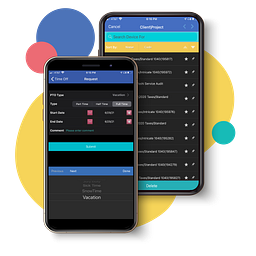
Empire SUITE
Source
Salesforce Sales Cloud
Destination

Compatibility
10 of 12
objects map 1:1 between Empire SUITE and Salesforce Sales Cloud.
Complexity
BStandard
Timeline
48–72 hours
Overview
Empire Suite positions itself as project accounting and time-tracking software with client management, billing, and employee-cost capabilities. Salesforce Sales Cloud is a CRM built around Account-Contact-Opportunity relationships with flexible custom fields and no native project accounting model. The migration challenge is translating Empire Suite's project-centric financial records (Projects with budgets and billing rates, Time Entries with billable hours, Expenses by category, Employees with cost rates) into Salesforce's relationship graph. We map Client records to Accounts with primary contacts, Project records to Opportunities with custom __c fields for budget tracking and per-project billing rates, Employee records to Contacts with custom cost-rate fields, and Time Entries to Tasks with billable-hour flags. The migration uses the Salesforce Bulk API for high-volume record creation and the REST API for complex custom-object relationships. All automations, approval workflows, and billing rule configurations in Empire Suite do not migrate — they must be rebuilt in Salesforce Flow or CPQ after go-live. Our delta-pickup window captures any time entries or expense records created during the cutover so the Salesforce org reflects Empire Suite's final state.
Every standard and custom field arrives verified.
AI proposes the map; you confirm before any record moves.
Parent–child, lookups, and ownership stay linked.
Calls, emails, meetings — with original timestamps.
Documents, uploads, and inline notes move with the record.
Why teams make this switch
Leaving
What's pushing teams away
Choosing
What's pulling them in
Object mapping
Each row shows how a Empire SUITE object lands in Salesforce Sales Cloud, including any object-level transformations, lookup resolution, or schema-design dependencies.
Typical mapping — final map is confirmed during the sample migration step.
Empire SUITE
Client
Salesforce Sales Cloud
Account
1:1Empire Suite Clients map directly to Salesforce Accounts. Client name becomes Account.Name, phone becomes Phone, email becomes a custom field or secondary contact lookup. Primary billing address maps to Account.BillingAddress. Multiple client contacts in Empire Suite become separate Contact records linked via AccountId.
Empire SUITE
Client Contact
Salesforce Sales Cloud
Contact
1:1Client contact records map to Salesforce Contacts. First name, last name, email, phone, and job title transfer directly. Contact type flags in Empire Suite (e.g., Primary, Billing, Technical) map to custom pick-list fields on Contact or to Contact.Salutation if a prefix field exists in the source.
Empire SUITE
Project
Salesforce Sales Cloud
Opportunity
1:1Empire Suite Projects map to Salesforce Opportunities with significant custom field additions. Project name becomes Opportunity.Name. Start date and end date map to Opportunity.CloseDate (end date) with a custom ProjectStartDate__c field. Budget amount maps to a custom BudgetAmount__c currency field. Billing rate type (hourly, fixed-fee, milestone) requires RecordTypeId assignment per value-mapping rule.
Empire SUITE
Project
Salesforce Sales Cloud
Custom Project Object
1:1For complex project accounting with multiple billing tiers, a custom Project__c object provides the schema flexibility that Opportunity's standard fields cannot accommodate. Project__c links to Account via AccountId lookup, stores ProjectNumber__c as external ID, and holds BudgetAmount__c, BillingRate__c, CostRate__c, and Status__c fields with value-mapping applied per billing type.
Empire SUITE
Time Entry
Salesforce Sales Cloud
Task
1:1Empire Suite Time Entries map to Salesforce Tasks. Task.Subject receives a formatted string combining project name + employee name + date. Task.ActivityDate receives the time entry date. Custom fields capture hours worked (BillableHours__c), billing rate (BillingRate__c), and cost rate (CostRate__c) as decimal fields. Task.WhatId links to the related Project Opportunity or Project__c record.
Empire SUITE
Time Entry
Salesforce Sales Cloud
Event
1:manyTime Entries with a meeting type flag in Empire Suite (e.g., 'Client Meeting', 'Internal Review') split to Salesforce Events instead of Tasks. Event.Subject receives the project-task description. Event.DurationInMinutes receives the logged duration. Custom Billable__c checkbox and BillingRate__c fields carry financial data. Event.WhatId links to the related Opportunity or Project__c.
Empire SUITE
Expense
Salesforce Sales Cloud
Custom Expense Object
1:1Empire Suite Expenses require a custom Expense__c object since Salesforce has no native expense entity. Expense__c stores ExpenseDate__c, Amount__c, Category__c (value-mapped from source categories), ReimbursementStatus__c, and Description__c. Expense__c links to Opportunity via WhatId or to a Project__c custom object via Project__c lookup for budget attribution.
Empire SUITE
Employee
Salesforce Sales Cloud
User + Contact
many:1Empire Suite Employees serve dual roles — internal time-trackers and client-contact equivalents. Active employees who will use Salesforce become User records matched by email. Their employee record data (cost rate, billing rate, title) becomes custom fields on User (CostRate__c, BillingRate__c) or on a parallel Contact record for reporting purposes. Inactive employees become Contacts only for historical reference.
Empire SUITE
Employee Cost Rate
Salesforce Sales Cloud
Custom Field on User / Contact
1:1Employee cost rates in Empire Suite (hourly cost to the company) have no Salesforce equivalent. We create a CostRate__c custom currency field on User for internal utilization reporting. This field calculates margin when BillableHours__c from Time Entries are multiplied by the difference between CostRate__c and BillingRate__c in a custom report type.
Empire SUITE
Billing Rate
Salesforce Sales Cloud
Custom Field on Project / Opportunity
1:1Billing rates in Empire Suite vary by project and employee (hourly rates, fixed fees, milestone amounts). These map to custom currency fields on the Project__c custom object or Opportunity: HourlyBillingRate__c, FixedFeeAmount__c, MilestoneBillingAmount__c. RecordTypeId assignments per billing type determine which fields are visible on the page layout via field-level security and page layout assignment rules.
Empire SUITE
Custom Property (any entity)
Salesforce Sales Cloud
Custom Field __c
1:1Any Empire Suite custom properties (fields added beyond standard schema) map to Salesforce custom fields with __c API suffix. Pick-list custom properties require value-by-value mapping to Salesforce pick-list values. Date custom properties map to Date fields. Number custom properties map to Number fields with appropriate precision and scale. Long-text custom properties require LongTextArea fields with character limits above 255.
Empire SUITE
Attachment / File
Salesforce Sales Cloud
ContentDocument / Salesforce Files
1:1File attachments on Empire Suite records (Projects, Time Entries, Expenses) re-upload to Salesforce as ContentDocumentLink records attached to the migrated parent record. Files with a ContentDocument Library designation migrate to Salesforce Files with public library visibility. Files attached to specific records migrate as private ContentVersion records linked via ContentDocumentLink to the corresponding Opportunity or Project__c record.
| Empire SUITE | Salesforce Sales Cloud | Compatibility | |
|---|---|---|---|
| Client | Account1:1 | Fully supported | |
| Client Contact | Contact1:1 | Fully supported | |
| Project | Opportunity1:1 | Fully supported | |
| Project | Custom Project Object1:1 | Fully supported | |
| Time Entry | Task1:1 | Fully supported | |
| Time Entry | Event1:many | Fully supported | |
| Expense | Custom Expense Object1:1 | Fully supported | |
| Employee | User + Contactmany:1 | Fully supported | |
| Employee Cost Rate | Custom Field on User / Contact1:1 | Fully supported | |
| Billing Rate | Custom Field on Project / Opportunity1:1 | Fully supported | |
| Custom Property (any entity) | Custom Field __c1:1 | Fully supported | |
| Attachment / File | ContentDocument / Salesforce Files1:1 | Fully supported |
Gotchas + challenges
Platform-specific issues from each side, plus the pair-specific challenges that don't show up on either platform's page on its own.
Empire SUITE gotchas
Custom Field-based Security Permissions vary by deployment
Empire TIME module may have isolated data stores
No public API documentation found in research
Salesforce Sales Cloud gotchas
Workflow Rules and Process Builder are retired
Bulk API batch quota exhaustion during large imports
Storage overage billing is non-obvious
Account-Contact many-to-many relationship mapping
Territory and team member import ordering dependencies
Pair-specific challenges
Migration approach
Audit Empire Suite schema and export record volumes by entity
We connect to Empire Suite via scoped read-access API credentials and export a full schema inventory: Client fields and record count, Project fields and record count, Time Entry fields with date range spans, Expense fields with category distribution, and Employee fields. We profile data quality — identifying records with missing billing rates, unassigned project managers, or dates stored in non-standard formats. This audit produces a data volume matrix that determines Bulk API batch sizing and delta-pickup window duration.
Pre-create Salesforce Record Types, custom objects, and custom fields
Based on the billing rate type distribution from the audit, we deliver a Record Type setup plan — one Record Type per distinct billing rate configuration (Hourly, Fixed Fee, Milestone, Hybrid). Your Salesforce admin pre-creates these along with the custom Project__c object, Expense__c object, and all custom fields referenced in the field mapping. We provide the exact field labels, API names (__c suffix), data types, and pick-list values so admin setup takes under a day before validation begins.
Resolve Employee records to Salesforce Users by email matching
We run an email-matching pass against your Salesforce User list for all Empire Suite Employee records. Matched employees receive their historical Task and Expense records as OwnerId assignments. Unmatched employees are listed with their record counts for admin resolution — either inviting them as Salesforce Users or designating a fallback owner. No Task or Expense__c record migrates without a resolved OwnerId; unmatched records are held in a staging report until resolution before the final migration batch runs.
Run a sample migration with field-level diff on 100–500 representative records
A representative slice migrates first — typically 100–200 Clients, 50–100 Projects, 500–1,000 Time Entries, and 200–500 Expenses spanning multiple billing rate types and date ranges. We generate a field-level diff comparing source field values against destination field values so you can verify RecordTypeId assignments for billing rate types, custom field data in Project__c vs Opportunity, and Task WhatId linkage to the correct parent record. You approve the sample before the full migration commits.
Execute full migration with delta-pickup window and audit log
Full migration runs through Salesforce Bulk API with quarterly batch splitting for Time Entries and daily batch splitting for Expenses. A delta-pickup window (24–48 hours after bulk completion) polls Empire Suite for any Time Entry or Expense records created or modified during the migration run. Every operation — create, update, link — is logged in a FlitStack audit record. One-click rollback reverts all migrated records to their pre-migration state if reconciliation fails. We deliver a final reconciliation report showing record counts by object, OwnerId resolution rate, and any records held due to unresolved dependencies.
Platform deep dives
Empire SUITE
Source
Strengths
Weaknesses
Salesforce Sales Cloud
Destination
Strengths
Weaknesses
Complexity grading
Standard CRM migration. 2 of 8 objects need a mapping; the rest are 1:1.
Overall complexity
Standard migration
Derived from compatibility, mapping clarity, API constraints, and data volume across Empire SUITE and Salesforce Sales Cloud.
Object compatibility
2 of 8 objects need a mapping; the rest are 1:1.
Field mapping clarity
Field mapping is derived from defaults — final spec confirmed during the sample migration.
Timeline complexity
8-object category — typical timelines run 2–7 days end-to-end.
API constraints
Empire SUITE: Not publicly documented..
Data volume sensitivity
Empire SUITE doesn't expose a bulk API — REST + parallelization used for high-volume runs.
Estimator
Rule-based pricing — no per-record fees, no manual quotes. Migrations over 2M records are scoped individually.
Step 1
Pick a category, then your source and destination platforms.
Category
FAQ
Answers to the questions buyers ask most during Empire SUITE to Salesforce Sales Cloud migration scoping. Not seeing yours? Book a call.
Walk through your Empire SUITE to Salesforce Sales Cloud migration with a real engineer — 30 minutes, free, written quote within 24 hours.
Book a free 30 minute consultationAdjacent paths
Other ways to leave Empire SUITE









Other ways to arrive at Salesforce Sales Cloud









Popular CRM migrations


Ready when you are
Tell us record counts and timeline. We'll come back with a written quote inside 1 business day — no commitment, no sales pitch.
