CRM migration
Field-level mapping, validation, and rollback between Empire SUITE and monday CRM. We move data and schema; workflows are rebuilt natively in monday CRM.
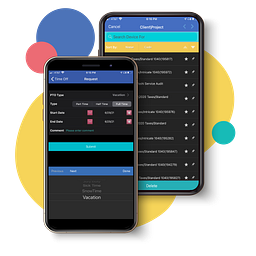
Empire SUITE
Source
monday CRM
Destination

Compatibility
11 of 11
objects map 1:1 between Empire SUITE and monday CRM.
Complexity
BStandard
Timeline
48–72 hours
Overview
Teams move from Empire SUITE to Monday CRM when they want a visual, board-based interface for sales pipeline management without the overhead of a traditional ERP. Empire SUITE's data model is relational and module-based — Contacts, Companies, Projects, Time Entries, and Invoices stored as distinct objects with foreign-key relationships. Monday CRM models everything as Items on Boards, with People Items, Organization Items, and Deal Items serving as the CRM primitives, and custom columns replacing traditional field definitions. The migration carries Contacts as People Items, Companies as Organization Items, Deals as Deal Items, and Projects as standalone Boards (or Deal sub-items depending on scope). The harder problems are translating Empire SUITE's structured field definitions into Monday column types, preserving time-entry data as custom columns without a native equivalent, mapping Empire SUITE user roles to Monday workspace members, and getting the board structure right before items land. Monday's daily API rate limits (1,000 for Basic/Standard, 10,000 for Pro, 25,000 for Enterprise) govern migration pacing. FlitStack sequences the load so foreign keys resolve in the right order: Organizations first, then People with Organization links, then Deals with Owner resolution by email match, then time-entry custom columns and attachments. Workflows, automations, and user-defined scripts do not migrate — FlitStack exports the definitions as rebuild references for Monday's automation builder.
Every standard and custom field arrives verified.
AI proposes the map; you confirm before any record moves.
Parent–child, lookups, and ownership stay linked.
Calls, emails, meetings — with original timestamps.
Documents, uploads, and inline notes move with the record.
Why teams make this switch
Leaving
What's pushing teams away
Choosing
What's pulling them in
Object mapping
Each row shows how a Empire SUITE object lands in monday CRM, including any object-level transformations, lookup resolution, or schema-design dependencies.
Typical mapping — final map is confirmed during the sample migration step.
Empire SUITE
Contact
monday CRM
People Item (CRM board)
1:1Empire SUITE Contacts migrate as People Items on a Monday CRM contact board. The People Item type provides native name, email, phone, and organization links. Owner resolution happens by email match against Monday workspace members — unmatched contacts land with a placeholder Owner until manually assigned.
Empire SUITE
Company
monday CRM
Organization Item (CRM board)
1:1Empire SUITE Companies migrate as Organization Items on the CRM board. Monday's Organization Items store company name, domain, industry, and employee count in native columns. Primary contact from Empire SUITE links to the Organization via the Person column on the Organization Item.
Empire SUITE
Deal / Project Deal
monday CRM
Deal Item (CRM board)
1:1Empire SUITE Deals migrate as Deal Items on Monday CRM's deal pipeline board. The Deal Item type includes native Amount, Close Date, and Pipeline/Stage columns. Empire SUITE deal stage values map to Monday Status column options — each pipeline in Empire SUITE becomes a separate Monday board with its own Status column definition.
Empire SUITE
Project
monday CRM
Board (standalone) or Deal sub-item
1:1Empire SUITE Projects map to Monday Boards when they represent long-running engagements tied to Deals. If the project is purely operational (time tracking, billing), it becomes a standalone Monday board. If tied to a specific deal, project milestones migrate as Deal sub-items so milestones stay associated with the deal record without duplicating the deal board structure.
Empire SUITE
Time Entry
monday CRM
Custom columns on Project Board or Deal Item
1:1Monday CRM has no native time-entry object. FlitStack maps Empire SUITE time entries to custom Number columns (hours), Date columns (entry date), and Text columns (description) on the related Project Board or Deal Item. The billable flag maps to a Status column with Billable/Non-Billable options.
Empire SUITE
Invoice / Estimate
monday CRM
Item with custom columns on Project Board
1:1Empire SUITE invoices and estimates migrate as Items on the related Project Board with custom columns for invoice number, amount, status (Draft, Sent, Paid), and due date. Monday's Quotes/Invoices feature (Standard+ plans) is not directly populated via API — the migration creates the Items as a record of what existed; rebuilding in Monday's native invoicing module requires manual entry or a separate integration.
Empire SUITE
Custom Field (on Contact)
monday CRM
Custom Column on People Item
1:1Empire SUITE custom fields on Contacts (beyond name/email/phone) map to Monday custom columns on the People Item. Column type selection follows the source field type: text fields become Monday Text columns, pick-lists become Status or Dropdown columns, dates become Date columns, numbers become Number columns.
Empire SUITE
Custom Field (on Company)
monday CRM
Custom Column on Organization Item
1:1Custom fields on Empire SUITE Companies migrate as custom columns on Organization Items. Industry-specific pick-list values (e.g., NAICS codes) require Monday Dropdown column configuration with the exact option list preserved. Multi-select custom fields map to multi-select Dropdown columns on Monday Enterprise plans or text columns on lower tiers.
Empire SUITE
User / Owner
monday CRM
Person Column / Workspace Member
1:1Empire SUITE Users resolve to Monday workspace members by email match. Each record (People Item, Organization Item, Deal Item) receives the matched user as the Person column value. If a Monday account doesn't exist for an Empire SUITE owner, the record lands with no Owner assigned — flagged before migration so your team can invite the user first.
Empire SUITE
Attachment / File
monday CRM
Files on Item (Monday native)
1:1Empire SUITE file attachments on Contacts, Companies, or Deals re-upload to the corresponding Monday Item as native Files. Monday's file storage limits apply (5GB on Basic, 20GB on Standard, 100GB on Pro). Inline images in notes are downloaded and reattached as image files.
Empire SUITE
Activity Log
monday CRM
Item Updates and Comments
1:1Empire SUITE's activity log entries (status changes, note additions, email logs) migrate as chronological Updates on the corresponding Monday Item. Monday's update stream preserves the original timestamp and owner. Activity type is stored as a prefix in the update body (e.g., '[Email] Sent quote to Acme Corp on Jan 15').
| Empire SUITE | monday CRM | Compatibility | |
|---|---|---|---|
| Contact | People Item (CRM board)1:1 | Fully supported | |
| Company | Organization Item (CRM board)1:1 | Fully supported | |
| Deal / Project Deal | Deal Item (CRM board)1:1 | Fully supported | |
| Project | Board (standalone) or Deal sub-item1:1 | Fully supported | |
| Time Entry | Custom columns on Project Board or Deal Item1:1 | Fully supported | |
| Invoice / Estimate | Item with custom columns on Project Board1:1 | Fully supported | |
| Custom Field (on Contact) | Custom Column on People Item1:1 | Fully supported | |
| Custom Field (on Company) | Custom Column on Organization Item1:1 | Fully supported | |
| User / Owner | Person Column / Workspace Member1:1 | Fully supported | |
| Attachment / File | Files on Item (Monday native)1:1 | Fully supported | |
| Activity Log | Item Updates and Comments1:1 | Fully supported |
Gotchas + challenges
Platform-specific issues from each side, plus the pair-specific challenges that don't show up on either platform's page on its own.
Empire SUITE gotchas
Custom Field-based Security Permissions vary by deployment
Empire TIME module may have isolated data stores
No public API documentation found in research
monday CRM gotchas
Subitems are not included in bulk exports
Daily API call limits vary sharply by plan
Legacy automations (Sentence Builder) are being deprecated
Excel and account exports only include table views
Enterprise admins can disable non-admin exports
Pair-specific challenges
Migration approach
Extract and audit Empire SUITE data model
FlitStack connects to Empire SUITE via API (or structured export) to pull all Contacts, Companies, Deals, Projects, Time Entries, custom field definitions, and user accounts. We audit the record count per object, identify custom field types and pick-list values, and document the relationship graph (which contacts link to which companies, which deals link to which contacts, which time entries link to which projects). The output is a migration scoping document that identifies the Monday CRM column types required, the board structure needed, and any records that will require owner resolution or manual cleanup before migration.
Design Monday CRM board architecture and column schema
Before data moves, FlitStack delivers a Monday board design plan based on the Empire SUITE data model. This specifies: which Monday CRM boards to create (one for People, one for Organizations, one per deal pipeline), what columns each board needs (matching Empire SUITE field types to Monday column types), and how to handle projects — as standalone boards or Deal sub-items. Custom columns are provisioned via Monday API before the migration run. Owner resolution maps Empire SUITE user emails to Monday workspace members, flagging any users who need to be invited to Monday before the migration runs.
Run a sample migration with field-level diff
A representative slice migrates first — typically 100–500 records spanning contacts, companies, deals, and a few projects with time entries. FlitStack generates a field-level diff between the Empire SUITE source record and the resulting Monday Item so you can verify column type selections (especially for custom fields and currency formatting), owner resolution, Organization-People linkage, and Status column option coverage. You approve the sample before the full run commits. Any column type corrections or missing Status options get fixed before the next batch.
Execute full migration with delta-pickup window
The full migration runs against Monday CRM, landing Contacts as People Items, Companies as Organization Items, Deals as Deal Items on their respective pipeline boards, and Projects as standalone boards with time entries as custom columns. A delta-pickup window (24–48 hours after the initial run) captures any records created or modified in Empire SUITE during the cutover. Monday's daily API rate limits are respected throughout — FlitStack paces writes and retries on 429 responses. An audit log records every operation; one-click rollback is available if reconciliation reveals missing records or incorrect linkages.
Platform deep dives
Empire SUITE
Source
Strengths
Weaknesses
monday CRM
Destination
Strengths
Weaknesses
Complexity grading
Standard CRM migration. 1 of 8 objects need a mapping; the rest are 1:1.
Overall complexity
Standard migration
Derived from compatibility, mapping clarity, API constraints, and data volume across Empire SUITE and monday CRM.
Object compatibility
1 of 8 objects need a mapping; the rest are 1:1.
Field mapping clarity
Field mapping is derived from defaults — final spec confirmed during the sample migration.
Timeline complexity
8-object category — typical timelines run 2–7 days end-to-end.
API constraints
Empire SUITE: Not publicly documented..
Data volume sensitivity
Empire SUITE doesn't expose a bulk API — REST + parallelization used for high-volume runs.
Estimator
Rule-based pricing — no per-record fees, no manual quotes. Migrations over 2M records are scoped individually.
Step 1
Pick a category, then your source and destination platforms.
Category
FAQ
Answers to the questions buyers ask most during Empire SUITE to monday CRM migration scoping. Not seeing yours? Book a call.
Walk through your Empire SUITE to monday CRM migration with a real engineer — 30 minutes, free, written quote within 24 hours.
Book a free 30 minute consultationAdjacent paths
Other ways to leave Empire SUITE









Other ways to arrive at monday CRM









Popular CRM migrations


Ready when you are
Tell us record counts and timeline. We'll come back with a written quote inside 1 business day — no commitment, no sales pitch.
