CRM migration
Field-level mapping, validation, and rollback between Empire SUITE and HighLevel. We move data and schema; workflows are rebuilt natively in HighLevel.
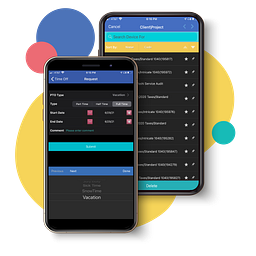
Empire SUITE
Source
HighLevel
Destination

Compatibility
10 of 10
objects map 1:1 between Empire SUITE and HighLevel.
Complexity
BStandard
Timeline
48–72 hours
Overview
Empire SUITE is a project-accounting and ERP suite from WSG Systems built for multi-office, multi-currency professional services operations. It stores client and project data with specialized fields for revenue recognition methodology, transfer pricing, and employee department assignments. HighLevel is an all-in-one CRM and marketing automation platform that uses a contact-company-opportunity model with Custom Objects for non-standard data. FlitStack AI migrates Empire SUITE company records, contacts, and associated time/expense metadata into HighLevel's standard objects and custom fields. We preserve Empire SUITE's employee number, department, revenue recognition type, and billing methodology as Custom Fields on HighLevel Contacts and Companies so historical context survives the transition. Workflows, automations, QuickBooks integrations, and Microsoft Office sync connections do not transfer — these must be rebuilt in HighLevel's workflow builder or reconnected as integrations. The migration runs via HighLevel's Contacts and Companies bulk import APIs, with Custom Objects loaded separately for project-related records that don't fit the standard contact schema.
Every standard and custom field arrives verified.
AI proposes the map; you confirm before any record moves.
Parent–child, lookups, and ownership stay linked.
Calls, emails, meetings — with original timestamps.
Documents, uploads, and inline notes move with the record.
Why teams make this switch
Leaving
What's pushing teams away
Choosing
What's pulling them in
Object mapping
Each row shows how a Empire SUITE object lands in HighLevel, including any object-level transformations, lookup resolution, or schema-design dependencies.
Typical mapping — final map is confirmed during the sample migration step.
Empire SUITE
Company
HighLevel
Company
1:1Empire SUITE company records map directly to HighLevel Companies using a one-to-one field correspondence. Company name, address, phone number, and website URL fields transfer as-is without transformation logic. Multi-currency configuration flags and inter-company relationship indicators from Empire SUITE are preserved as custom fields on the HighLevel Company record for ongoing reference and reporting within the CRM environment.
Empire SUITE
Contact
HighLevel
Contact
1:1Empire SUITE contact records representing client representatives, billing contacts, and project managers map directly to HighLevel Contacts. Core identity fields including name, email address, phone number, and role designation transfer without modification. The contact's associated company linkage is resolved during migration by matching the contact's company name against the migrated HighLevel Company record to establish proper foreign-key relationships.
Empire SUITE
Employee
HighLevel
User / Custom Field on Contact
1:1Empire SUITE employees are not HighLevel users by default — they are source-system staff records. Employee number, department, and custom security role from Empire SUITE are stored as custom fields on the corresponding HighLevel Contact record so historical assignments are queryable in HighLevel.
Empire SUITE
Project
HighLevel
Custom Object (Project) or Opportunity
1:1Empire SUITE projects have no direct HighLevel equivalent. We create a Project Custom Object in HighLevel with fields for project name, status, budget, billing method (time-and-materials, fixed-price, scheduled), and revenue recognition type. Active projects may also create Opportunity records for CRM pipeline tracking.
Empire SUITE
Invoice
HighLevel
Custom Object (Invoice) or Note / Attachment
1:1Empire SUITE invoices do not map to any HighLevel native object. We export invoice data as CSV and import it into a custom Invoice Custom Object with invoice number, date, amount, status, and related company/contact lookups. Line-item detail is preserved as JSON in a long-text field or as a linked attachment.
Empire SUITE
Time Entry
HighLevel
Custom Object (Time Entry)
1:1Billable time entries from Empire SUITE are migrated into a Time Entry Custom Object linked to the Contact (employee) and Project Custom Object. Entry date, hours, billing rate, and project name are stored as separate fields so the data supports HighLevel workflow triggers based on time entry conditions.
Empire SUITE
Expense Report
HighLevel
Custom Object (Expense)
1:1Expense report records from Empire SUITE are migrated into a dedicated Expense Custom Object with separate fields for expense date, amount, category, reimbursement status, and associated project reference. This schema preserves the financial context of each expense while enabling HighLevel workflow conditions on individual expense attributes. Approval workflow flags and routing rules from Empire SUITE are not transferred — those business processes must be rebuilt as HighLevel workflow conditions or approval steps if required in the target system.
Empire SUITE
Department
HighLevel
Custom Field or Tag on Contact
1:1Empire SUITE department codes and inter-department transfer pricing rules are preserved as custom fields on Contact records and as Tags that can trigger HighLevel workflow routing. Department-to-department billing rates are stored as a lookup table Custom Object for reference by finance teams.
Empire SUITE
QuickBooks Integration
HighLevel
Stripe / Payment Integration + Custom Object
1:1Empire SUITE's bidirectional QuickBooks sync for invoicing and bill payment has no HighLevel equivalent. We export the last sync state and advise rebuilding payment collection via HighLevel's Stripe integration. Historical QuickBooks linkage metadata is preserved as a custom field for audit purposes.
Empire SUITE
Microsoft Office Attachments
HighLevel
HighLevel Files / Attachments
1:1Documents attached to Empire SUITE invoices, projects, or contacts are downloaded and re-uploaded to HighLevel Files, linked to the corresponding Contact, Company, or Custom Object record. File size limits from HighLevel's upload API apply — large files may require zipping or external storage linking.
| Empire SUITE | HighLevel | Compatibility | |
|---|---|---|---|
| Company | Company1:1 | Fully supported | |
| Contact | Contact1:1 | Fully supported | |
| Employee | User / Custom Field on Contact1:1 | Fully supported | |
| Project | Custom Object (Project) or Opportunity1:1 | Fully supported | |
| Invoice | Custom Object (Invoice) or Note / Attachment1:1 | Fully supported | |
| Time Entry | Custom Object (Time Entry)1:1 | Fully supported | |
| Expense Report | Custom Object (Expense)1:1 | Fully supported | |
| Department | Custom Field or Tag on Contact1:1 | Fully supported | |
| QuickBooks Integration | Stripe / Payment Integration + Custom Object1:1 | Fully supported | |
| Microsoft Office Attachments | HighLevel Files / Attachments1:1 | Fully supported |
Gotchas + challenges
Platform-specific issues from each side, plus the pair-specific challenges that don't show up on either platform's page on its own.
Empire SUITE gotchas
Custom Field-based Security Permissions vary by deployment
Empire TIME module may have isolated data stores
No public API documentation found in research
HighLevel gotchas
Sub-account architecture creates isolated data silos per client
Usage-based telecom and AI costs are not in the subscription price
Workflows have no native equivalent in most destination CRMs
API rate limits cap bulk migration throughput at 100 requests per 10 seconds per sub-account
White-label configuration and branding assets do not export via API
Pair-specific challenges
Migration approach
Audit Empire SUITE data model and export reference metadata
We connect to Empire SUITE via scoped read access and catalog all company records, contact records, project records, and associated financial metadata (invoices, time entries, expenses). We identify custom fields, department codes, revenue recognition types, and transfer pricing flags that require HighLevel Custom Object or custom field creation. The audit output is a migration plan with a table of source objects, destination objects, and transformation logic for your review before any data moves.
Create HighLevel Custom Objects and custom fields
Based on the audit, we create the Custom Object definitions in your HighLevel sub-account: Project, Invoice, Time Entry, and Expense Custom Objects with all required fields. We also create custom fields on the standard Contact and Company objects for Empire SUITE metadata (employee number, department code, security role, revenue recognition type, currency code, transfer pricing flag). We deliver a field-definition checklist so your HighLevel admin can verify the schema before import begins.
Migrate Companies, then Contacts, then Custom Objects
The load order matters because HighLevel's import system resolves company links on Contact records. We migrate Companies first, then Contacts with their resolved Company lookups, then Custom Objects (Project, Invoice, Time Entry, Expense) with their relationship fields. We validate record counts at each stage and surface any orphan records (contacts without a matched company, time entries without a matched project) for your team to resolve before the next stage starts.
Run sample migration with field-level diff
A representative slice of 100–500 records migrates first, spanning contacts, companies, projects, and invoices. We generate a field-level diff report comparing source values against destination values for every mapped field. You review the diff to confirm revenue recognition types, department codes, and invoice statuses landed correctly before the full migration commits. Any field mapping adjustments are made and the sample re-runs until the diff passes.
Execute full migration with delta-pickup window
The full migration runs against your HighLevel sub-account. A delta-pickup window of 24–48 hours captures any records created or modified in Empire SUITE during the cutover period. Our audit log records every operation — record created, record updated, relationship resolved. One-click rollback reverts the full migration if reconciliation fails. After rollback confirmation, your team can re-export from Empire SUITE and restart the cutover with fresh delta data.
Platform deep dives
Empire SUITE
Source
Strengths
Weaknesses
HighLevel
Destination
Strengths
Weaknesses
Complexity grading
Standard CRM migration. 2 of 8 objects need a mapping; the rest are 1:1.
Overall complexity
Standard migration
Derived from compatibility, mapping clarity, API constraints, and data volume across Empire SUITE and HighLevel.
Object compatibility
2 of 8 objects need a mapping; the rest are 1:1.
Field mapping clarity
Field mapping is derived from defaults — final spec confirmed during the sample migration.
Timeline complexity
8-object category — typical timelines run 2–7 days end-to-end.
API constraints
Empire SUITE: Not publicly documented..
Data volume sensitivity
Empire SUITE doesn't expose a bulk API — REST + parallelization used for high-volume runs.
Estimator
Rule-based pricing — no per-record fees, no manual quotes. Migrations over 2M records are scoped individually.
Step 1
Pick a category, then your source and destination platforms.
Category
FAQ
Answers to the questions buyers ask most during Empire SUITE to HighLevel migration scoping. Not seeing yours? Book a call.
Walk through your Empire SUITE to HighLevel migration with a real engineer — 30 minutes, free, written quote within 24 hours.
Book a free 30 minute consultationAdjacent paths
Other ways to leave Empire SUITE









Other ways to arrive at HighLevel









Popular CRM migrations


Ready when you are
Tell us record counts and timeline. We'll come back with a written quote inside 1 business day — no commitment, no sales pitch.
