CRM migration
Field-level mapping, validation, and rollback between Empire SUITE and Zoho CRM. We move data and schema; workflows are rebuilt natively in Zoho CRM.
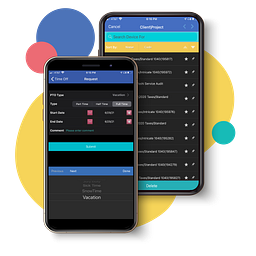
Empire SUITE
Source
Zoho CRM
Destination

Compatibility
11 of 12
objects map 1:1 between Empire SUITE and Zoho CRM.
Complexity
BStandard
Timeline
24–72 hours
Overview
Empire Suite stores CRM data across contacts, companies, deals, activities, and custom objects, with owner assignment tied to user email addresses. Zoho CRM models the same core entities — Leads, Contacts, Accounts, Deals, Tasks, Events, and Notes — but uses different field naming conventions and relationship architectures. FlitStack AI maps Empire Suite contacts to Zoho CRM Contacts (or Leads based on record type), companies to Accounts, and deals to Zoho Deals with stage value mapping applied per pick-list. We use Zoho's Bulk API for high-volume record writes while pacing against API credit limits per tier. Empire Suite automations, workflows, and reporting rules do not migrate — we deliver a Zoho Blueprint rebuild plan so your admin reconstructs each process manually. Attachments are re-uploaded to Zoho's file storage, and any Empire Suite custom fields without Zoho equivalents are created as custom fields before the migration runs. A 24–48 hour delta pickup window captures records modified during cutover so Zoho reflects the final source state at go-live.
Every standard and custom field arrives verified.
AI proposes the map; you confirm before any record moves.
Parent–child, lookups, and ownership stay linked.
Calls, emails, meetings — with original timestamps.
Documents, uploads, and inline notes move with the record.
Why teams make this switch
Leaving
What's pushing teams away
Choosing
What's pulling them in
Object mapping
Each row shows how a Empire SUITE object lands in Zoho CRM, including any object-level transformations, lookup resolution, or schema-design dependencies.
Typical mapping — final map is confirmed during the sample migration step.
Empire SUITE
Contact
Zoho CRM
Contact
1:1Empire Suite contacts map directly to Zoho CRM Contacts. Email, phone, and address fields transfer as-is. If the source record has no associated company, it lands as a standalone Zoho Contact with no AccountId — your admin links it manually or via import matching on email domain.
Empire SUITE
Contact (status = inactive/archived)
Zoho CRM
Lead
1:manyEmpire Suite contacts marked as archived or inactive route to Zoho CRM Leads to preserve a historical record without cluttering the active Contact list. Active contacts remain Contacts in Zoho. The split is based on a status field value in Empire Suite identified during discovery.
Empire SUITE
Company
Zoho CRM
Account
1:1Empire Suite companies map to Zoho CRM Accounts using direct field translation. Company name becomes Account Name, while the website, industry classification, and employee count fields transfer directly without transformation. Parent-company hierarchies in Empire Suite map to Zoho's Account hierarchy via the Parent Account lookup field, maintaining organizational structure across the migration.
Empire SUITE
Deal
Zoho CRM
Deal
1:1Empire Suite deals map to Zoho CRM Deals with stage value mapping applied to match the target pipeline layout. Deal name, amount, expected close date, and owner all transfer directly. Stage names are translated value-by-value against Zoho's Stage pick-list options for the designated pipeline, ensuring consistent deal lifecycle representation in the destination system.
Empire SUITE
Pipeline
Zoho CRM
Pipeline
1:1Empire Suite pipelines map to Zoho CRM Deal Pipelines on a 1:1 basis. Each pipeline's stage sequence transfers as-is. Stage probabilities transfer as optional numeric fields if the source stores them — Zoho's Stage probability field is scoped per pipeline layout.
Empire SUITE
Activity (Call / Email / Meeting)
Zoho CRM
Task / Event
1:1Empire Suite call and email records map to Zoho Tasks with Type field set to Call or Email respectively. Meetings map to Zoho Events with original start and end times preserved. Each activity links to its parent Contact or Deal record via the WhatId field in Zoho.
Empire SUITE
Note
Zoho CRM
Note
1:1Empire Suite notes migrate as Zoho CRM Notes, preserving the original content where possible. Plain-text notes transfer directly without modification. When source notes contain rich-text formatting with unsupported HTML markup, FlitStack extracts the underlying text content and strips incompatible tags to ensure readability and proper display within Zoho's Note module interface.
Empire SUITE
Attachment / File
Zoho CRM
Attachment
1:1File attachments against Empire Suite records are downloaded and re-uploaded to Zoho CRM Attachments. Zoho's 25 MB per file limit applies — files exceeding this are flagged for splitting or alternative delivery. Attachments link to the same parent record in Zoho that they referenced in Empire Suite.
Empire SUITE
Custom Object
Zoho CRM
Custom Module
1:1Empire Suite custom objects map to Zoho CRM custom modules. The _C naming convention is applied to the module's API name. Custom module relationships that use N:N linking in Empire Suite require manual junction module setup in Zoho — we document the required relationships in the migration plan.
Empire SUITE
User / Owner
Zoho CRM
User
1:1Empire Suite owner references resolve to Zoho CRM Users by email address match. Unmatched owner IDs are flagged before migration so your team either creates the corresponding Zoho user first or assigns records to a fallback owner. No record lands without a valid Zoho OwnerId.
Empire SUITE
Workflow / Automation
Zoho CRM
Blueprint + Workflow
1:1Empire Suite workflows, approval rules, and automated assignment logic do not migrate to Zoho CRM. FlitStack audits the source automation configuration and delivers a Zoho Blueprint + Workflow rebuild plan organized by module and trigger type. Rebuilt automations are your admin's responsibility using Zoho's visual workflow builder.
Empire SUITE
Report / Dashboard
Zoho CRM
Report / Analytics
1:1Empire Suite reports and dashboards do not transfer. The underlying data migrates, so Zoho CRM's native reporting picks up the same records. FlitStack delivers a report inventory document listing every source report's metric and filter logic so your admin can rebuild each one in Zoho Analytics or the native report builder.
| Empire SUITE | Zoho CRM | Compatibility | |
|---|---|---|---|
| Contact | Contact1:1 | Fully supported | |
| Contact (status = inactive/archived) | Lead1:many | Fully supported | |
| Company | Account1:1 | Fully supported | |
| Deal | Deal1:1 | Fully supported | |
| Pipeline | Pipeline1:1 | Fully supported | |
| Activity (Call / Email / Meeting) | Task / Event1:1 | Fully supported | |
| Note | Note1:1 | Fully supported | |
| Attachment / File | Attachment1:1 | Fully supported | |
| Custom Object | Custom Module1:1 | Fully supported | |
| User / Owner | User1:1 | Fully supported | |
| Workflow / Automation | Blueprint + Workflow1:1 | Fully supported | |
| Report / Dashboard | Report / Analytics1:1 | Fully supported |
Gotchas + challenges
Platform-specific issues from each side, plus the pair-specific challenges that don't show up on either platform's page on its own.
Empire SUITE gotchas
Custom Field-based Security Permissions vary by deployment
Empire TIME module may have isolated data stores
No public API documentation found in research
Zoho CRM gotchas
API access requires Professional tier or above
Subform fields do not export cleanly via CSV
API credit consumption is non-linear
Export download links expire in 7 days
Owner (User) assignments require pre-mapped user IDs
Pair-specific challenges
Migration approach
Discovery and data audit
FlitStack connects to Empire Suite via read-only API access and extracts a full data dump covering all modules, custom fields, and attachment metadata. We audit record counts, identify orphaned relationships, flag multi-select field formats, and produce a preliminary field mapping spreadsheet. This phase also captures the Empire Suite automation inventory so the rebuild plan is ready before data migration begins.
Zoho CRM schema pre-creation
Before data moves, FlitStack creates any missing custom fields and custom modules in Zoho CRM using the Zoho API. Multi-select pick-lists are pre-populated with the value options sourced from Empire Suite so the import job does not reject unmapped pick-list values. We also verify that Zoho user accounts exist for every owner email address in the source data, validating API permissions and confirming the correct data center region is configured for the migration target environment.
Data cleaning and transformation
The extracted Empire Suite data undergoes cleaning and transformation before loading. Duplicates are identified and flagged using record fingerprinting. Multi-select comma-separated values are split into individual pick-list entries mapped to Zoho's multi-select format. Date formats are normalized to ISO 8601 to match Zoho's expected input. Null or placeholder values are resolved per your specified rule — skip, default, or flag for manual review. Attachments are downloaded from Empire Suite blob storage in parallel with the data cleaning phase to maximize throughput.
Sequenced migration with sandbox validation
Migration runs in three sequenced phases following Zoho's foreign key constraints: (1) Accounts, (2) Contacts and Leads, then (3) Deals and Activities. A representative slice — typically 100–500 records per module — migrates first into a Zoho sandbox. We generate a field-level diff report comparing source values against Zoho values so you can verify mapping correctness before the full run commits.
Full migration and delta cutover
The full dataset migrates to Zoho CRM production using Zoho's Bulk API, paced against API credit limits. A 24–48 hour delta window captures records created or modified during the cutover period. Attachments are re-uploaded to Zoho's file storage with parent record links rebuilt using the newly assigned Zoho record IDs. FlitStack generates an audit log and one-click rollback is available if reconciliation identifies missing records or mapping errors.
Post-migration validation and handoff
FlitStack validates record counts across all modules, spot-checks field-level accuracy on a random sample of migrated records, and confirms that custom field values transferred correctly. We deliver the automation rebuild plan, report inventory document, and final field mapping spreadsheet as a handoff package. Your Zoho admin reviews the Zoho CRM instance before go-live and flags any discrepancies for FlitStack to address within the included post-migration support window.
Platform deep dives
Empire SUITE
Source
Strengths
Weaknesses
Zoho CRM
Destination
Strengths
Weaknesses
Complexity grading
Standard CRM migration. 1 of 8 objects need a mapping; the rest are 1:1.
Overall complexity
Standard migration
Derived from compatibility, mapping clarity, API constraints, and data volume across Empire SUITE and Zoho CRM.
Object compatibility
1 of 8 objects need a mapping; the rest are 1:1.
Field mapping clarity
Field mapping is derived from defaults — final spec confirmed during the sample migration.
Timeline complexity
8-object category — typical timelines run 2–7 days end-to-end.
API constraints
Empire SUITE: Not publicly documented..
Data volume sensitivity
Empire SUITE doesn't expose a bulk API — REST + parallelization used for high-volume runs.
Estimator
Rule-based pricing — no per-record fees, no manual quotes. Migrations over 2M records are scoped individually.
Step 1
Pick a category, then your source and destination platforms.
Category
FAQ
Answers to the questions buyers ask most during Empire SUITE to Zoho CRM migration scoping. Not seeing yours? Book a call.
Walk through your Empire SUITE to Zoho CRM migration with a real engineer — 30 minutes, free, written quote within 24 hours.
Book a free 30 minute consultationAdjacent paths
Other ways to leave Empire SUITE









Other ways to arrive at Zoho CRM









Popular CRM migrations


Ready when you are
Tell us record counts and timeline. We'll come back with a written quote inside 1 business day — no commitment, no sales pitch.
