CRM migration
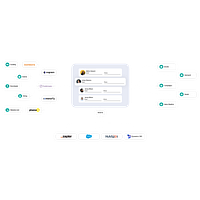
Field-level mapping, validation, and rollback between Orderry and HighLevel. We move data and schema; workflows are rebuilt natively in HighLevel.

Orderry
Source
HighLevel
Destination

Compatibility
12 of 12
objects map 1:1 between Orderry and HighLevel.
Complexity
BStandard
Timeline
48–72 hours
Overview
Orderry organizes field service operations around clients, work orders, products, and invoices — treating each as a separate operational entity with time-tracking and inventory consumption tied to the job. HighLevel consolidates these concepts into a CRM-centric model: contacts (clients), opportunities (deals/work orders), tags for categorization, and custom fields for service-specific metadata. The migration carries Orderry's client profiles, work order history with technician assignments, product inventory records, and line-item data into HighLevel contacts, opportunities, and custom objects. We surface Orderry's job-status workflow as HighLevel pipeline stages, map product inventory to custom fields on opportunity records, and preserve original work order create dates as custom datetime fields. Workflows, automations, and inventory thresholds are not migratable — Orderry's workflow rules must be rebuilt as HighLevel Workflows, and inventory reorder rules require manual reconfiguration in HighLevel settings. The migration mechanism uses Orderry's CSV export endpoint for clients, products, and work orders, then bulk-imports into HighLevel via the Contacts and Opportunities API with field-level mapping validated before commit.
Every standard and custom field arrives verified.
AI proposes the map; you confirm before any record moves.
Parent–child, lookups, and ownership stay linked.
Calls, emails, meetings — with original timestamps.
Documents, uploads, and inline notes move with the record.
Why teams make this switch
Leaving
What's pushing teams away
Choosing
What's pulling them in
Object mapping
Each row shows how a Orderry object lands in HighLevel, including any object-level transformations, lookup resolution, or schema-design dependencies.
Typical mapping — final map is confirmed during the sample migration step.
Orderry
Client
HighLevel
Contact
1:1Orderry client profiles map directly to HighLevel contacts. Client name, phone, email, address, and custom fields transfer as contact fields. Orderry client notes become HighLevel contact notes. A separate Companies record can be created if the client is a business entity.
Orderry
Work Order / Job
HighLevel
Opportunity
1:1Orderry work orders become HighLevel opportunities in a dedicated Service Pipeline. Job status (New, In Progress, Completed, Invoiced) maps to pipeline stage values. Work order number, description, and assigned technician transfer as opportunity fields and custom fields, preserving any internal references and timestamps for downstream reporting.
Orderry
Work Order Status
HighLevel
Pipeline Stage
1:1Each Orderry work order status value maps to a corresponding HighLevel pipeline stage, ensuring that the lifecycle of a job is represented accurately in the CRM. Status transitions are preserved as stage‑change timestamps stored in custom datetime fields, which allows you to build reports on job duration and identify bottlenecks across the pipeline.
Orderry
Product / Inventory Item
HighLevel
Custom Object (Products)
1:1Orderry product catalog does not have a native HighLevel equivalent. Products migrate as a custom object with fields for name, SKU, unit price, stock quantity, and reorder level. HighLevel does not support automatic inventory deduction; reorder logic requires Workflow rebuild.
Orderry
Work Order Line Item
HighLevel
Opportunity Line Item
1:1Products and services added to Orderry work orders transfer as line items on the HighLevel opportunity, preserving unit price, quantity, and discount information. Taxes and rounding rules are recorded as notes on the opportunity to ensure financial accuracy and to support any future invoicing or reporting needs.
Orderry
Employee / Technician
HighLevel
User
1:1Orderry employee records with name, email, and role transfer to HighLevel users, allowing technician assignments on opportunities, tasks, and workflow actions. Email matching resolves the correct HighLevel user ID, and any inactive Orderry employees become inactive HighLevel users to reflect current staffing levels.
Orderry
Estimate / Quote
HighLevel
Opportunity
1:1Orderry estimates map to HighLevel opportunities either in a separate Estimates pipeline or as a custom field flag on the main opportunity, preserving estimate total, line items, and approval status. Accepted estimates can trigger stage progression via a HighLevel Workflow, ensuring that your sales process continues smoothly after conversion.
Orderry
Invoice
HighLevel
Custom Object (Invoices)
1:1Orderry invoices transfer as records in a custom Invoices object linked to the opportunity, storing invoice number, date, total, balance due, and payment status as custom fields. Because HighLevel lacks native invoicing, these records serve as reference data for reconciliation, and your team can update the payment status through manual entry or Workflow‑driven triggers.
Orderry
Location
HighLevel
Sub-Account / Custom Field
1:1Orderry multi‑location data requires a migration decision: either create HighLevel sub‑accounts per location to preserve isolation and location‑specific access controls, or add a Location__c custom field on contacts and opportunities for a single‑account view. FlitStack delivers a location‑mapping worksheet during the pre‑migration audit, guiding your team through the choice and detailing how inventory and employee assignments will be distributed.
Orderry
Attachment / Document
HighLevel
Contact File / Opportunity File
1:1Orderry file attachments on work orders and client profiles are uploaded to HighLevel as files linked to the corresponding contact or opportunity record, preserving the original file name and metadata. Note that HighLevel imposes file size limits per record; any files exceeding these limits may need to be stored externally and referenced via a URL custom field.
Orderry
Time Entry / Job Timer
HighLevel
Custom Field / Activity
1:1Orderry time entries linked to work orders become custom fields on the HighLevel opportunity, capturing total hours worked, hourly rate, and labor cost. The original time entry timestamps are stored in a custom datetime field, enabling technician performance reporting, payroll integration, and historical analysis of labor allocation across jobs.
Orderry
Custom Fields (Work Order)
HighLevel
Custom Fields (Opportunity)
1:1Orderry custom fields on work orders—such as service type, priority level, dispatch method, or warranty flag—migrate as custom fields on the HighLevel opportunity object, preserving their data type and pick‑list values. Field type matching is enforced during migration: pick‑list to pick‑list, text to text, date to date, ensuring data integrity and enabling consistent filtering and reporting.
| Orderry | HighLevel | Compatibility | |
|---|---|---|---|
| Client | Contact1:1 | Fully supported | |
| Work Order / Job | Opportunity1:1 | Fully supported | |
| Work Order Status | Pipeline Stage1:1 | Fully supported | |
| Product / Inventory Item | Custom Object (Products)1:1 | Fully supported | |
| Work Order Line Item | Opportunity Line Item1:1 | Fully supported | |
| Employee / Technician | User1:1 | Fully supported | |
| Estimate / Quote | Opportunity1:1 | Fully supported | |
| Invoice | Custom Object (Invoices)1:1 | Fully supported | |
| Location | Sub-Account / Custom Field1:1 | Fully supported | |
| Attachment / Document | Contact File / Opportunity File1:1 | Fully supported | |
| Time Entry / Job Timer | Custom Field / Activity1:1 | Fully supported | |
| Custom Fields (Work Order) | Custom Fields (Opportunity)1:1 | Fully supported |
Gotchas + challenges
Platform-specific issues from each side, plus the pair-specific challenges that don't show up on either platform's page on its own.
Orderry gotchas
No public API for automated data export
Out-of-stock items cannot be added from product list
Hobby plan has hard caps with no expansion path
Annual pricing discount not shown in base prices
HighLevel gotchas
Sub-account architecture creates isolated data silos per client
Usage-based telecom and AI costs are not in the subscription price
Workflows have no native equivalent in most destination CRMs
API rate limits cap bulk migration throughput at 100 requests per 10 seconds per sub-account
White-label configuration and branding assets do not export via API
Pair-specific challenges
Migration approach
Pre-migration audit and source export
FlitStack AI connects to Orderry via scoped read access and exports clients, work orders, products, invoices, employees, and attachments as structured CSVs. We validate record counts, identify custom fields, and document work order status values and inventory thresholds. The audit worksheet confirms which Orderry locations map to HighLevel sub-accounts or custom fields before field mapping begins, and we generate a data dictionary to clarify each exported field's purpose.
Schema setup in HighLevel
Before data moves, your HighLevel admin (or our team) creates the pipeline, stages, custom objects (Products, Invoices), and custom fields required for the migration. We deliver a schema setup plan based on your Orderry work order status values, product categories, custom field count, and location strategy so HighLevel is schema-ready before validation runs. The plan also outlines any required API permissions for the custom objects.
Field-level mapping and sample migration
FlitStack AI maps every Orderry field to its HighLevel equivalent per the field mapping plan, including value mappings for status pick-lists and technician email-to-user resolution. A representative sample (typically 100–500 records spanning clients, work orders, and products) migrates first. We generate a field-level diff so you can verify stage mapping, custom field population, and user assignment before the full run commits.
Full migration with delta-pickup
The full Orderry dataset migrates to HighLevel: clients to contacts, work orders to opportunities in the Service Pipeline, products to the Products custom object, and invoices to the Invoices custom object. A delta-pickup window (typically 24–48 hours) captures any new or modified records created in Orderry during cutover. Audit logs capture every operation, and one-click rollback is available if reconciliation identifies data integrity issues.
Workflow rebuild handoff and go-live support
Orderry workflow definitions are exported as a structured rebuild reference document. Your HighLevel admin uses this to reconstruct status-change triggers, email notifications, and task assignments in the HighLevel Workflow Builder. FlitStack provides a 30-day post-migration support window for data correction, re-mapping, and custom field adjustments during the transition period, and we can schedule a walkthrough of the new workflow design to ensure nothing is missed.
Platform deep dives
Orderry
Source
Strengths
Weaknesses
HighLevel
Destination
Strengths
Weaknesses
Complexity grading
Standard CRM migration. 2 of 8 objects need a mapping; the rest are 1:1.
Overall complexity
Standard migration
Derived from compatibility, mapping clarity, API constraints, and data volume across Orderry and HighLevel.
Object compatibility
2 of 8 objects need a mapping; the rest are 1:1.
Field mapping clarity
Field mapping is derived from defaults — final spec confirmed during the sample migration.
Timeline complexity
8-object category — typical timelines run 2–7 days end-to-end.
API constraints
Orderry: 5 requests per second per documented Orderry help guide..
Data volume sensitivity
Orderry doesn't expose a bulk API — REST + parallelization used for high-volume runs.
Estimator
Rule-based pricing — no per-record fees, no manual quotes. Migrations over 2M records are scoped individually.
Step 1
Pick a category, then your source and destination platforms.
Category
FAQ
Answers to the questions buyers ask most during Orderry to HighLevel migration scoping. Not seeing yours? Book a call.
Walk through your Orderry to HighLevel migration with a real engineer — 30 minutes, free, written quote within 24 hours.
Book a free 30 minute consultationAdjacent paths
Other ways to leave Orderry









Other ways to arrive at HighLevel
Popular CRM migrations


Ready when you are
Tell us record counts and timeline. We'll come back with a written quote inside 1 business day — no commitment, no sales pitch.