ERP migration
Field-level mapping, validation, and rollback between Integra ERP and Dolibarr ERP. We move data and schema; workflows are rebuilt natively in Dolibarr ERP.
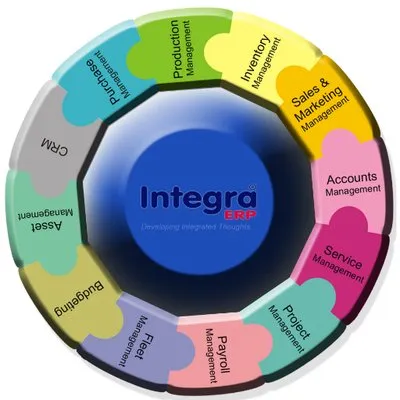
Integra ERP
Source
Dolibarr ERP
Destination

Compatibility
10 of 12
objects map 1:1 between Integra ERP and Dolibarr ERP.
Complexity
BStandard
Timeline
3-5 weeks
Overview
Migrating from Integra ERP to Dolibarr requires a non-API extraction pipeline because Integra ERP publishes no public REST or SOAP endpoint. We extract data through direct database queries against on-premise instances, parse proprietary storage formats, and load into Dolibarr through its CSV-based import module in strict dependency order: Chart of Accounts first, then Customers and Vendors, then Items, then open AP/AR balances, then inventory ledgers, then historical Sales Orders. Integra ERP organizes data by branch or warehouse location; we aggregate stock values by item and map them to Dolibarr warehouse or location codes. Open payable and receivable balances migrate as opening-balance records rather than individual invoices. We preserve journal-entry relationships so the destination trial balance reconciles, and we flag that embedded documents, scanned files, and proprietary attachments cannot be extracted through any documented mechanism. Workflows, automations, and report definitions do not migrate; we deliver a written inventory for the customer's admin to rebuild in Dolibarr's modular configuration.
Every standard and custom field arrives verified.
AI proposes the map; you confirm before any record moves.
Parent–child, lookups, and ownership stay linked.
Calls, emails, meetings — with original timestamps.
Documents, uploads, and inline notes move with the record.
Why teams make this switch
Leaving
What's pushing teams away
Choosing
What's pulling them in
Object mapping
Each row shows how a Integra ERP object lands in Dolibarr ERP, including any object-level transformations, lookup resolution, or schema-design dependencies.
Typical mapping — final map is confirmed during the sample migration step.
Integra ERP
Chart of Accounts
Dolibarr ERP
Accounting (plan comptable)
lossyIntegra ERP stores account codes and account-type classifications across multiple tables. We extract the full account hierarchy, map each source account code to a Dolibarr accounting account number using a customer-provided account-mapping spreadsheet, and preserve account-type (asset, liability, income, expense). Dolibarr supports PCG (French), SYSCOHADA, and generic international accounting plans; we configure the target plan type during schema design and validate the trial balance after load to confirm debits equal credits.
Integra ERP
Customers
Dolibarr ERP
Third Parties (type: Customer)
1:1Integra ERP Customer records (contact details, billing address, GST registration, credit terms) map directly to Dolibarr Third Party records with the Customer type flag set. We preserve the open AR balance as an opening-balance receivable entry in Dolibarr's accounting module. Customer-specific pricing rules in Integra migrate as price-supervisor rules attached to the Third Party in Dolibarr.
Integra ERP
Vendors
Dolibarr ERP
Third Parties (type: Supplier)
1:1Vendor master data including payment terms, GST/VAT registration, and address records map to Dolibarr Third Party records with the Supplier type flag. Vendor-specific item pricing (where present in Integra's vendor-price tables) migrates as supplier-price lists in Dolibarr's Product module, linked to the relevant Supplier Third Party.
Integra ERP
Items (Products)
Dolibarr ERP
Products / Services
1:1Integra Items carry classification codes, BOM structures (for manufacturers), and branch-specific stock values. We flatten BOM hierarchies into individual product-component relationships in Dolibarr, map Integra's product types (traded goods, raw materials, finished goods) to Dolibarr's product classification, and preserve the original SKU as the ref field. Branch-level stock values aggregate by item and map to Dolibarr warehouse locations.
Integra ERP
Open AP / AR
Dolibarr ERP
Accountancy: Outstanding Receivables and Payables
1:1Outstanding payable and receivable balances in Integra ERP must migrate as opening-balance records in Dolibarr rather than individual invoice entries, because Dolibarr's import module handles historical invoices through a separate accounting-import profile. We extract the net outstanding amount per vendor and customer, create corresponding accounting entries with open = 1 flag, and set the due date to migration date for aging-report accuracy.
Integra ERP
Inventory Ledgers
Dolibarr ERP
Stock (Warehouse module)
1:1Integra ERP stores stock quantities by branch or warehouse location. We aggregate stock values by item across all branches, resolve the destination warehouse or location code in Dolibarr (using a customer-provided branch-to-warehouse mapping), and preserve serial and batch tracking fields where present in the source. Stock-reconciliation counts are loaded as inventory movements rather than direct stock updates to maintain an audit trail.
Integra ERP
Sales Orders (Open and Historical)
Dolibarr ERP
Orders
1:1Integra ERP stores Sales Order headers and line items across linked tables. We extract header-level fields (order number, date, customer reference, order status) and line-level fields (item, quantity, unit price, tax code) as a flattened CSV, then load through Dolibarr's Orders import profile. Order-status values map to Dolibarr workflow states using a status-mapping table agreed upon during scoping. Orders referencing voided customers are flagged and held for customer-admin resolution.
Integra ERP
Employees
Dolibarr ERP
HR / Users
1:1Integra ERP's employee management module exports employee master records including department assignment and basic compensation fields. We map these to Dolibarr User records (for system access) and HR module entries (for employee directory). Salary and compensation data migrates as informational records only; payroll processing remains outside standard Dolibarr scope unless the HR module with payroll extension is activated.
Integra ERP
Historical Transactions (Purchase Receipts, Journal Entries)
Dolibarr ERP
Accountancy: Various / Banking
1:1Full transaction history in Integra ERP spans multiple linked tables (header, line, tax, payment). We extract header-and-line pairs in dependency order, reconstruct the accounting double-entry using the account-mapping spreadsheet, and load through Dolibarr's accounting-import profile. Complex journal entries referencing multiple line items and tax codes require custom transformation scripts. We flag any transactions with missing account references for manual resolution before load.
Integra ERP
Custom Fields
Dolibarr ERP
ExtraFields
lossyIntegra ERP instances may carry organization-specific custom fields on Customer, Vendor, Item, or Transaction records. We audit the source schema for non-standard columns, map each to a Dolibarr ExtraFields entry (activated via the CustomFields module or native extrafields), and preserve data types (date, integer, varchar, select) during transformation. Dolibarr's ExtraFields are stored per object and can be managed through the setup interface post-migration.
Integra ERP
Documents (Attachments)
Dolibarr ERP
Not supported
1:1Integra ERP stores attachments, scanned documents, and PDFs inside the proprietary on-premise file system without a documented export mechanism. We extract any linked file paths from the database but cannot guarantee file integrity or accessibility. Dolibarr's document management module accepts uploaded files post-migration; the customer should plan a parallel document-archival project if attachment preservation is business-critical.
Integra ERP
Dealer / Branch Management
Dolibarr ERP
Multi-company or Project
1:1Integra ERP includes multi-branch dealer management for trading and distribution companies. We extract branch-level data (branch-specific customers, branch-specific inventory, branch-specific sales orders) and map to Dolibarr Projects (for reporting segregation) or multi-company configuration if Dolibarr's Multi-company module is activated. The customer chooses the scoping approach during discovery.
| Integra ERP | Dolibarr ERP | Compatibility | |
|---|---|---|---|
| Chart of Accounts | Accounting (plan comptable)lossy | Mapping required | |
| Customers | Third Parties (type: Customer)1:1 | Fully supported | |
| Vendors | Third Parties (type: Supplier)1:1 | Fully supported | |
| Items (Products) | Products / Services1:1 | Mapping required | |
| Open AP / AR | Accountancy: Outstanding Receivables and Payables1:1 | Mapping required | |
| Inventory Ledgers | Stock (Warehouse module)1:1 | Mapping required | |
| Sales Orders (Open and Historical) | Orders1:1 | Fully supported | |
| Employees | HR / Users1:1 | Fully supported | |
| Historical Transactions (Purchase Receipts, Journal Entries) | Accountancy: Various / Banking1:1 | Fully supported | |
| Custom Fields | ExtraFieldslossy | Fully supported | |
| Documents (Attachments) | Not supported1:1 | Fully supported | |
| Dealer / Branch Management | Multi-company or Project1:1 | Fully supported |
Gotchas + challenges
Platform-specific issues from each side, plus the pair-specific challenges that don't show up on either platform's page on its own.
Integra ERP gotchas
No public API for automated export
On-premise database format is proprietary
No documented data portability feature
Perpetual license does not include migration support
Dolibarr ERP gotchas
Foreign key constraint errors on cross-distribution database restore
SQL injection vulnerabilities in version 9.0.1
Custom fields stored as JSON in extraoptions require field-by-field deserialization
Decimal precision and rounding configuration affects price fields
No native iOS/Android app forces reliance on browser
Pair-specific challenges
Migration approach
Source access and extraction scoping
We coordinate with the customer's IT team to obtain read-only database credentials (or report-writer access for flat-file-only extraction), establish VPN or direct network connectivity, and map the Integra ERP schema against the active modules in use. We identify every table referenced by each active module (finance, inventory, sales, HR), document foreign-key relationships, and flag any proprietary encoding or encrypted fields that require pre-parsing. If database access is not available, we scope flat-file report exports and document which objects cannot be fully extracted.
Destination schema design and module activation
We configure Dolibarr based on the customer's active Integra ERP modules, activating only the corresponding Dolibarr modules (Third Parties, Products, Stock, Orders, Invoices, Accounting, HR, Projects). We design the account-mapping spreadsheet in collaboration with the customer's accountant, configure the target accounting plan (PCG, SYSCOHADA, or generic), set up warehouse locations matching the customer's branch structure, and define the Third Party type flags (Customer, Supplier, or both) for each migrated party. ExtraFields are created for any source custom fields identified during schema audit.
Dependency-ordered extraction in ETL pipeline
We build a custom extraction script that queries Integra ERP in strict dependency order: Chart of Accounts first (no dependencies), then Third Parties (Customers and Vendors), then Products/Items (may reference vendor codes), then open AP/AR balances (reference Third Parties and Accounts), then inventory ledgers (reference Products and warehouse codes), then Sales Orders (reference Third Parties, Products, and Accounts), then historical transactions (reference all prior entities). Each extraction phase outputs a normalized CSV with consistent date formatting (YYYY-MM-DD HH:MM:SS) and type-safe field values validated against Dolibarr's import profile.
Trial-load and reconciliation in staging environment
We run a trial migration into a staging Dolibarr instance using a representative subset of data (typically 10-20% of total record volume). The customer's accountant and operations lead review reconciled record counts (Accounts in, Third Parties in, Products in, Orders in), spot-check 25-50 random records against the Integra ERP source, and validate that the Dolibarr accounting trial balance nets to zero after opening-balance entries are loaded. Any mapping corrections, date-format issues, or account-reference gaps are resolved in this phase before production migration begins.
Production migration in dependency order with delta capture
We execute the full production migration into the live Dolibarr instance in the same dependency sequence used in staging. Each phase emits a row-count reconciliation report that we compare against the source record counts before the next phase begins. During the migration window, any records modified in Integra ERP after extraction are captured as a delta load. We do not freeze Integra ERP writes during migration; instead, we schedule a final delta pass at cutover and validate that no records were missed before declaring the migration complete.
Cutover, validation, and automation inventory handoff
We freeze Integra ERP writes at cutover, run the final delta migration, and validate that Dolibarr is self-consistent (all Third Parties have valid types, all Orders reference valid Third Parties, inventory stock matches expected aggregate). We deliver the full migration report including record counts per object, any records skipped with reason, and the account-mapping spreadsheet used. We also deliver a written inventory of Integra ERP automations (workflow triggers, scheduled tasks, alert rules) and report definitions requiring rebuild in Dolibarr's configuration interface. We support a 72-hour hypercare window for reconciliation issues raised by the customer's team.
Platform deep dives
Integra ERP
Source
Strengths
Weaknesses
Dolibarr ERP
Destination
Strengths
Weaknesses
Complexity grading
Standard ERP migration. 1 of 8 objects need a mapping; the rest are 1:1.
Overall complexity
Standard migration
Derived from compatibility, mapping clarity, API constraints, and data volume across Integra ERP and Dolibarr ERP.
Object compatibility
1 of 8 objects need a mapping; the rest are 1:1.
Field mapping clarity
Field mapping is derived from defaults — final spec confirmed during the sample migration.
Timeline complexity
8-object category — typical timelines run 2–7 days end-to-end.
API constraints
Integra ERP: Not publicly documented.
Data volume sensitivity
Integra ERP doesn't expose a bulk API — REST + parallelization used for high-volume runs.
Estimator
Rule-based pricing — no per-record fees, no manual quotes. Migrations over 2M records are scoped individually.
Step 1
Pick a category, then your source and destination platforms.
Category
FAQ
Answers to the questions buyers ask most during Integra ERP to Dolibarr ERP migration scoping. Not seeing yours? Book a call.
Walk through your Integra ERP to Dolibarr ERP migration with a real engineer — 30 minutes, free, written quote within 24 hours.
Book a free 30 minute consultationAdjacent paths
Other ways to leave Integra ERP
Other ways to arrive at Dolibarr ERP








Ready when you are
Tell us record counts and timeline. We'll come back with a written quote inside 1 business day — no commitment, no sales pitch.





