
Migrate your Integra ERP data
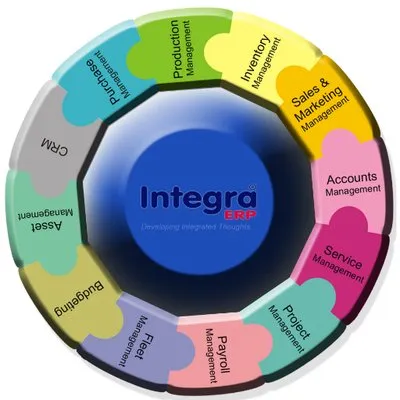
Integra ERP is an India-published ERP for retail, trading, and manufacturing SMEs that bundles supply-chain, inventory, and financials into one system, with cloud and on-premise options but no public API for programmatic export.
In its favor
Why people choose Integra ERP
The signal that keeps Integra ERP on the shortlist. Sourced from G2, Capterra, and customer scoping calls.
Industry-specific retail and trading modules purpose-built for Indian SME workflows, including multi-branch inventory visibility and dealer management, sourced from Capterra product description.
Lowest entry cost among comparable ERPs in the Indian SME segment with a one-time perpetual license starting at ₹500 per user, sourced from Capterra pricing listing.
Fully integrated centralized data management covering finance, inventory, supply chain, and CRM in a single platform without requiring separate integrations, sourced from softwarefinder.com overview.
Real-time production tracking for manufacturers from raw material procurement through finished goods dispatch, sourced from TechnologyCounter product description.
Mobile apps for distribution field teams and executive dashboards available as standard third-party plugins, sourced from integraerp.in modules page.
Perpetual license pricing model is rigid and does not accommodate distinct operational requirements, forcing customers with evolving workflows toward more flexible SaaS alternatives.
No public API is documented or available, preventing customers from integrating Integra ERP with modern BI, e-commerce, or automation tools, driving migrations to API-first platforms.
On-premise deployment requires dedicated Windows infrastructure and IT staff to maintain, creating hidden operational overhead that erodes the cost advantage for growing businesses.
Limited transparency in pricing tiers beyond the base ₹500 per-user cost, with no clear feature gating documentation, causing budget surprises during implementation.
Reasons to switch
Why people leave Integra ERP
The recurring reasons buyers give for replacing Integra ERP. Presented as facts, not knocks.
Platform scorecard
Strengths, weaknesses, and where Integra ERP fits
Grades across six dimensions, plus a SWOT-style view of where the platform shines and where it falls short.
SWOT — strengths, weaknesses, and use-case fit
Strengths
Weaknesses
Where it works
Where it struggles
Pricing tiers
Integra ERP pricing overview
Integra ERP uses a one-time perpetual license model starting at ₹500 per user with no recurring SaaS fee, though the vendor does not publicly publish feature-gating between tiers. Upper-tier pricing requires direct inquiry and is customized based on company size, industry, and deployment type.
Base
Tier 1 of 3
₹500 per user, one-time
What's included
Need help selecting your ERP?
Book a free 30 minute consultationPricing is informational. FlitStack AI does not bill on Integra ERP's schedule — see our quote-based pricing →
What gets migrated
Integra ERP object support
Object-by-object support for Integra ERP migrations. Per-pair details surface during scoping.
Chart of Accounts
Mapping requiredAccount structures vary by organization in Integra ERP. We map the source account codes to destination equivalents using a customer-provided account-mapping spreadsheet and preserve the account-type hierarchy (Asset, Liability, Equity, Revenue, Expense) to ensure the trial balance nets to zero post-migration.
Customers
Fully supportedCustomer records including contact details, billing addresses, and credit terms export cleanly from Integra ERP. We map each customer ID to the destination system and preserve open AR balances as of the migration cut-off date.
Vendors
Fully supportedVendor master data including payment terms, GST/VAT registration, and address records transfer directly. We preserve vendor-specific item pricing where it exists in the source data.
Items (Products)
Mapping requiredItems may carry Integra-specific classification codes, BOM structures for manufacturers, or branch-specific stock values. We flatten BOM hierarchies into individual item records and map branch-level stock quantities to destination inventory locations.
Open AP / AR
Mapping requiredOutstanding payable and receivable balances must be migrated as opening balances rather than individual invoices in most destination systems. We extract the net outstanding amount per vendor and customer, tag them as opening-balance entries, and note the migration-date cutoff so aging reports remain accurate.
Historical Transactions
Mapping requiredFull transaction history (sales orders, purchase receipts, journal entries) requires careful sequencing because Integra ERP stores line-item data across multiple linked tables. We extract header-and-line records together and map them to destination invoice or journal objects.
Inventory Ledgers
Mapping requiredStock quantities are branch or warehouse-specific in Integra ERP. We aggregate by item and map to destination warehouse or location codes. Serial and batch tracking fields are preserved where present.
Sales Orders
Mapping requiredOpen and closed sales orders export with their line items, pricing, and order-status fields. We map order-status values to destination workflow states and flag any orders that reference voided customers or items.
Employees
Fully supportedEmployee master records including department assignment and basic compensation fields are available from Integra ERP's employee management module. We transfer them as HR records in the destination system.
Documents
Not in this platformAttachments, scanned documents, and PDFs stored inside Integra ERP are not exposed via a documented export mechanism. We extract any linked file paths but cannot guarantee file integrity. Customers should separately archive document repositories.
| Object | Support | Notes |
|---|---|---|
| Chart of Accounts | Mapping required | Account structures vary by organization in Integra ERP. We map the source account codes to destination equivalents using a customer-provided account-mapping spreadsheet and preserve the account-type hierarchy (Asset, Liability, Equity, Revenue, Expense) to ensure the trial balance nets to zero post-migration. |
| Customers | Fully supported | Customer records including contact details, billing addresses, and credit terms export cleanly from Integra ERP. We map each customer ID to the destination system and preserve open AR balances as of the migration cut-off date. |
| Vendors | Fully supported | Vendor master data including payment terms, GST/VAT registration, and address records transfer directly. We preserve vendor-specific item pricing where it exists in the source data. |
| Items (Products) | Mapping required | Items may carry Integra-specific classification codes, BOM structures for manufacturers, or branch-specific stock values. We flatten BOM hierarchies into individual item records and map branch-level stock quantities to destination inventory locations. |
| Open AP / AR | Mapping required | Outstanding payable and receivable balances must be migrated as opening balances rather than individual invoices in most destination systems. We extract the net outstanding amount per vendor and customer, tag them as opening-balance entries, and note the migration-date cutoff so aging reports remain accurate. |
| Historical Transactions | Mapping required | Full transaction history (sales orders, purchase receipts, journal entries) requires careful sequencing because Integra ERP stores line-item data across multiple linked tables. We extract header-and-line records together and map them to destination invoice or journal objects. |
| Inventory Ledgers | Mapping required | Stock quantities are branch or warehouse-specific in Integra ERP. We aggregate by item and map to destination warehouse or location codes. Serial and batch tracking fields are preserved where present. |
| Sales Orders | Mapping required | Open and closed sales orders export with their line items, pricing, and order-status fields. We map order-status values to destination workflow states and flag any orders that reference voided customers or items. |
| Employees | Fully supported | Employee master records including department assignment and basic compensation fields are available from Integra ERP's employee management module. We transfer them as HR records in the destination system. |
| Documents | Not in this platform | Attachments, scanned documents, and PDFs stored inside Integra ERP are not exposed via a documented export mechanism. We extract any linked file paths but cannot guarantee file integrity. Customers should separately archive document repositories. |
Gotchas
What to watch for in Integra ERP migrations
Issues we've hit on past Integra ERP migrations, tagged by severity. FlitStack AI handles every one — surfacing them up front because buyer engineering teams want to know.
No public API for automated export
On-premise database format is proprietary
No documented data portability feature
Perpetual license does not include migration support
| Severity | Issue |
|---|---|
| High | No public API for automated export |
| High | On-premise database format is proprietary |
| Medium | No documented data portability feature |
| Medium | Perpetual license does not include migration support |
Leaving Integra ERP?
Where Integra ERP customers move next
6 destinations Integra ERP can migrate to.






How a Integra ERP migration works
Four steps, Integra ERP-specific
Connect
None documented into Integra ERP. Scopes limited to read-only on the data we move.
Map
We translate Integra ERP-specific structures (custom fields, objects, value lists) to the destination's model.
Sample
Test with a 50–200 record subset to validate Integra ERP quirks before production.
Migrate
Full migration with Integra ERP rate-limit handling. Rollback available throughout.
FAQ
Integra ERP migration FAQ
Answers to the questions buyers ask most during Integra ERP migration scoping. Not seeing yours? Book a call.
Can't find your answer?
Walk through your Integra ERP migration with a real engineer — 30 minutes, free, written quote within 24 hours.
Book a free 30 minute consultationReady when you are
Migrate Integra ERP.
Without the rebuild.
Free scoping call with a migration engineer. Tell us about your Integra ERP setup and destination — written quote back within a business day.