ERP migration
Field-level mapping, validation, and rollback between Integra ERP and Infor CloudSuite Corporate. We move data and schema; workflows are rebuilt natively in Infor CloudSuite Corporate.
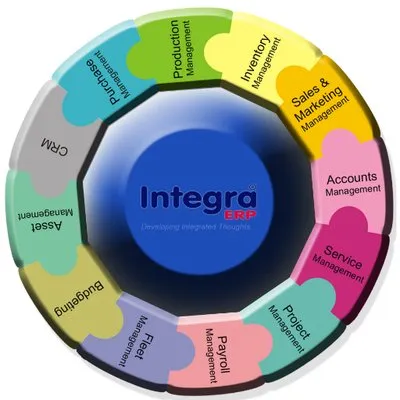
Integra ERP
Source
Infor CloudSuite Corporate
Destination

Compatibility
8 of 11
objects map 1:1 between Integra ERP and Infor CloudSuite Corporate.
Complexity
BStandard
Timeline
6-10 weeks
Overview
Migrating from Integra ERP to Infor CloudSuite requires extraction without an API because Integra ERP publishes no public REST or SOAP interface. We connect directly to the on-premise database or run structured flat-file exports to pull Customers, Vendors, Items, Open AP/AR ledgers, Chart of Accounts entries, Inventory ledgers, and historical Sales Orders. Infor CloudSuite is a multi-tenant cloud ERP hosted on AWS with industry-specific editions (Industrial, Distribution, Food & Beverage, and others) and an AI layer called Coleman. We load reference data first—Chart of Accounts, then Vendors and Customers, then Items—before moving to transactional records, and we use Infor's ION integration layer and data migration utilities to stage records. Integra ERP's BOM structures for manufacturers must be flattened into individual item records during transform. Workflows, automations, and custom reports built inside Integra ERP do not migrate; we deliver a written inventory of these for the customer's Infor administrator to rebuild using Infor OS and the standard configuration tools.
Every standard and custom field arrives verified.
AI proposes the map; you confirm before any record moves.
Parent–child, lookups, and ownership stay linked.
Calls, emails, meetings — with original timestamps.
Documents, uploads, and inline notes move with the record.
Source platform
Integra ERP platform overview
Scorecard, SWOT, gotchas, and pricing for Integra ERP.
Destination platform
Infor CloudSuite Corporate platform overview
Scorecard, SWOT, gotchas, and pricing for Infor CloudSuite Corporate.
Data migration guide
The complete Infor CloudSuite migration guide
Data model, import mechanisms, field mapping strategy, pitfalls, and cutover — by the engineers running it.
Destination checklist
Infor CloudSuite migration checklist
Pre- and post-cutover tasks for moving onto Infor CloudSuite Corporate.
Why teams make this switch
Leaving
What's pushing teams away
Choosing
What's pulling them in
Object mapping
Each row shows how a Integra ERP object lands in Infor CloudSuite Corporate, including any object-level transformations, lookup resolution, or schema-design dependencies.
Typical mapping — final map is confirmed during the sample migration step.
Integra ERP
Chart of Accounts
Infor CloudSuite Corporate
General Ledger Account (Financials)
1:1Integra ERP's Chart of Accounts stores account codes, names, and types in a flat or hierarchical structure. We map each account code to the destination General Ledger account using a customer-provided account-mapping spreadsheet validated by the finance team. Account-type mapping (Asset, Liability, Equity, Revenue, Expense) preserves the trial balance at migration cutover. If Integra ERP uses a segmented account code structure (e.g., Cost Centre.Company.Type), we flatten or restructure the segments per the Infor CloudSuite Financials chart design.
Integra ERP
Customers
Infor CloudSuite Corporate
Business Partner / Customer Master
1:1Integra ERP Customer records (name, billing address, GST/VAT registration, credit terms, contact details, open AR balance) map directly to Infor CloudSuite Business Partner records. We set the BP type to Customer and preserve the GST registration number in the tax registration field. Open AR balances as of cutover date migrate as opening balance journal entries rather than individual invoices unless the destination requires open item management.
Integra ERP
Vendors
Infor CloudSuite Corporate
Business Partner / Vendor Master
1:1Integra ERP Vendor records (name, payment terms, GST/VAT registration, address, vendor-specific item pricing) map to Infor CloudSuite Business Partner with BP type set to Supplier. Vendor-specific item pricing is preserved as a pricing schedule on the Business Partner. Open AP balances as of cutover migrate as opening balance entries rather than individual vouchers in most destination configurations.
Integra ERP
Items (Products)
Infor CloudSuite Corporate
Item Master
1:1Integra ERP Items may carry branch-specific stock values, classification codes, and BOM structures. We flatten BOM hierarchies into individual item records during transform: each component of a BOM becomes a standalone item with its own unit of measure and cost. Integra-specific classification codes that do not map to standard Infor item categories are added as custom attributes via Infor OS extensions. Branch-level stock aggregates are mapped to destination warehouse or location codes.
Integra ERP
BOM (Bill of Materials)
Infor CloudSuite Corporate
Item BOM (Manufacturing)
lossyManufacturing customers with BOMs in Integra ERP must decide whether to flatten them during migration or recreate them in Infor CloudSuite Industrial. We extract BOMs as separate structured records, note the parent-item and component relationships, and deliver a BOM mapping spreadsheet alongside the standard item migration. The customer and their Infor implementation partner decide whether to load BOMs via Infor's data migration utility or rebuild them in the CloudSuite Manufacturing configuration.
Integra ERP
Open AP / AR
Infor CloudSuite Corporate
Opening Balance Entries
lossyOutstanding payable and receivable balances must be migrated as opening balance journal entries in Infor CloudSuite Financials rather than individual invoices, because most destination configurations do not replicate Integra ERP's open-item invoice tracking. We extract the net outstanding amount per vendor and per customer as of the cutover date, create corresponding GL entries, and flag the entries for the finance team to verify against source reports before finalizing.
Integra ERP
Inventory Ledgers
Infor CloudSuite Corporate
Warehouse / Location Stock Records
1:manyIntegra ERP stores stock quantities per branch or warehouse location. We aggregate by Item across all source branches and map to destination warehouse or location codes. Serial and batch tracking fields are preserved as custom attributes where present in the source. Stock valuation amounts (if stored separately) are mapped to the inventory valuation method configured in Infor CloudSuite.
Integra ERP
Sales Orders
Infor CloudSuite Corporate
Sales Order
1:1Open and closed sales orders export with header fields (order number, date, customer reference, order status, terms) and line items (item number, quantity, unit price, discounts). We map Integra ERP order-status values to Infor CloudSuite Sales Order status workflow states. Orders referencing voided or inactive customers are flagged in a reconciliation report for the customer to resolve before import.
Integra ERP
Historical Transactions (Sales Orders, Purchase Receipts, Journal Entries)
Infor CloudSuite Corporate
Historical Transaction Records
1:1Full transaction history—sales orders, purchase receipts, and journal entries—requires extraction of header-and-line linked tables from Integra ERP. We load historical data in dependency order (journals first to establish account balances, then transactions) and deliver a reconciliation report comparing source totals to destination sums by account and period. Loading historical data is optional for reporting-only scenarios; the customer specifies the lookback window during scoping.
Integra ERP
Employees
Infor CloudSuite Corporate
Employee Master (HCM)
1:1Integra ERP's employee management module provides employee records including department assignment and basic compensation fields. We transfer them as Employee Master records in Infor CloudSuite HCM where available. Note that Infor CloudSuite editions without an HCM module require this data to be loaded into a separate HR system or held for manual entry.
Integra ERP
Documents / Attachments
Infor CloudSuite Corporate
Not Migrated
1:1Attachments, scanned documents, and PDFs stored inside Integra ERP are not exposed via a documented export mechanism. We extract any linked file paths from the source database but cannot guarantee file integrity or completeness. The customer should archive these files separately using the on-premise file system before decommissioning Integra ERP.
| Integra ERP | Infor CloudSuite Corporate | Compatibility | |
|---|---|---|---|
| Chart of Accounts | General Ledger Account (Financials)1:1 | Mapping required | |
| Customers | Business Partner / Customer Master1:1 | Fully supported | |
| Vendors | Business Partner / Vendor Master1:1 | Fully supported | |
| Items (Products) | Item Master1:1 | Mapping required | |
| BOM (Bill of Materials) | Item BOM (Manufacturing)lossy | Fully supported | |
| Open AP / AR | Opening Balance Entrieslossy | Mapping required | |
| Inventory Ledgers | Warehouse / Location Stock Records1:many | Mapping required | |
| Sales Orders | Sales Order1:1 | Mapping required | |
| Historical Transactions (Sales Orders, Purchase Receipts, Journal Entries) | Historical Transaction Records1:1 | Fully supported | |
| Employees | Employee Master (HCM)1:1 | Fully supported | |
| Documents / Attachments | Not Migrated1:1 | Fully supported |
Gotchas + challenges
Platform-specific issues from each side, plus the pair-specific challenges that don't show up on either platform's page on its own.
Integra ERP gotchas
No public API for automated export
On-premise database format is proprietary
No documented data portability feature
Perpetual license does not include migration support
Infor CloudSuite Corporate gotchas
Infor OS tier-based usage limits gate API and BaaS capabilities
Custom Fields use inconsistent naming across Infor editions
SQL migration utility requires source database access
Multi-site and multi-currency data require separate period closure sequencing
REST API payload and timeout limits restrict bulk migration throughput
Pair-specific challenges
Migration approach
Infrastructure access and source schema discovery
We work with the customer's IT team to provision read-only database credentials or report-writer access to the Integra ERP on-premise instance. We inspect the live source schema, document the actual tables and columns in use, identify any proprietary format parsing requirements, and establish the extraction method (direct SQL or flat-file export). We also capture any file attachment paths and BOM structures at this stage. This phase produces a source schema map and an extraction plan signed off by the customer's technical lead before any data leaves the source system.
Destination edition confirmation and schema design
We confirm the target Infor CloudSuite edition with the customer (Industrial, Distribution, or other vertical) and document the destination data model. This includes provisioning the Business Partner master, Item master, GL chart, warehouse/location structure, and any required Infor OS extensions for custom attributes. We design the account-mapping spreadsheet for the Chart of Accounts and the BOM mapping spreadsheet for manufacturing customers. The destination schema is validated in a test environment before production migration begins.
Reference data extraction and load
We extract reference data in dependency order: Chart of Accounts first (because all transactions reference accounts), then Vendors and Customers (because purchase and sales transactions reference them), then Items (because inventory and BOMs reference items). Each reference table is cleansed (duplicate removal, inactive flag handling, GST registration format validation) and loaded into Infor CloudSuite. Open AP/AR opening balances are extracted as net outstanding amounts and loaded as journal entries in the Financials module. We produce a reference data reconciliation report comparing record counts by table after each load.
Inventory and transactional data migration
With reference data in place, we extract inventory ledgers (aggregated by item and mapped to destination warehouse codes) and historical transactions (sales orders, purchase receipts, journal entries) in date-range batches. BOM components are flattened during the item extract and stored as individual records with a link to their parent item for BOM reconstruction. We use Infor's data migration utility or ION API to stage records, and we run a trial balance comparison at this stage to confirm that the GL debits and credits sum correctly before proceeding.
Sandbox validation and reconciliation
We run a full migration into a non-production Infor CloudSuite environment using production-like data volumes. The customer's finance lead reconciles the trial balance, the operations lead spot-checks inventory quantities by warehouse, and the sales lead validates open order status. Any mapping corrections (wrong account code, missing warehouse mapping, incorrect item category) are documented and applied to the production migration scripts. We do not proceed to production migration until the customer signs off on the sandbox reconciliation.
Production cutover and handoff
We freeze write access to Integra ERP during the cutover window, run a final delta extraction of any records modified since the sandbox migration, load the delta, and validate the production Infor CloudSuite trial balance and open order counts. We deliver the workflow and automation inventory document to the customer's administrator. We do not rebuild Integra ERP workflows or reports inside Infor CloudSuite; that work is handled by the customer's Infor implementation partner using Infor OS tools. We offer a one-week post-cutover hypercare window for data reconciliation issues raised within the first five business days of production use.
Platform deep dives
Integra ERP
Source
Strengths
Weaknesses
Infor CloudSuite Corporate
Destination
Strengths
Weaknesses
Complexity grading
Standard ERP migration. 2 of 8 objects need a mapping; the rest are 1:1.
Overall complexity
Standard migration
Derived from compatibility, mapping clarity, API constraints, and data volume across Integra ERP and Infor CloudSuite Corporate.
Object compatibility
2 of 8 objects need a mapping; the rest are 1:1.
Field mapping clarity
Field mapping is derived from defaults — final spec confirmed during the sample migration.
Timeline complexity
8-object category — typical timelines run 2–7 days end-to-end.
API constraints
Integra ERP: Not publicly documented.
Data volume sensitivity
Integra ERP doesn't expose a bulk API — REST + parallelization used for high-volume runs.
Estimator
Rule-based pricing — no per-record fees, no manual quotes. Migrations over 2M records are scoped individually.
Step 1
Pick a category, then your source and destination platforms.
Category
FAQ
Answers to the questions buyers ask most during Integra ERP to Infor CloudSuite Corporate migration scoping. Not seeing yours? Book a call.
Walk through your Integra ERP to Infor CloudSuite Corporate migration with a real engineer — 30 minutes, free, written quote within 24 hours.
Book a free 30 minute consultationAdjacent paths
Other ways to leave Integra ERP
Other ways to arrive at Infor CloudSuite Corporate







Ready when you are
Tell us record counts and timeline. We'll come back with a written quote inside 1 business day — no commitment, no sales pitch.





