ERP migration
Field-level mapping, validation, and rollback between Integra ERP and Microsoft Dynamics 365 Business Central. We move data and schema; workflows are rebuilt natively in Microsoft Dynamics 365 Business Central.
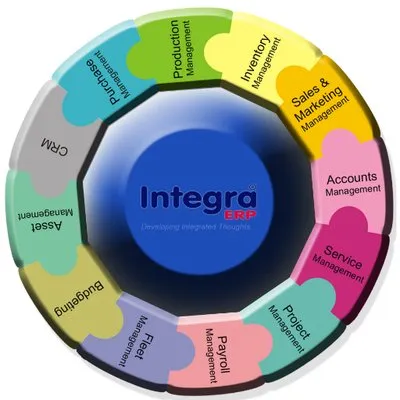
Integra ERP
Source
Microsoft Dynamics 365 Business Central
Destination

Compatibility
10 of 12
objects map 1:1 between Integra ERP and Microsoft Dynamics 365 Business Central.
Complexity
BStandard
Timeline
5-8 weeks
Overview
Moving from Integra ERP to Microsoft Dynamics 365 is a data-first migration with no API shortcut on the source side. Integra ERP publishes no public REST or SOAP API, so we extract through direct database queries against on-premise instances or scheduled flat-file report exports. The extraction must follow strict dependency order—Chart of Accounts first, then Customers and Vendors, then Items, then Inventory, then open AP/AR as opening balances, then historical Sales Orders—because downstream records reference upstream IDs. We reconstruct journal-entry relationships during load so the Dynamics 365 trial balance ties out. We do not migrate Integra workflows, custom report definitions, or document attachments; we deliver a written inventory of these for your admin team to rebuild in Dynamics 365.
Every standard and custom field arrives verified.
AI proposes the map; you confirm before any record moves.
Parent–child, lookups, and ownership stay linked.
Calls, emails, meetings — with original timestamps.
Documents, uploads, and inline notes move with the record.
Source platform
Integra ERP platform overview
Scorecard, SWOT, gotchas, and pricing for Integra ERP.
Destination platform
Microsoft Dynamics 365 Business Central platform overview
Scorecard, SWOT, gotchas, and pricing for Microsoft Dynamics 365 Business Central.
Data migration guide
The complete Dynamics 365 Business Central migration guide
Data model, import mechanisms, field mapping strategy, pitfalls, and cutover — by the engineers running it.
Destination checklist
Dynamics 365 Business Central migration checklist
Pre- and post-cutover tasks for moving onto Microsoft Dynamics 365 Business Central.
Why teams make this switch
Leaving
What's pushing teams away
Choosing
What's pulling them in
Object mapping
Each row shows how a Integra ERP object lands in Microsoft Dynamics 365 Business Central, including any object-level transformations, lookup resolution, or schema-design dependencies.
Typical mapping — final map is confirmed during the sample migration step.
Integra ERP
Chart of Accounts
Microsoft Dynamics 365 Business Central
Chart of Accounts (MainAccount + Dimensions)
lossyIntegra ERP stores a flat account list with type classification (Asset, Liability, Income, Expense) and optional GST registration flags. We map each source account code to a Dynamics 365 MainAccount, preserving the original account number as the MainAccount ID and the account name as DisplayName. We configure AccountType, AccountCategory, and any GST-related posting definitions from source account flags. If the source uses cost-center sub-accounts, we implement Dynamics 365 Financial Dimensions (Department, Cost Center, Project) as separate dimension sets rather than embedding segments in the account code.
Integra ERP
Customers
Microsoft Dynamics 365 Business Central
Customers (CustTable in Finance, Customer in Business Central)
1:1Customer records including contact details, billing addresses, GST/VAT registration numbers, and credit terms transfer directly to Dynamics 365 CustTable. We map the source customer ID to the destination AccountNum, preserve the payment terms as Dynamics 365 CashDisc and PaymentTermId references, and carry forward any credit limit as the CreditMax on the customer. Open AR balances are extracted as of the migration date and entered as opening-balance transactions in the AR subledger rather than as individual invoices.
Integra ERP
Vendors
Microsoft Dynamics 365 Business Central
Vendors (VendTable in Finance, Vendor in Business Central)
1:1Vendor master data maps to Dynamics 365 VendTable, preserving vendor ID, name, address, GST/VAT registration, and payment terms. We transfer vendor-specific item pricing where it exists in the source data as vendor product group records in Dynamics 365. Open AP balances are extracted as of migration date and entered as opening-balance transactions in the AP subledger so that outstanding payable amounts reflect correctly in AP aging reports.
Integra ERP
Items
Microsoft Dynamics 365 Business Central
Released Products (EcoResProduct in Finance, Item in Business Central)
1:1Items carry Integra-specific classification codes, BOM structures for manufacturers, and branch-specific stock values. We flatten BOM hierarchies into individual Released Product records with BOM explosion noted in the product's manufacturing information. We map item type (Stocked, Service, Asset) from Integra's item classification, carry forward the source SKU as the item number, and preserve unit-of-measure definitions. Serial and batch tracking settings transfer to Dynamics 365 inventory dimension groups. Branch-level stock quantities aggregate to destination warehouse or site codes during load.
Integra ERP
Open AR (Outstanding Receivables)
Microsoft Dynamics 365 Business Central
CustTransOpening + AR Opening Balance
1:1Integra ERP exports outstanding receivable balances per customer as net amounts. Dynamics 365 does not create individual invoices from the source for historical AR; instead, we create an AR opening-balance transaction using a dedicated Opening Balance journal with CustTrans records of type Opening. We preserve the original invoice reference as free-text invoice numbers and set the due date and amount from the source outstanding balance. This ensures AR aging reports in Dynamics 365 reflect accurate opening positions.
Integra ERP
Open AP (Outstanding Payables)
Microsoft Dynamics 365 Business Central
VendTransOpening + AP Opening Balance
1:1Outstanding payable balances per vendor migrate as AP opening-balance transactions using a dedicated Opening Balance journal in Dynamics 365. We create VendTrans records of type Opening with the vendor account reference, original invoice number, due date, and amount from the source outstanding balance. This reconstructs the AP aging position accurately in Dynamics 365 from the first day of operation.
Integra ERP
Historical Sales Orders
Microsoft Dynamics 365 Business Central
Sales Orders + CustInvoiceJour
1:1Open and closed sales orders transfer with line items, pricing, quantities, and order status. We map Integra order-status values to Microsoft Dynamics 365 Sales Status (Backorder, Invoiced, Cancelled). Order lines with items map to SalesLine with ItemId, SalesQty, SalesPrice, and discount percentages. Closed orders are migrated as invoiced sales with the related CustInvoiceJour records so historical revenue reporting is complete. We flag any orders referencing voided customers or discontinued items for customer review before insert.
Integra ERP
Inventory Ledgers
Microsoft Dynamics 365 Business Central
InventDim + On-Hand Inventory
1:1Stock quantities are branch or warehouse-specific in Integra ERP. We map each source branch to a Dynamics 365 Site and Warehouse combination, and transfer on-hand quantities as InventTrans records of type Opening. Serial and batch numbers transfer to Dynamics 365 InventSerial and InventBatch tables with their associated tracking information. We aggregate by item and warehouse so that Dynamics 365 on-hand reports reflect correct stock positions at go-live.
Integra ERP
Employees
Microsoft Dynamics 365 Business Central
HcmWorker (Finance) / Employee (Business Central)
1:1Employee master records from Integra ERP's employee management module transfer as HcmWorker entities in Finance or Employee records in Business Central. We map employee number, name, department assignment, employment status, and basic compensation fields. Workers map to the Dynamics 365 legal-entity structure and can be assigned to security roles for system access provisioning. Bank account and tax information transfer to HcmWorkerAddress and DirPartyQuantitativeData respectively.
Integra ERP
BOM Structures (for manufacturing customers)
Microsoft Dynamics 365 Business Central
BOM / Production Bill of Materials
1:1If the source Integra ERP instance uses BOM for manufacturing, we flatten multi-level BOM hierarchies into Dynamics 365 BOMHeader and BOMLine structures. Each Integra BOM at the top level creates a BOM in Dynamics 365 with a version valid for the production site. Component items link to the BOM as BOMLine records with quantity-per relationships. Route and work center definitions do not migrate from Integra and require separate configuration in Dynamics 365 Production.
Integra ERP
Document Metadata (file paths)
Microsoft Dynamics 365 Business Central
Document Handling References
1:1Attachments, scanned documents, and PDFs stored inside Integra ERP are not exposed via a documented export mechanism. We extract any linked file paths from the source database but cannot guarantee file integrity or completeness. We provide a manifest of document references with their original file paths and associated record IDs, so the customer's admin can manually relocate files to SharePoint or Dynamics 365 Document Handling after migration. No document content migrates automatically.
Integra ERP
Multi-Branch Structure
Microsoft Dynamics 365 Business Central
Legal Entities + Sites
lossyIntegra ERP supports multi-branch deployments where each branch maintains separate inventory, customer, and vendor records. We map each source branch to a separate Dynamics 365 legal entity and assign site codes for inventory dimension segregation. If branches share a single chart of accounts, we configure inter-company accounting in Dynamics 365 so transactions between entities post correctly. Customer and vendor records can be shared across entities or isolated per entity depending on the source data model.
| Integra ERP | Microsoft Dynamics 365 Business Central | Compatibility | |
|---|---|---|---|
| Chart of Accounts | Chart of Accounts (MainAccount + Dimensions)lossy | Mapping required | |
| Customers | Customers (CustTable in Finance, Customer in Business Central)1:1 | Fully supported | |
| Vendors | Vendors (VendTable in Finance, Vendor in Business Central)1:1 | Fully supported | |
| Items | Released Products (EcoResProduct in Finance, Item in Business Central)1:1 | Fully supported | |
| Open AR (Outstanding Receivables) | CustTransOpening + AR Opening Balance1:1 | Fully supported | |
| Open AP (Outstanding Payables) | VendTransOpening + AP Opening Balance1:1 | Fully supported | |
| Historical Sales Orders | Sales Orders + CustInvoiceJour1:1 | Fully supported | |
| Inventory Ledgers | InventDim + On-Hand Inventory1:1 | Mapping required | |
| Employees | HcmWorker (Finance) / Employee (Business Central)1:1 | Fully supported | |
| BOM Structures (for manufacturing customers) | BOM / Production Bill of Materials1:1 | Fully supported | |
| Document Metadata (file paths) | Document Handling References1:1 | Fully supported | |
| Multi-Branch Structure | Legal Entities + Siteslossy | Fully supported |
Gotchas + challenges
Platform-specific issues from each side, plus the pair-specific challenges that don't show up on either platform's page on its own.
Integra ERP gotchas
No public API for automated export
On-premise database format is proprietary
No documented data portability feature
Perpetual license does not include migration support
Microsoft Dynamics 365 Business Central gotchas
Named-user licensing has no concurrent-use relief
API rate limits throttle large-volume migrations
Historical posted transactions require selective migration scoping
NAV-to-Business Central cloud migration requires partner coordination
Custom fields and AL extensions require separate migration handling
Pair-specific challenges
Migration approach
Discovery and extraction access
We audit the Integra ERP instance to determine deployment type (cloud or on-premise), database format, and record volumes across all objects (account codes, customers, vendors, items, inventory, open AP/AR, historical sales orders, employees). We obtain read-only database credentials or report-writer access for on-premise deployments, or coordinate flat-file export schedules for cloud instances. The discovery output is a written migration scope document listing record counts per object, identified extraction dependencies, and a recommended Dynamics 365 edition (Business Central Essentials, Premium, or Finance and Supply Chain Management) based on the customer's functional requirements.
Schema mapping and tax configuration design
We design the destination schema in Dynamics 365. This includes provisioning the Chart of Accounts with appropriate MainAccount structure and Financial Dimensions, configuring GST Tax Groups and Tax Codes (for Indian operations), setting up Sites and Warehouses mapped from Integra branch codes, creating Customer and Vendor account structures with payment terms and credit limits, and defining item product types, tracking dimensions, and BOM structures. Schema is deployed via the Dynamics 365 Data Management framework or Business Central configuration packages into a Sandbox environment first for validation.
Sandbox migration and reconciliation
We run a full extraction and load into the customer's Dynamics 365 Sandbox using production-like data volume. The customer's finance and operations team reconciles account balances, customer counts, vendor counts, inventory quantities, and open AP/AR totals against the Integra ERP source reports. We correct any field mapping errors, adjust tax configuration assignments, and resolve BOM structure issues during this phase. Sign-off on the sandbox migration is required before production migration begins.
Owner and dimension reconciliation
We extract every distinct employee referenced as an owner or approver on customer, vendor, and transaction records in Integra ERP. These map to HcmWorker or User records in Dynamics 365. We verify that each source owner has a corresponding employee record in the destination legal entity. Any missing workers go to a reconciliation queue for the customer's HR and IT teams to provision before record import resumes, because OwnerId references are required on most standard entities.
Production migration in dependency order
We run production migration in strict record-dependency order: Chart of Accounts first (all account records must exist before transactions post), then Customers and Vendors (with payment terms and credit limits), then Items and Released Products (with BOM structures), then Inventory on-hand entries as opening balances, then Open AP and AR as opening-balance transactions, then historical Sales Orders and related CustInvoiceJour records. Each phase emits a row-count reconciliation report showing source count, inserted count, rejected count, and rejected row details before the next phase begins.
Cutover, validation, and document handoff
We freeze Integra ERP writes during the cutover window, run a final delta migration of any records modified during the migration period, then validate the Dynamics 365 trial balance against the Integra ERP general ledger. We deliver a document manifest of all file path references extracted from the source for the customer's admin to relocate to SharePoint or Document Handling. We provide a one-week hypercare window to resolve any reconciliation discrepancies reported by the customer's finance and operations teams. We do not configure Dynamics 365 workflows, Power Automate flows, or report definitions as part of the migration scope; these are delivered as a written requirements document for the customer's admin or a Dynamics 365 partner to implement separately.
Platform deep dives
Integra ERP
Source
Strengths
Weaknesses
Microsoft Dynamics 365 Business Central
Destination
Strengths
Weaknesses
Complexity grading
Standard ERP migration. 1 of 8 objects need a mapping; the rest are 1:1.
Overall complexity
Standard migration
Derived from compatibility, mapping clarity, API constraints, and data volume across Integra ERP and Microsoft Dynamics 365 Business Central.
Object compatibility
1 of 8 objects need a mapping; the rest are 1:1.
Field mapping clarity
Field mapping is derived from defaults — final spec confirmed during the sample migration.
Timeline complexity
8-object category — typical timelines run 2–7 days end-to-end.
API constraints
Integra ERP: Not publicly documented.
Data volume sensitivity
Integra ERP doesn't expose a bulk API — REST + parallelization used for high-volume runs.
Estimator
Rule-based pricing — no per-record fees, no manual quotes. Migrations over 2M records are scoped individually.
Step 1
Pick a category, then your source and destination platforms.
Category
FAQ
Answers to the questions buyers ask most during Integra ERP to Microsoft Dynamics 365 Business Central migration scoping. Not seeing yours? Book a call.
Walk through your Integra ERP to Microsoft Dynamics 365 Business Central migration with a real engineer — 30 minutes, free, written quote within 24 hours.
Book a free 30 minute consultationAdjacent paths
Other ways to leave Integra ERP
Other ways to arrive at Microsoft Dynamics 365 Business Central








Ready when you are
Tell us record counts and timeline. We'll come back with a written quote inside 1 business day — no commitment, no sales pitch.




