
Migrate your Virtual Case Management data
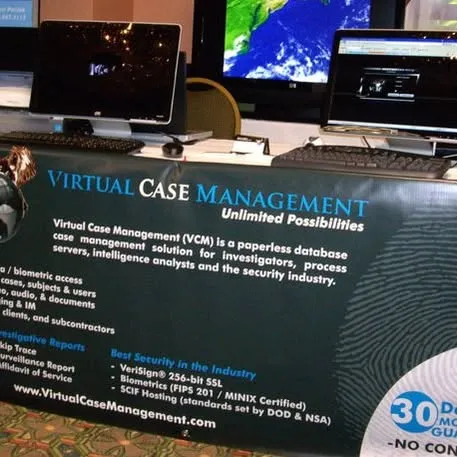
A nonprofit-focused case management platform for social service agencies that tracks clients, coordinates referrals, and manages multi-agency access controls under one roof.
In its favor
Why people choose Virtual Case Management
The signal that keeps Virtual Case Management on the shortlist. Sourced from G2, Capterra, and customer scoping calls.
Low barrier to entry for small nonprofits that need a purpose-built case management system without enterprise complexity or cost.
Client ID auto-generation provides immediate record organization for agencies that lack a standardized numbering system.
Built-in referral network connects agencies to local service providers, reducing coordination friction in multi-organization workflows.
Multi-security-level design allows confidential client information sharing across agencies while restricting unauthorized access.
Support team receives consistent praise for responsiveness and helping users navigate the system during daily operations.
Reporting and demographic tools are severely limited, making it difficult to extract meaningful business intelligence or comply with funder data requests.
The platform is challenging for users unfamiliar with database-style data entry, creating adoption friction for non-technical staff.
Agencies outgrow the platform as they scale, needing advanced workflow automation or deeper integrations that VCM does not provide.
Lack of flexible export options makes it difficult to move data to other systems when switching platforms.
Reasons to switch
Why people leave Virtual Case Management
The recurring reasons buyers give for replacing Virtual Case Management. Presented as facts, not knocks.
Platform scorecard
Strengths, weaknesses, and where Virtual Case Management fits
Grades across six dimensions, plus a SWOT-style view of where the platform shines and where it falls short.
SWOT — strengths, weaknesses, and use-case fit
Strengths
Weaknesses
Where it works
Where it struggles
Pricing tiers
Virtual Case Management pricing overview
Pricing is not publicly published on the Virtual Case Management website. The platform targets small to mid-size nonprofit agencies, and sales contact is required to obtain a custom quote. Based on comparable case management platforms in the nonprofit space, pricing is typically per-user per month with tiered feature levels.
Bronze
Tier 1 of 4
$24.99/month
What's included
Need help selecting your CRM?
Book a free 30 minute consultationPricing is informational. FlitStack AI does not bill on Virtual Case Management's schedule — see our quote-based pricing →
What gets migrated
Virtual Case Management object support
Object-by-object support for Virtual Case Management migrations. Per-pair details surface during scoping.
Clients
Fully supportedClients are the primary record type in VCM, each assigned a system-generated unique ID number. We migrate Clients 1:1 and preserve all standard fields (name, contact info, demographics) and activity history associated with each record.
Activities
Fully supportedActivities track client interactions and progress notes. We map activities to the destination system's equivalent (Notes, Interactions, Timeline entries) and preserve timestamps and descriptions.
Referrals
Mapping requiredVCM's referral system connects clients to service providers across the VCM network. We preserve referral records and map the referral relationships, though destination systems may require custom fields to fully replicate the network structure.
Agencies
Fully supportedAgencies represent the organizations using VCM and the providers in the service directory. We migrate agency records and maintain the hierarchy for multi-agency security assignments.
Service Directory
Mapping requiredThe service directory lists providers with services, hours, fees, restrictions, and documentation. We map directory entries to the destination's equivalent structure, though categorization and custom attributes may require manual review.
Security Levels
Mapping requiredVCM uses multi-tier security levels to control inter-agency visibility of client data. We transfer security level assignments but recommend a post-migration audit to confirm access controls map correctly to the destination's permission model.
Custom Fields
Mapping requiredVCM supports some degree of custom data entry. We handle custom field mapping during scoping but note that VCM's schema for custom fields is not publicly documented, requiring a field-by-field review with the customer.
Documents
Mapping requiredVCM stores attached documents. We migrate file attachments where accessible, preserving filenames and association to the parent Client or Activity record. Very large attachments may require chunked transfer.
Reports
Not in this platformVCM has significant limitations on reporting and demographic tools, which is a known pain point. Report definitions themselves are not exportable and must be rebuilt in the destination system.
Users
Mapping requiredUser accounts and staff assignments exist in VCM. We map active users to corresponding accounts in the destination system, preserving role assignments where the destination schema allows.
| Object | Support | Notes |
|---|---|---|
| Clients | Fully supported | Clients are the primary record type in VCM, each assigned a system-generated unique ID number. We migrate Clients 1:1 and preserve all standard fields (name, contact info, demographics) and activity history associated with each record. |
| Activities | Fully supported | Activities track client interactions and progress notes. We map activities to the destination system's equivalent (Notes, Interactions, Timeline entries) and preserve timestamps and descriptions. |
| Referrals | Mapping required | VCM's referral system connects clients to service providers across the VCM network. We preserve referral records and map the referral relationships, though destination systems may require custom fields to fully replicate the network structure. |
| Agencies | Fully supported | Agencies represent the organizations using VCM and the providers in the service directory. We migrate agency records and maintain the hierarchy for multi-agency security assignments. |
| Service Directory | Mapping required | The service directory lists providers with services, hours, fees, restrictions, and documentation. We map directory entries to the destination's equivalent structure, though categorization and custom attributes may require manual review. |
| Security Levels | Mapping required | VCM uses multi-tier security levels to control inter-agency visibility of client data. We transfer security level assignments but recommend a post-migration audit to confirm access controls map correctly to the destination's permission model. |
| Custom Fields | Mapping required | VCM supports some degree of custom data entry. We handle custom field mapping during scoping but note that VCM's schema for custom fields is not publicly documented, requiring a field-by-field review with the customer. |
| Documents | Mapping required | VCM stores attached documents. We migrate file attachments where accessible, preserving filenames and association to the parent Client or Activity record. Very large attachments may require chunked transfer. |
| Reports | Not in this platform | VCM has significant limitations on reporting and demographic tools, which is a known pain point. Report definitions themselves are not exportable and must be rebuilt in the destination system. |
| Users | Mapping required | User accounts and staff assignments exist in VCM. We map active users to corresponding accounts in the destination system, preserving role assignments where the destination schema allows. |
Gotchas
What to watch for in Virtual Case Management migrations
Issues we've hit on past Virtual Case Management migrations, tagged by severity. FlitStack AI handles every one — surfacing them up front because buyer engineering teams want to know.
No publicly documented bulk export API
Report definitions are not exportable
Database-entry interface creates training burden
Multi-agency security level mapping requires manual verification
| Severity | Issue |
|---|---|
| High | No publicly documented bulk export API |
| Medium | Report definitions are not exportable |
| Low | Database-entry interface creates training burden |
| Medium | Multi-agency security level mapping requires manual verification |
Leaving Virtual Case Management?
Where Virtual Case Management customers move next
12 destinations Virtual Case Management can migrate to.












How a Virtual Case Management migration works
Four steps, Virtual Case Management-specific
Connect
Not publicly documented. Virtual Case Management does not publish a developer portal or REST API documentation; integration capability is not advertised on the marketing site. into Virtual Case Management. Scopes limited to read-only on the data we move.
Map
We translate Virtual Case Management-specific structures (custom fields, objects, value lists) to the destination's model.
Sample
Test with a 50–200 record subset to validate Virtual Case Management quirks before production.
Migrate
Full migration with Virtual Case Management rate-limit handling. Rollback available throughout.
FAQ
Virtual Case Management migration FAQ
Answers to the questions buyers ask most during Virtual Case Management migration scoping. Not seeing yours? Book a call.
Can't find your answer?
Walk through your Virtual Case Management migration with a real engineer — 30 minutes, free, written quote within 24 hours.
Book a free 30 minute consultationReady when you are
Migrate Virtual Case Management.
Without the rebuild.
Free scoping call with a migration engineer. Tell us about your Virtual Case Management setup and destination — written quote back within a business day.