CRM migration
Field-level mapping, validation, and rollback between Virtual Case Management and Mailchimp. We move data and schema; workflows are rebuilt natively in Mailchimp.
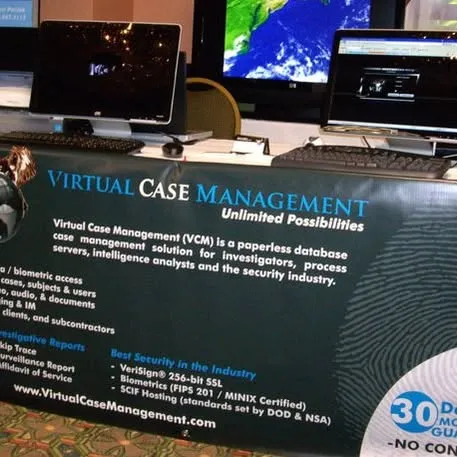
Virtual Case Management
Source
Mailchimp
Destination

Compatibility
12 of 12
objects map 1:1 between Virtual Case Management and Mailchimp.
Complexity
BStandard
Timeline
24–48 hours
Overview
Virtual Case Management stores client records for nonprofit and human services organizations — tracking demographics, program enrollments, referral sources, service histories, and caseworker assignments. The platform uses a flat contact record with custom fields for program-specific data. Mailchimp is an email marketing platform organized around audiences, contacts, tags, and merge fields. Migrating from VCM to Mailchimp means extracting client contact data (names, emails, phone numbers, addresses) and mapping program enrollment status, referral sources, and client tags into Mailchimp's tag-based segmentation or custom merge fields. VCM's case notes, document attachments, referral chain data, and service history records have no Mailchimp equivalent and must be documented separately or exported to a document repository. We use VCM's API export and Mailchimp's bulk import API to move contact records, applying tag-based value mappings for program enrollment and referral source fields. A 24–48 hour delta pickup window captures any new client intakes or contact updates made during the cutover. FlitStack does not migrate VCM workflows, automated intake rules, or case assignment logic — those constructs are destination-side and must be rebuilt in Mailchimp's automation tools.
Every standard and custom field arrives verified.
AI proposes the map; you confirm before any record moves.
Parent–child, lookups, and ownership stay linked.
Calls, emails, meetings — with original timestamps.
Documents, uploads, and inline notes move with the record.
Why teams make this switch
Leaving
What's pushing teams away
Choosing
What's pulling them in
Object mapping
Each row shows how a Virtual Case Management object lands in Mailchimp, including any object-level transformations, lookup resolution, or schema-design dependencies.
Typical mapping — final map is confirmed during the sample migration step.
Virtual Case Management
Client / Contact Record
Mailchimp
Mailchimp Contact (Audience Member)
1:1VCM's client record maps directly to a Mailchimp audience member. Every client with a valid email address becomes a Mailchimp subscriber. Clients without email addresses are flagged for manual review — your team decides whether to include them or hold them in a separate VCM export.
Virtual Case Management
Client Email Address
Mailchimp
Mailchimp EMAIL field
1:1The primary email address on a VCM client record maps directly to Mailchimp's EMAIL field, which is the unique identifier for each audience member. Mailchimp enforces email format validation; invalid addresses are flagged and excluded from the import. During the pre-migration data audit, we identify malformed email addresses and provide a report so your team can correct or remove them before the import process begins.
Virtual Case Management
Client First Name / Last Name
Mailchimp
Mailchimp FNAME / LNAME merge fields
1:1VCM first name and last name fields map to Mailchimp's standard FNAME and LNAME merge fields, which are automatically available in every Mailchimp audience. These power personalization tokens like 'Dear *|FNAME|*' in email templates, allowing you to address recipients by name in your campaigns. If VCM stores names in a single field rather than separate first and last name fields, we split them during the transformation process before loading into Mailchimp.
Virtual Case Management
Program Enrollment Status
Mailchimp
Mailchimp Tag or Merge Field
1:1VCM program enrollment checkboxes or pick-lists (e.g., 'Housing Program', 'Food Bank', 'Youth Services') map to Mailchimp tags applied per enrollment. This preserves the multi-program client scenario — a client enrolled in three programs receives three tags in Mailchimp, enabling segment-based campaigns.
Virtual Case Management
Referral Source
Mailchimp
Mailchimp Tag or Merge Field
1:1VCM referral source pick-list values (e.g., 'Hospital', 'School', 'Self-Referral', 'Court') map to Mailchimp tags or a custom merge field (REFERRAL_SOURCE). Value-by-value mapping ensures each referral category is represented in Mailchimp's segmentation UI. During planning, your team chooses whether referral sources should be tags (for flexible segment building) or a structured merge field (for reporting dashboards). We document all pick-list values from VCM to ensure no referral category is lost in translation.
Virtual Case Management
Client Phone Number
Mailchimp
Mailchimp PHONE merge field
1:1VCM phone number fields map to Mailchimp's PHONE merge field, which is available by default. Note that Mailchimp does not use phone numbers for SMS campaigns unless your Mailchimp plan includes mobile optimization and you separately configure SMS opt-in. If you anticipate using SMS outreach in the future, we can flag phone numbers for mobile marketing compliance during the migration, ensuring you're prepared to activate SMS features when your plan allows.
Virtual Case Management
Client Address (Street, City, State, Zip)
Mailchimp
Mailchimp ADDRESS merge field
1:1VCM address fields map to Mailchimp's structured ADDRESS merge field, which stores street, city, state, and zip as sub-fields. This enables Mailchimp's postal merge feature for physical mail campaigns if your nonprofit uses that channel. For organizations that send printed newsletters, event invitations, or donation acknowledgments via postal mail, the ADDRESS merge field allows personalized letter generation directly from Mailchimp without manual label creation.
Virtual Case Management
Caseworker / Assigned Staff
Mailchimp
Mailchimp Merge Field (CASEWORKER)
1:1VCM's assigned caseworker field has no native Mailchimp equivalent. We create a CASEWORKER merge field on the Mailchimp audience and populate it with the staff member's name or email. This lets you segment by assigned caseworker if needed for internal coordination emails.
Virtual Case Management
Case Notes and Service History
Mailchimp
No Equivalent in Mailchimp
1:1VCM case notes, service entries, and interaction history are narrative records with no Mailchimp equivalent. Mailchimp is not a case management tool. We export these as a separate CSV and document their location; your team manages them in VCM or an alternative system if you maintain both platforms temporarily.
Virtual Case Management
Client Intake Date
Mailchimp
Mailchimp Merge Field (INTAKE_DATE)
1:1VCM's client intake date maps to a custom INTAKE_DATE merge field in Mailchimp (date type). This preserves enrollment recency for segmentation — useful for welcome series triggers based on how long a client has been in the system. You can create segments for 'clients enrolled in the last 30 days' or 'clients active for over a year,' enabling time-based automation that delivers tailored outreach to different client cohorts based on their tenure with your organization.
Virtual Case Management
VCM Document Attachments
Mailchimp
No Equivalent in Mailchimp
1:1VCM stores consent forms, referral letters, and case documents as file attachments. Mailchimp does not have a document repository. We flag attachments for separate export and storage; if documents need to be referenced in emails, they must be hosted externally and linked.
Virtual Case Management
VCM Custom Fields (Program-Specific)
Mailchimp
Mailchimp Merge Fields
1:1VCM custom fields created for program-specific data (e.g., 'Housing Voucher Status', 'Income Bracket', 'Household Size') map to Mailchimp custom merge fields. Each field requires creation in Mailchimp before import; we deliver a merge field setup plan as part of the migration package.
| Virtual Case Management | Mailchimp | Compatibility | |
|---|---|---|---|
| Client / Contact Record | Mailchimp Contact (Audience Member)1:1 | Fully supported | |
| Client Email Address | Mailchimp EMAIL field1:1 | Fully supported | |
| Client First Name / Last Name | Mailchimp FNAME / LNAME merge fields1:1 | Fully supported | |
| Program Enrollment Status | Mailchimp Tag or Merge Field1:1 | Fully supported | |
| Referral Source | Mailchimp Tag or Merge Field1:1 | Fully supported | |
| Client Phone Number | Mailchimp PHONE merge field1:1 | Fully supported | |
| Client Address (Street, City, State, Zip) | Mailchimp ADDRESS merge field1:1 | Fully supported | |
| Caseworker / Assigned Staff | Mailchimp Merge Field (CASEWORKER)1:1 | Fully supported | |
| Case Notes and Service History | No Equivalent in Mailchimp1:1 | Fully supported | |
| Client Intake Date | Mailchimp Merge Field (INTAKE_DATE)1:1 | Fully supported | |
| VCM Document Attachments | No Equivalent in Mailchimp1:1 | Fully supported | |
| VCM Custom Fields (Program-Specific) | Mailchimp Merge Fields1:1 | Fully supported |
Gotchas + challenges
Platform-specific issues from each side, plus the pair-specific challenges that don't show up on either platform's page on its own.
Virtual Case Management gotchas
No publicly documented bulk export API
Report definitions are not exportable
Database-entry interface creates training burden
Multi-agency security level mapping requires manual verification
Mailchimp gotchas
Contact count includes unsubscribed and non-subscribed records
Automation workflows cannot be exported
Account suspensions trigger silently during migration
Template HTML is Mailchimp-specific and may not render in other platforms
E-commerce data requires active store connection
Pair-specific challenges
Migration approach
Conduct pre-migration data audit and field mapping plan
FlitStack AI extracts a full contact export from Virtual Case Management via API, profiles the data for invalid emails, duplicate records, and blank required fields, and identifies all active custom fields. We deliver a field mapping plan showing which VCM fields map to Mailchimp merge fields (created as part of setup), which become tags, and which have no Mailchimp equivalent and will be exported separately. Your team approves the plan before any data moves.
Create Mailchimp audience and configure merge fields
We create a new Mailchimp audience (or use an existing one per your direction) and pre-create all custom merge fields needed for the migration — CASEWORKER, INTAKE_DATE, STATUS, and any program-specific fields identified in the audit. Tags are pre-configured with naming conventions for program enrollment and referral source. This step runs in parallel with your VCM team continuing normal operations.
Run sample migration with field-level verification
A representative sample (typically 100–500 records) migrates first, loading into your Mailchimp audience. We generate a field-level diff report showing source VCM values against destination Mailchimp field values for every mapped field. You verify tag application for multi-enrollment clients, merge field population for custom fields, and overall contact count in Mailchimp versus VCM total. No full migration commits until this sample passes your sign-off.
Execute full migration with delta-pickup window
The full VCM contact list migrates via Mailchimp's bulk import API. A delta-pickup window of 24–48 hours captures any new client intakes or email updates made during the cutover. After the window closes, we run a final reconciliation report comparing total contacts, tag counts, and merge field completeness against the VCM source. FlitStack AI provides a rollback-capable audit log; if reconciliation fails beyond agreed tolerances, we can re-import from the VCM snapshot.
Platform deep dives
Virtual Case Management
Source
Strengths
Weaknesses
Mailchimp
Destination
Strengths
Weaknesses
Complexity grading
Standard CRM migration. 1 of 8 objects need a mapping; the rest are 1:1.
Overall complexity
Standard migration
Derived from compatibility, mapping clarity, API constraints, and data volume across Virtual Case Management and Mailchimp.
Object compatibility
1 of 8 objects need a mapping; the rest are 1:1.
Field mapping clarity
Field mapping is derived from defaults — final spec confirmed during the sample migration.
Timeline complexity
8-object category — typical timelines run 2–7 days end-to-end.
API constraints
Virtual Case Management: Not publicly documented — confirmed during integration scoping..
Data volume sensitivity
Virtual Case Management doesn't expose a bulk API — REST + parallelization used for high-volume runs.
Estimator
Rule-based pricing — no per-record fees, no manual quotes. Migrations over 2M records are scoped individually.
Step 1
Pick a category, then your source and destination platforms.
Category
FAQ
Answers to the questions buyers ask most during Virtual Case Management to Mailchimp migration scoping. Not seeing yours? Book a call.
Walk through your Virtual Case Management to Mailchimp migration with a real engineer — 30 minutes, free, written quote within 24 hours.
Book a free 30 minute consultationAdjacent paths
Other ways to leave Virtual Case Management









Other ways to arrive at Mailchimp








Popular CRM migrations


Ready when you are
Tell us record counts and timeline. We'll come back with a written quote inside 1 business day — no commitment, no sales pitch.
