CRM migration
Field-level mapping, validation, and rollback between SprintHub and Pipedrive. We move data and schema; workflows are rebuilt natively in Pipedrive.

SprintHub
Source
Pipedrive
Destination

Compatibility
5 of 11
objects map 1:1 between SprintHub and Pipedrive.
Complexity
BStandard
Timeline
3-5 weeks
Overview
Moving from SprintHub to Pipedrive is a scope-down migration. SprintHub bundles marketing automation, omnichannel support with multiple WhatsApp accounts, social media management, and AI agents into a single platform; Pipedrive is a sales-focused CRM that prioritizes pipeline visibility and deal tracking over marketing tools. We extract Leads, Contacts, Companies, Deals, Pipeline Stages, Tags, and Custom Fields from SprintHub via its API (hosted on a GitBook instance that requires customer-provided credentials for discovery) and load them into Pipedrive's Person, Organization, and Deal objects using Pipedrive's REST API with rate-limit handling and batch chunking. WhatsApp conversation histories and multi-account routing configurations require manual reconfiguration post-migration because Pipedrive treats messaging as a connected channel rather than a native multi-account routing layer. SprintHub marketing automation workflows, social media campaign data, and AI agent configurations do not migrate; we deliver a written inventory of these for the customer's admin to rebuild in Pipedrive's Automation or a third-party sales engagement tool.
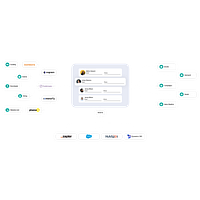
Every standard and custom field arrives verified.
AI proposes the map; you confirm before any record moves.
Parent–child, lookups, and ownership stay linked.
Calls, emails, meetings — with original timestamps.
Documents, uploads, and inline notes move with the record.
Why teams make this switch
Leaving
What's pushing teams away
Choosing
What's pulling them in
Object mapping
Each row shows how a SprintHub object lands in Pipedrive, including any object-level transformations, lookup resolution, or schema-design dependencies.
Typical mapping — final map is confirmed during the sample migration step.
SprintHub
Lead
Pipedrive
Lead
1:1SprintHub Lead records map to Pipedrive Lead. We extract standard Lead fields including name, contact info, status, and owner assignment. SprintHub's Lead API uses GraphQL-style query parameters; we resolve hubspot_owner_id references against Pipedrive User records by email match. Any Lead without a matching Pipedrive User goes to a reconciliation queue for the customer's admin to provision before record import begins.
SprintHub
Contact
Pipedrive
Person
1:1SprintHub Contact records map to Pipedrive Person. Contact details, custom properties, and company associations transfer directly. If the source Contact has a linked SprintHub Company, we resolve that to the corresponding Pipedrive Organization before inserting the Person record so that the org_id lookup is satisfied at import time. Tags attached to the Contact are preserved as pipedrive_user_field_id entries on the Person record.
SprintHub
Company
Pipedrive
Organization
1:1SprintHub Company records map to Pipedrive Organization. Company names, industry, size, and custom fields migrate without transformation. The company domain becomes the Organization's website field and is used as the deduplication key during import. Organization is inserted before Person records so that Person-Organization lookups resolve at migration time rather than requiring a second-pass update.
SprintHub
Deal
Pipedrive
Deal
1:1SprintHub Deals map to Pipedrive Deals. The dealstage property maps to a Pipedrive Stage that we pre-create to match the source pipeline structure. Pipeline assignment maps to a Pipedrive Pipeline that we configure before migration. Closed-Lost and Closed-Won reasons from SprintHub custom properties become Pipedrive Lost_reason custom fields. Deal owner resolves by email match against Pipedrive User records.
SprintHub
Pipeline
Pipedrive
Pipeline
lossySprintHub Pipeline definitions, including stage names and ordering, are extracted as explicit key-value pairs per pipeline rather than assumed from standard names. Each SprintHub pipeline becomes a Pipedrive Pipeline. Stage probability percentages from SprintHub transfer to Pipedrive stage probability values, rounded to the nearest Pipedrive-allowed integer. Pipedrive allows multiple pipelines per account, matching SprintHub's multi-pipeline capability.
SprintHub
Pipeline Stage
Pipedrive
Stage
lossyStage names, order, and win/loss probability vary per SprintHub pipeline and are preserved explicitly in the migration mapping workbook. We configure each Pipedrive Stage to match the source stage name, position, and probability so that the sales team sees the same deal progression. Stages are created in the correct order before Deals are imported so that Pipedrive's stage_id foreign key is satisfied at insert time.
SprintHub
Tag
Pipedrive
Custom field (user field)
lossySprintHub tags are global across the instance and can be attached to Leads, Contacts, Companies, and Deals. We retrieve the full tag list including color metadata and preserve tag associations on each record during migration. Tags are mapped to Pipedrive custom user fields (type: varchar) on the respective object. The customer chooses during scoping whether tags become multi-select user fields or stored as comma-separated text for simplicity.
SprintHub
Custom Field
Pipedrive
Custom field
lossySprintHub custom field names, types, and picklist options vary per instance. We extract the full custom field schema alongside record values. Each custom field is pre-created in Pipedrive with the appropriate type conversion: text fields to varchar, numbers to numeric, dates to date, picklists to enum. Custom field definitions are validated during the discovery phase by inspecting the SprintHub API response schema. Picklist options migrate as Pipedrive enum options with the same label and value.
SprintHub
WhatsApp Multi-Account Configuration
Pipedrive
Not migratable (rebuild required)
1:1SprintHub's support for multiple WhatsApp accounts per instance is a key feature for Brazilian teams. Pipedrive does not have native multi-account WhatsApp routing. We export the account-to-conversation mappings and routing rules as a structured JSON document for the customer to reconfigure in a third-party WhatsApp integration (e.g., Twilio, W活, or a Brazilian-focused WhatsApp Business API provider) post-migration. This is not a data migration; it is a configuration rebuild that requires the customer's admin to set up the new channel connection in Pipedrive.
SprintHub
Marketing Automation Workflow
Pipedrive
Not migratable (rebuild required)
lossySprintHub automation rules including trigger conditions, filter logic, and multi-step action sequences are stored in a proprietary format. We export the rule definitions as structured JSON including trigger type, conditions, actions, and delays. Pipedrive's Automation feature covers deal-triggered and activity-triggered automations but does not replicate SprintHub's marketing automation model (email drip sequences, lead scoring, behavioral triggers). We deliver a written automation inventory with Pipedrive Automation equivalents recommended for each rule. The customer's admin rebuilds automations post-migration.
SprintHub
Social Media Campaign
Pipedrive
Not migratable (rebuild required)
lossySprintHub social media campaign data including post histories, metrics, and attribution settings are stored in SprintHub's social module. We export available campaign records and performance data (impressions, clicks, engagement) as a structured CSV for the customer's records. Attribution settings and UTM mapping require manual reconfiguration in the destination social or marketing analytics tool. Pipedrive has no native social media management; the customer assigns these campaigns to their chosen social analytics platform post-migration.
| SprintHub | Pipedrive | Compatibility | |
|---|---|---|---|
| Lead | Lead1:1 | Fully supported | |
| Contact | Person1:1 | Fully supported | |
| Company | Organization1:1 | Fully supported | |
| Deal | Deal1:1 | Fully supported | |
| Pipeline | Pipelinelossy | Fully supported | |
| Pipeline Stage | Stagelossy | Fully supported | |
| Tag | Custom field (user field)lossy | Fully supported | |
| Custom Field | Custom fieldlossy | Fully supported | |
| WhatsApp Multi-Account Configuration | Not migratable (rebuild required)1:1 | Fully supported | |
| Marketing Automation Workflow | Not migratable (rebuild required)lossy | Fully supported | |
| Social Media Campaign | Not migratable (rebuild required)lossy | Fully supported |
Gotchas + challenges
Platform-specific issues from each side, plus the pair-specific challenges that don't show up on either platform's page on its own.
SprintHub gotchas
API documentation is not publicly accessible via standard developer portals
WhatsApp multi-account channel routing may not map to other CRMs
Custom workflow automations require manual rebuild in destination systems
Platform updates may invalidate previously tested custom configurations
Pipedrive gotchas
Custom field hash keys differ per account
Export access gated by visibility groups
Token-based API rate limits since December 2024
Sequences and Automations not exposed via REST API
Cost escalates via workflow caps and add-ons
Pair-specific challenges
Migration approach
Discovery and credentials acquisition
We request SprintHub API access credentials from the customer and manually explore the endpoint schema via the GitBook-hosted API reference. We audit the source across all objects: Lead count, Contact count, Company count, Deal count per pipeline, tag list, custom field schema (names, types, picklist options), pipeline and stage definitions, and owner assignments. We also document WhatsApp multi-account configurations, marketing automation workflows, and social media campaign records as configuration items that require separate rebuild scope. The discovery output is a written migration scope and a data volume estimate.
Pipedrive account provisioning and schema design
The customer provisions a Pipedrive account at the chosen tier (Essential through Enterprise). We create Pipedrive Pipelines and Stages to match the SprintHub pipeline structure exactly, including stage names, order, and probability percentages. Custom fields are pre-created with the correct Pipedrive types matching the SprintHub schema. Users are invited to Pipedrive so that owner email matching can resolve at migration time. We configure custom field types before any data import begins so that the import pipeline encounters no type-mismatch errors.
Sandbox migration and reconciliation
We run a full migration into a Pipedrive Sandbox (or the live account with a test subset) using production-like data volume. The customer's RevOps lead reconciles record counts across all objects, spot-checks 25-50 random records against the SprintHub source, and validates that custom field values appear correctly in Pipedrive. Stage names and pipeline assignments are verified. The customer signs off the schema and mapping before production migration begins. Any mapping corrections happen here, not in production.
Owner reconciliation and User provisioning
We extract every distinct SprintHub Owner referenced on Lead, Contact, Company, and Deal records and match by email against the Pipedrive destination account's User table. Owners without a matching Pipedrive User go to a reconciliation queue. The customer's admin provisions any missing Pipedrive Users. Migration cannot proceed past this step because OwnerId references are required on most standard objects. This step also applies to any inactive SprintHub owners whose records need to be preserved with an inactive Pipedrive User.
Production migration in dependency order
We run production migration in record-dependency order: Organizations (from SprintHub Companies), Persons (with org_id resolved), Deals (with stage_id, pipeline_id, and owner resolved), Leads, Tags (as custom field entries), and Custom Field values on each record. Each phase emits a row-count reconciliation report before the next phase begins. We use Pipedrive's REST API with batch chunking and rate-limit handling to avoid 429 errors. SprintHub API rate limits are managed with exponential backoff and request queuing.
Cutover, validation, and configuration rebuild handoff
We freeze SprintHub writes during cutover, run a final delta migration of any records modified during the migration window, then enable Pipedrive as the system of record. We deliver the automation inventory document (SprintHub workflows mapped to Pipedrive Automation equivalents), the WhatsApp routing JSON document, and the social media campaign data export. We support a one-week hypercare window where we resolve reconciliation issues. We do not rebuild SprintHub automations or WhatsApp routing inside the migration scope; those are separate configuration tasks for the customer's admin.
Platform deep dives
SprintHub
Source
Strengths
Weaknesses
Pipedrive
Destination
Strengths
Weaknesses
Complexity grading
Standard CRM migration. 3 of 8 objects need a mapping; the rest are 1:1.
Overall complexity
Standard migration
Derived from compatibility, mapping clarity, API constraints, and data volume across SprintHub and Pipedrive.
Object compatibility
3 of 8 objects need a mapping; the rest are 1:1.
Field mapping clarity
Field mapping is derived from defaults — final spec confirmed during the sample migration.
Timeline complexity
8-object category — typical timelines run 2–7 days end-to-end.
API constraints
SprintHub: Not publicly documented.
Data volume sensitivity
SprintHub doesn't expose a bulk API — REST + parallelization used for high-volume runs.
Estimator
Rule-based pricing — no per-record fees, no manual quotes. Migrations over 2M records are scoped individually.
Step 1
Pick a category, then your source and destination platforms.
Category
FAQ
Answers to the questions buyers ask most during SprintHub to Pipedrive migration scoping. Not seeing yours? Book a call.
Walk through your SprintHub to Pipedrive migration with a real engineer — 30 minutes, free, written quote within 24 hours.
Book a free 30 minute consultationAdjacent paths
Other ways to leave SprintHub









Other ways to arrive at Pipedrive
Popular CRM migrations


Ready when you are
Tell us record counts and timeline. We'll come back with a written quote inside 1 business day — no commitment, no sales pitch.