CRM migration
Field-level mapping, validation, and rollback between Factoreal and Mailchimp. We move data and schema; workflows are rebuilt natively in Mailchimp.

Factoreal
Source
Mailchimp
Destination

Compatibility
6 of 8
objects map 1:1 between Factoreal and Mailchimp.
Complexity
BStandard
Timeline
2-3 weeks
Overview
Moving from Factoreal to Mailchimp is an export-and-import migration constrained by Factoreal's lack of a documented public API. All contact records, segment definitions, campaign history, and email templates must be extracted via CSV files generated from the Factoreal application UI. We sequence contact deduplication before import to prevent Mailchimp's hard bounce penalties, reconstruct segment membership as Mailchimp segment rules rather than static lists, and convert Factoreal merge field placeholders to Mailchimp merge tag syntax. We do not migrate automation workflows, SMS or WhatsApp message logs, website visitor session data, or pre-built reports — these are documented gaps we scope upfront and address through manual export of aggregate metrics where applicable. Automations and campaign logic require manual rebuild in Mailchimp's automation builder post-migration.
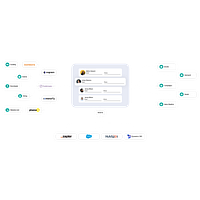
Every standard and custom field arrives verified.
AI proposes the map; you confirm before any record moves.
Parent–child, lookups, and ownership stay linked.
Calls, emails, meetings — with original timestamps.
Documents, uploads, and inline notes move with the record.
Why teams make this switch
Leaving
What's pushing teams away
Choosing
What's pulling them in
Object mapping
Each row shows how a Factoreal object lands in Mailchimp, including any object-level transformations, lookup resolution, or schema-design dependencies.
Typical mapping — final map is confirmed during the sample migration step.
Factoreal
Contact
Mailchimp
Subscriber (Member)
1:1Factoreal contact records map to Mailchimp subscribers via email address as the primary key. We export Factoreal contacts as CSV, deduplicate on email address before import, and map standard profile fields (first name, last name, phone, address) to Mailchimp's MERGE field structure. Any Factoreal custom contact properties migrate as Mailchimp merge fields created in the destination audience before import. Opt-in and subscription status migrate to Mailchimp's Status field (subscribed, unsubscribed, pending, cleaned) using Factoreal's contact status property as the source.
Factoreal
Segment
Mailchimp
Segment
lossyFactoreal segments are defined by filter rules on contact attributes and behavioral events. We document each Factoreal segment's filter logic — field, operator, value conditions — and rebuild equivalent saved segments in Mailchimp using Mailchimp's segment rule builder. If Factoreal segments were static lists rather than dynamic rules, we export the contact IDs per segment and create Mailchimp tags as a proxy for group membership, since Mailchimp segments do not support static membership that persists independently of filter rules.
Factoreal
Campaign
Mailchimp
Campaign
1:1Factoreal campaign records hold subject line, content, send history, and engagement metrics (opens, clicks, unsubscribes). We map campaign structure to Mailchimp's Campaign object, preserving subject line, preview text, and from name/address. Historical send dates migrate as the Campaign send time. Engagement metrics (open count, click count) cannot be imported as Mailchimp metrics — these are recalculated by Mailchimp's reporting engine post-import. We provide a reconciliation sheet mapping Factoreal campaign metrics to Mailchimp's reported metrics for comparison.
Factoreal
Email Template
Mailchimp
Template
1:1Factoreal email templates include HTML content and dynamic field placeholders. We extract the template HTML and convert Factoreal merge field syntax (e.g., {{first_name}}) to Mailchimp merge tag syntax (e.g., *|FNAME|*). Visual rendering differences between Factoreal's template editor and Mailchimp's template structure require a review pass; we flag any unsupported HTML elements and provide a cleaned HTML version that Mailchimp's template editor can accept. We do not migrate template layouts or design assets — these are rebuilt in Mailchimp's template editor.
Factoreal
Tag
Mailchimp
Tag
1:1Factoreal contacts carry multiple tags that represent behavioral classifications or list memberships. We export the full tag list per contact and create equivalent tags in Mailchimp. Tags on Mailchimp subscribers are applied during the contact import via the Tags field. Mailchimp's tag model supports any string without a predefined taxonomy, matching Factoreal's flexible tagging approach. We preserve the many-to-many relationship by importing each contact's tag list as a comma-separated value in the Mailchimp Tags field.
Factoreal
Custom Field
Mailchimp
Merge Field
1:1Factoreal custom fields on contact records map to Mailchimp merge fields. We identify all custom field definitions during discovery (field name, data type), create corresponding merge fields in the destination Mailchimp audience with matching types (text, number, date, phone, address, dropdown), and map exported values during contact import. Factoreal's custom field types must be translated: free-text fields become Mailchimp TEXT merge fields, numeric fields become NUMBER merge fields, and date fields become DATE merge fields.
Factoreal
E-commerce Data (Orders, Products)
Mailchimp
Product (via Mailchimp for Shopify or API)
1:1Factoreal captures order and product data natively. Mailchimp does not have native e-commerce objects — products and orders are typically populated via an e-commerce integration (Shopify, WooCommerce, BigCommerce) or a custom API connection. We export Factoreal product and order records as CSV and evaluate whether the customer has an existing e-commerce platform that Mailchimp can connect to, or whether a custom Mailchimp API integration is needed. If neither is in place, we scope product and order data as a documented export for manual entry or a separate integration build.
Factoreal
Suppression List (Unsubscribes, Bounces)
Mailchimp
Suppression List
lossyFactoreal contact records with unsubscribed or bounced status must be imported into Mailchimp as suppressed records before any campaign sends. We extract unsubscribed and bounced contacts from Factoreal and import them as Mailchimp suppressions using Mailchimp's audience-level suppression import. This prevents accidentally re-emailing unsubscribed contacts when the migration completes and campaigns resume. The suppression list import is the first action taken in the Mailchimp destination before any active subscriber imports begin.
| Factoreal | Mailchimp | Compatibility | |
|---|---|---|---|
| Contact | Subscriber (Member)1:1 | Fully supported | |
| Segment | Segmentlossy | Fully supported | |
| Campaign | Campaign1:1 | Fully supported | |
| Email Template | Template1:1 | Fully supported | |
| Tag | Tag1:1 | Fully supported | |
| Custom Field | Merge Field1:1 | Fully supported | |
| E-commerce Data (Orders, Products) | Product (via Mailchimp for Shopify or API)1:1 | Mapping required | |
| Suppression List (Unsubscribes, Bounces) | Suppression Listlossy | Fully supported |
Gotchas + challenges
Platform-specific issues from each side, plus the pair-specific challenges that don't show up on either platform's page on its own.
Factoreal gotchas
No public REST API for automated migration
Website visitor session data is not exportable
Contact migration required hands-on support in practice
Automation workflows do not migrate as executable rules
Limited third-party integration ecosystem
Mailchimp gotchas
Contact count includes unsubscribed and non-subscribed records
Automation workflows cannot be exported
Account suspensions trigger silently during migration
Template HTML is Mailchimp-specific and may not render in other platforms
E-commerce data requires active store connection
Pair-specific challenges
Migration approach
Factoreal data export coordination
We request a full data export from Factoreal covering contacts (with all properties), segments (with filter rule definitions), campaign history (subject, send date, engagement metrics), email templates (HTML and merge field placeholders), tags, and unsubscribed or bounced contacts. Factoreal's lack of a bulk API means export cycles are initiated from the application UI and may take one to three business days to process. We review the exported CSV structure early to identify missing fields, encoding issues, and duplicate rows before mapping begins.
Mailchimp audience and merge field creation
We create the destination Mailchimp audience and pre-configure all merge fields to match Factoreal's custom contact property definitions. Merge field types are mapped from Factoreal's data types: text properties become TEXT merge fields, numeric properties become NUMBER merge fields, and date properties become DATE merge fields. Tags and segment logic are documented separately. We also import the unsubscribed and bounced contact list as suppressions before any active subscriber imports begin.
Contact deduplication and data cleaning
We deduplicate the Factoreal contact export on email address, flagging duplicate records for the customer's review. We validate field formats, remove hard bounces identified in the suppression list, and standardize date formats to match Mailchimp's expected input. Any records with missing mandatory fields (email address, first name) are held in a reconciliation queue for the customer's admin to resolve before import. This step is the most common source of delay and is scoped accordingly.
Segment and tag reconstruction
We analyze each Factoreal segment's filter logic and document the equivalent Mailchimp segment rule. If Factoreal segments were static lists, we export contact IDs per segment and apply Mailchimp tags as a proxy. Tags are applied during the contact import via the Tags field in the Mailchimp API or CSV format. The customer reviews the segment logic in Mailchimp's segment builder before activation to confirm that the reconstructed logic produces the expected audience membership.
Campaign history and template import
We import Factoreal campaign history as Mailchimp campaigns with preserved subject lines, send dates, and from addresses. Engagement metrics (open rate, click rate) are reconciled as a separate report comparing Factoreal's historical numbers to Mailchimp's post-import reporting baselines. Email templates are exported as HTML, cleaned for Mailchimp compatibility, and converted to Mailchimp template format with merge field syntax updated from Factoreal's placeholder format to Mailchimp's *|MERGE|* syntax. We do not migrate template design assets; these require rebuild in Mailchimp's template editor.
Cutover, validation, and automation handoff
We run a final delta migration of any contacts modified in Factoreal during the migration window, then enable Mailchimp as the primary sending platform. We deliver a written inventory of Factoreal automation workflows with recommended Mailchimp Customer Journeys equivalents. We do not rebuild automations as code. We provide a pre-flight checklist covering domain authentication (SPF, DKIM), suppression list confirmation, and audience segmentation review before the first campaign send from Mailchimp.
Platform deep dives
Factoreal
Source
Strengths
Weaknesses
Mailchimp
Destination
Strengths
Weaknesses
Complexity grading
Standard CRM migration. 2 of 8 objects need a mapping; the rest are 1:1.
Overall complexity
Standard migration
Derived from compatibility, mapping clarity, API constraints, and data volume across Factoreal and Mailchimp.
Object compatibility
2 of 8 objects need a mapping; the rest are 1:1.
Field mapping clarity
Field mapping is derived from defaults — final spec confirmed during the sample migration.
Timeline complexity
8-object category — typical timelines run 2–7 days end-to-end.
API constraints
Factoreal: Not publicly documented.
Data volume sensitivity
Factoreal doesn't expose a bulk API — REST + parallelization used for high-volume runs.
Estimator
Rule-based pricing — no per-record fees, no manual quotes. Migrations over 2M records are scoped individually.
Step 1
Pick a category, then your source and destination platforms.
Category
FAQ
Answers to the questions buyers ask most during Factoreal to Mailchimp migration scoping. Not seeing yours? Book a call.
Walk through your Factoreal to Mailchimp migration with a real engineer — 30 minutes, free, written quote within 24 hours.
Book a free 30 minute consultationAdjacent paths
Other ways to leave Factoreal









Other ways to arrive at Mailchimp








Popular CRM migrations


Ready when you are
Tell us record counts and timeline. We'll come back with a written quote inside 1 business day — no commitment, no sales pitch.
