CRM migration
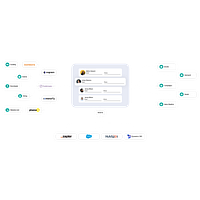
Field-level mapping, validation, and rollback between ClientTether.com and Mailchimp. We move data and schema; workflows are rebuilt natively in Mailchimp.
ClientTether.com
Source
Mailchimp
Destination

Compatibility
4 of 10
objects map 1:1 between ClientTether.com and Mailchimp.
Complexity
BStandard
Timeline
2-3 weeks
Overview
ClientTether.com and Mailchimp serve fundamentally different roles. ClientTether is a franchise-first CRM with unlimited user seats, multi-brand hierarchy, pipelines, proposals, work orders, built-in SMS, call logging, and automation workflows. Mailchimp is an email marketing platform organized around Audiences, Campaigns, Customer Journeys, and Tags. Migrating from a CRM to an ESP means accepting that pipelines, proposals, work orders, franchise owner hierarchies, call logs, and SMS history do not map to Mailchimp's data model. We extract all Contacts and Leads with their associated tags and email addresses, flatten the franchise hierarchy into audience tags and segments, map email sequences to Mailchimp Campaigns, and deliver a written inventory of the ClientTether objects that require manual replacement in Mailchimp or another tool. Workflow automations longer than three steps require manual rebuild because ClientTether's automation logic is not fully exposed via its public API.
Every standard and custom field arrives verified.
AI proposes the map; you confirm before any record moves.
Parent–child, lookups, and ownership stay linked.
Calls, emails, meetings — with original timestamps.
Documents, uploads, and inline notes move with the record.
Why teams make this switch
Leaving
What's pushing teams away
Choosing
What's pulling them in
Object mapping
Each row shows how a ClientTether.com object lands in Mailchimp, including any object-level transformations, lookup resolution, or schema-design dependencies.
Typical mapping — final map is confirmed during the sample migration step.
ClientTether.com
Contact
Mailchimp
Audience Member
1:1ClientTether Contact records map directly to Mailchimp audience members. Email address is the dedupe key. We extract first name, last name, email, phone, tags, and any custom field values that correspond to Mailchimp standard or merge fields. Contacts without a valid email address are held in a reconciliation report because Mailchimp requires an email address for audience membership.
ClientTether.com
Lead
Mailchimp
Audience Member
1:1ClientTether Leads map to Mailchimp audience members with the same structure as Contacts. Lead source attribution migrates as a custom merge field (LEADSOURCE__c equivalent in Mailchimp). We preserve the lead source ID or form ID as a reference value for attribution reconstruction in Mailchimp segments.
ClientTether.com
Account
Mailchimp
Tag or Segment
lossyClientTether Account records (representing franchisee entities, franchise owners, or brand accounts) have no direct Mailchimp equivalent because Mailchimp has no Account-level hierarchy. We export the account hierarchy as a flat tag structure (e.g., BRAND_AcmeCorp, FRANCHISEOWNER_JaneDoe, FSO_CentralRegion) and create Mailchimp segments from these tag combinations. Segments are more flexible than static lists for ongoing franchise territory segmentation.
ClientTether.com
Tag
Mailchimp
Tag
1:1ClientTether Tags migrate to Mailchimp Tags one-to-one. Tags used for automation trigger conditions are exported with their assignments so the customer can see which tags drive segmentation logic. Mailchimp Tags are additive labels on audience members and can be used as filter conditions in segments or Customer Journeys.
ClientTether.com
Email Sequence
Mailchimp
Campaign
1:manyClientTether Email Sequences (time-triggered drip campaigns) map to Mailchimp Campaigns. Each sequence step becomes a scheduled campaign send with the original delay interval preserved as a send-time offset from enrollment. Mailchimp Standard plan allows multiple steps in an automation flow; Essentials plan is limited. We flag any sequence with more than 4 steps for upgrade assessment because Mailchimp Essentials caps automation complexity. Sequence enrollment status migrates as a custom field to allow segmentation of contacts who completed or dropped out of the sequence.
ClientTether.com
Pipeline
Mailchimp
Not applicable
lossyClientTether Pipelines (deal stages, pipeline assignments) have no Mailchimp equivalent. Mailchimp does not store deal stage data or pipeline assignments. We flag every Pipeline and its stages during discovery and document them as out-of-scope for manual replacement in a CRM tool if the customer needs pipeline management post-migration.
ClientTether.com
Proposal
Mailchimp
Not applicable
lossyClientTether Proposals (template-based documents with pricing and terms) have no Mailchimp equivalent. Mailchimp is an email marketing platform, not a proposal or quoting tool. We export proposal records as a CSV reference file for the customer's records but do not import them into Mailchimp. Proposals should be managed in a separate tool (ClientTether, PandaDoc, Better Proposals, or a CRM) post-migration.
ClientTether.com
Work Order
Mailchimp
Not applicable
lossyClientTether Work Orders (operational execution records linked to proposals) have no Mailchimp equivalent. Mailchimp does not store operational or fulfillment data. We export Work Order records as a reference CSV. Work order management should continue in a field service or operations tool post-migration.
ClientTether.com
Call Log
Mailchimp
Not applicable
lossyClientTether Call Logs (inbound and outbound call records with duration, disposition, and recording URL) do not migrate to Mailchimp. Mailchimp tracks email engagement activity (opens, clicks, unsubscribes) but has no call log storage. Call history should remain in ClientTether (read-only archive), a dedicated call logging tool, or be exported as a reference CSV for the customer's records.
ClientTether.com
Custom Field
Mailchimp
Merge Field
1:1ClientTether Custom Fields on Contacts and Leads map to Mailchimp Merge Fields. We enumerate all custom field types during discovery (text, number, date, picklist, checkbox) and map them to Mailchimp merge field types (text, number, date, phone, address, or birthday). Picklist values become predefined merge field options. Merge field names are normalized to Mailchimp's 10-character API name limit and the 255-character value limit.
| ClientTether.com | Mailchimp | Compatibility | |
|---|---|---|---|
| Contact | Audience Member1:1 | Fully supported | |
| Lead | Audience Member1:1 | Fully supported | |
| Account | Tag or Segmentlossy | Fully supported | |
| Tag | Tag1:1 | Fully supported | |
| Email Sequence | Campaign1:many | Fully supported | |
| Pipeline | Not applicablelossy | Fully supported | |
| Proposal | Not applicablelossy | Fully supported | |
| Work Order | Not applicablelossy | Fully supported | |
| Call Log | Not applicablelossy | Fully supported | |
| Custom Field | Merge Field1:1 | Fully supported |
Gotchas + challenges
Platform-specific issues from each side, plus the pair-specific challenges that don't show up on either platform's page on its own.
ClientTether.com gotchas
Workflow automation logic is not fully API-accessible
Pricing is per sales account, not per user — an unusual model
Multi-brand hierarchy requires remapping at the destination
Proposal and Work Order linkage may not survive export intact
Mailchimp gotchas
Contact count includes unsubscribed and non-subscribed records
Automation workflows cannot be exported
Account suspensions trigger silently during migration
Template HTML is Mailchimp-specific and may not render in other platforms
E-commerce data requires active store connection
Pair-specific challenges
Migration approach
Discovery and scope definition
We audit ClientTether across all objects: Contact and Lead volume with email validity rates, Account and franchise hierarchy depth, tag taxonomy and usage frequency, active email sequences and step counts, workflow automations and step complexity, and any custom fields on Contact, Lead, and Account. We pair this with a Mailchimp plan assessment (Essentials vs Standard) based on sequence complexity and audience size. The discovery output is a written migration scope that explicitly lists in-scope objects (Contacts, Leads, Tags, Email Sequences) and out-of-scope objects (Pipelines, Proposals, Work Orders, Call Logs) with a recommendation for each out-of-scope category.
Franchise hierarchy design and tag taxonomy
We map ClientTether's multi-brand, FSO, franchise owner, and FBC hierarchy into a Mailchimp tag taxonomy and segment structure. Each distinct hierarchy level becomes a tag prefix (BRAND_, FSO_, FRANCHISEOWNER_, FBC_) with the entity name as the value. We design Mailchimp Segments using tag combinations to replicate the territory and brand filtering that the franchise team relied on in ClientTether. The customer reviews and approves the tag taxonomy before any contact export begins.
Contact and Lead export with email validation
We extract all ClientTether Contacts and Leads via API or CSV export. We run email validation to flag hard bounces, disposable addresses, and missing email addresses before import. Contacts without valid emails are held in a separate reconciliation queue. We extract tags, custom field values, lead source attribution, and account association (mapped to the tag taxonomy from Step 2). The export produces a contact file ready for Mailchimp audience import.
Audience import and segment configuration in Mailchimp
We create the Mailchimp Audience with the correct field mapping (ClientTether custom fields to Mailchimp merge fields). We import contacts in batches using Mailchimp's API or CSV import with duplicate detection by email address. After import, we apply the tag taxonomy from Step 2 to all contacts based on their ClientTether account association and franchise hierarchy position. We configure Mailchimp Segments using the tag combinations to replicate the territory and brand filters used in ClientTether.
Email sequence mapping and campaign recreation
We map each ClientTether Email Sequence to Mailchimp Campaigns. For each sequence step, we identify the email template, delay interval, trigger condition, and enrollment criteria. We recreate the sequence as a Mailchimp Customer Journey (automation) or a scheduled campaign series depending on the plan tier. We flag any sequence with more than four steps for Mailchimp Standard plan upgrade and note this in the handoff document. Sequence enrollment status (completed, dropped, enrolled) is written to a custom merge field for segmentation after migration.
Validation, reconciliation, and handoff documentation
We reconcile record counts between ClientTether and Mailchimp (total contacts imported, tags applied, segments configured, campaigns created). We spot-check 25-50 records for field-level accuracy and verify tag assignment by franchise hierarchy. We deliver a written handoff document that includes the out-of-scope object inventory (Pipelines, Proposals, Work Orders, Call Logs, Workflows), the tag taxonomy and segment definitions, the sequence-to-campaign map with any plan upgrade recommendations, and a list of automations requiring manual rebuild in Mailchimp Customer Journeys. We support a one-week hypercare window for reconciliation issues raised by the customer's marketing team.
Platform deep dives
ClientTether.com
Source
Strengths
Weaknesses
Mailchimp
Destination
Strengths
Weaknesses
Complexity grading
Standard CRM migration. 1 of 8 objects need a mapping; the rest are 1:1.
Overall complexity
Standard migration
Derived from compatibility, mapping clarity, API constraints, and data volume across ClientTether.com and Mailchimp.
Object compatibility
1 of 8 objects need a mapping; the rest are 1:1.
Field mapping clarity
Field mapping is derived from defaults — final spec confirmed during the sample migration.
Timeline complexity
8-object category — typical timelines run 2–7 days end-to-end.
API constraints
ClientTether.com: Not publicly documented.
Data volume sensitivity
ClientTether.com doesn't expose a bulk API — REST + parallelization used for high-volume runs.
Estimator
Rule-based pricing — no per-record fees, no manual quotes. Migrations over 2M records are scoped individually.
Step 1
Pick a category, then your source and destination platforms.
Category
FAQ
Answers to the questions buyers ask most during ClientTether.com to Mailchimp migration scoping. Not seeing yours? Book a call.
Walk through your ClientTether.com to Mailchimp migration with a real engineer — 30 minutes, free, written quote within 24 hours.
Book a free 30 minute consultationAdjacent paths
Other ways to leave ClientTether.com









Other ways to arrive at Mailchimp
Popular CRM migrations


Ready when you are
Tell us record counts and timeline. We'll come back with a written quote inside 1 business day — no commitment, no sales pitch.