CRM migration
Field-level mapping, validation, and rollback between Zymplify and Odoo CRM. We move data and schema; workflows are rebuilt natively in Odoo CRM.
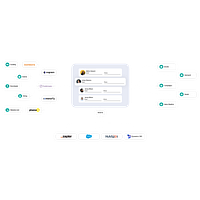
Zymplify
Source
Odoo CRM
Destination

Compatibility
6 of 12
objects map 1:1 between Zymplify and Odoo CRM.
Complexity
BStandard
Timeline
4-6 weeks
Overview
Moving from Zymplify to Odoo CRM is a migration from an intent-first GTM platform into a modular open-source ERP and CRM suite. Zymplify organises data around intent signals, sales cadences, and marketing workflows built on a proprietary CDP layer; Odoo CRM uses a standard Partner, Opportunity, and lead model with pipeline stages configured per sales team. We extract contact and company records via Zymplify's API, carry Bombora and G2 Buyer Intent signal scores as custom fields on Odoo Partner records, and map Zymplify pipeline stages to Odoo sales team stages with probabilities preserved. Zymplify workflows, sales cadences, and the CDP hub's enrichment provenance have no direct Odoo equivalents; we document these as rebuild requirements and carry raw enrichment metrics as custom fields rather than native objects. Odoo's transparent per-user pricing and Community Edition option address Zymplify's pricing opacity as a primary churn driver.
Every standard and custom field arrives verified.
AI proposes the map; you confirm before any record moves.
Parent–child, lookups, and ownership stay linked.
Calls, emails, meetings — with original timestamps.
Documents, uploads, and inline notes move with the record.
Why teams make this switch
Leaving
What's pushing teams away
Choosing
What's pulling them in
Object mapping
Each row shows how a Zymplify object lands in Odoo CRM, including any object-level transformations, lookup resolution, or schema-design dependencies.
Typical mapping — final map is confirmed during the sample migration step.
Zymplify
Contact
Odoo CRM
Partner / Contact
1:1Zymplify Contact records with standard fields (name, email, phone, role, company association) map directly to Odoo CRM Partner records in customer mode, with phone and mobile mapped to phone and mobile fields. Where Zymplify uses a separate Contact object, Odoo uses Partner with a type field set to 'contact' for individuals; the associated Company maps to a separate Partner in company mode with the contact linked via child_ids. Enrichment provenance from Zymplify's CDP hub is carried as custom Char fields (e.g., enrichment_source__c) rather than native metadata.
Zymplify
Company
Odoo CRM
Partner (company mode)
1:1Zymplify Company records map to Odoo Partner records with type='company'. The company domain becomes the website field and is used as a dedupe key during import. Bombora intent scores, G2 Buyer Intent signal levels, and Zymplify's intent spike timestamps are carried as custom Float or Char fields on the Partner record (e.g., bombora_score__c, g2_intent_topic__c, intent_spike_date__c). The original intent signal data is migration metadata rather than a native Odoo object.
Zymplify
Deal / Pipeline Stages
Odoo CRM
Opportunity
1:1Zymplify Deals map to Odoo CRM Lead/Opp objects. Pipeline stages are customisable per account in Zymplify; we map stage names 1:1 to Odoo stage names within the relevant sales team pipeline. Deal value, close date, and probability transfer to Odoo's expected_revenue, date_deadline, and probability fields. Odoo's stage-based kanban view mirrors Zymplify's pipeline view, reducing training friction.
Zymplify
Sales Cadence
Odoo CRM
CRM Model (crm.phonecall) + Note
lossyZymplify Sales Cadences are outreach sequences combining email steps, delays, and task actions. Odoo has no native cadence equivalent. We document each cadence's step sequence, delay logic, and action types as a rebuild specification for the customer's admin, and we create CRM phonecall and note records for any completed or in-progress cadence steps that represent actual customer touchpoints. The rebuild target in Odoo is Automated Actions triggered by stage changes or partner tags.
Zymplify
Marketing Workflow
Odoo CRM
Automated Action (ir.actions.server)
lossyZymplify Marketing Workflows use triggers, conditions, and actions in a visual builder. Odoo Automated Actions are server-side actions driven by ir.actions.server records with Python domain expressions. We document each Zymplify workflow's trigger, conditions, branch logic, and action outputs as a requirements specification; the customer's admin rebuilds them as Odoo Automated Actions or via the workflow module. Workflow automation does not migrate as code.
Zymplify
Customer Success / Churn Forecast
Odoo CRM
Partner custom fields
1:1Zymplify health scores and churn risk indicators are platform-native calculations with no Odoo equivalent. We extract raw health signals (engagement frequency, renewal proximity, support ticket count) as custom Float and Date fields on the Partner record (e.g., health_score__c, churn_risk_indicator__c). The scoring model itself does not migrate; the customer admin rebuilds it in Odoo using Automated Actions or a dedicated custom module.
Zymplify
CDP Hub / Data Cleansing Records
Odoo CRM
Partner custom fields
1:1Zymplify's CDP hub manages contact deduplication and enrichment provenance. We carry the deduplication decisions (merged record IDs, master record flags) and enrichment source data as custom fields on the Partner record (e.g., cdp_merge_master__c, enrichment_provider__c, enrichment_date__c). The cleansing workflow itself is not migratable; it must be rebuilt in Odoo using duplicate detection rules or a third-party data quality app.
Zymplify
Custom Properties
Odoo CRM
Custom Fields (ir.model.fields)
lossyZymplify custom fields across all object types do not have a publicly documented export schema. We discover the custom field inventory during the discovery phase by querying Zymplify's API for field metadata, then create matching custom fields in Odoo via the Settings > Technical > Fields interface before data import. Field types are mapped from Zymplify types to Odoo field types (text to Char, number to Float or Integer, date to Date, checkbox to Boolean, multi-select to Char with comma-separated values).
Zymplify
User / Team Member
Odoo CRM
User
1:1Zymplify User records include role, hub assignment, and ownership relationships. We map active users to Odoo User records by email match. Hub assignments (Prospecting, Marketing, Sales, Success) are preserved as custom Char or Selection fields on the User record because Odoo's internal categories do not map directly to Zymplify's four-hub model. Owner relationships on Deals and Contacts are resolved via User email lookup at migration time.
Zymplify
Tag / Label
Odoo CRM
Tags (mail.mail.message) or custom Char field
lossyTags applied to Contacts and Companies in Zymplify are platform-native. We export them as a comma-separated custom Char field on the Odoo Partner record (tags__c). Odoo's messaging system supports tags on communication records but not on Partner records natively; the customer chooses between storing as a custom Char field or rebuilding tagging taxonomy using Odoo tags on CRM Lead tags. This decision is made during scoping based on how tags are used in reporting.
Zymplify
Intent Signal (Bombora / G2)
Odoo CRM
Partner custom fields
lossyBombora intent scores and G2 Buyer Intent signal data are Zymplify-native metadata attached to Company records. They cannot be exported as structured objects via a documented Zymplify API. We extract signal metadata as custom fields (bombora_intent_score__c, g2_topic_intent__c, signal_provider__c, signal_date__c) on the Partner record. Intent data has no Odoo equivalent and functions as enrichment provenance for the customer's admin to act on manually or rebuild within Odoo's reporting tools.
Zymplify
Engagement (calls, emails, meetings, tasks)
Odoo CRM
CRM phonecall, mail.message, calendar.event
1:manyZymplify engagement records are split by type: call engagements map to Odoo crm.phonecall (or calendar.event for scheduled calls), email engagements map to mail.message records linked to the Partner, meeting engagements map to calendar.event with attendee relations, and task engagements map to mail.activity records. Engagement timestamps and disposition data transfer to custom fields on the target record. Parent record resolution (linking engagements to the correct Partner) is resolved via email match on the Contact and Company records before migration.
| Zymplify | Odoo CRM | Compatibility | |
|---|---|---|---|
| Contact | Partner / Contact1:1 | Fully supported | |
| Company | Partner (company mode)1:1 | Fully supported | |
| Deal / Pipeline Stages | Opportunity1:1 | Fully supported | |
| Sales Cadence | CRM Model (crm.phonecall) + Notelossy | Fully supported | |
| Marketing Workflow | Automated Action (ir.actions.server)lossy | Fully supported | |
| Customer Success / Churn Forecast | Partner custom fields1:1 | Fully supported | |
| CDP Hub / Data Cleansing Records | Partner custom fields1:1 | Mapping required | |
| Custom Properties | Custom Fields (ir.model.fields)lossy | Mapping required | |
| User / Team Member | User1:1 | Fully supported | |
| Tag / Label | Tags (mail.mail.message) or custom Char fieldlossy | Fully supported | |
| Intent Signal (Bombora / G2) | Partner custom fieldslossy | Fully supported | |
| Engagement (calls, emails, meetings, tasks) | CRM phonecall, mail.message, calendar.event1:many | Fully supported |
Gotchas + challenges
Platform-specific issues from each side, plus the pair-specific challenges that don't show up on either platform's page on its own.
Zymplify gotchas
No public pricing page — actual costs vary by directory
Intent data and workflows are Zymplify-native with no direct export
7-day free trial is insufficient to evaluate the platform
Integration ecosystem is thin and poorly documented
Vendor lock-in compounds migration complexity
Odoo CRM gotchas
Odoo.sh version gating blocks assisted migrations from trial
Enterprise modules fail to install on Community after database restore
Custom module view inheritance breaks between Odoo major versions
Custom fields risk losing their application context on Community
API access for Community is gated behind the Custom Plan
Pair-specific challenges
Migration approach
Discovery and Zymplify API audit
We audit the customer's Zymplify account across hubs in use (Prospecting, Marketing, Sales, Success), custom field inventory on Contact, Company, and Deal objects, active pipeline stages, cadence count and step structure, active workflow count and trigger types, engagement volume by type, and user roster. We also probe Zymplify's API surface to confirm available export endpoints, rate limits, and any rate-cap or throttling constraints. The discovery output is a written migration scope covering record counts, field mapping inventory, cadence and workflow documentation, and an honest assessment of what can be extracted programmatically versus what requires manual export or rebuild.
Odoo environment assessment and schema preparation
We assess the destination Odoo environment: Community versus Enterprise edition, Odoo version, existing modules installed, and current Partner/Lead/Custom field inventory. We create any missing custom fields (bombora_score__c, g2_intent_topic__c, enrichment_provider__c, churn_risk_indicator__c, tags__c, and others identified in discovery) via Odoo's Settings > Technical > Fields interface before any data import. We configure pipeline stages to match Zymplify stage names and probabilities, and we set up sales team structures if Zymplify's hub assignments require Odoo team-based access control mapping.
Data extraction and transformation
We extract contact, company, deal, engagement, user, tag, and custom field data from Zymplify via the available API or CSV export. Each record is transformed to match Odoo's Partner, crm.lead, crm.phonecall, calendar.event, and mail.message schema: field names are renamed, date formats are converted to ISO 8601, multi-select values are comma-separated, and parent record IDs are resolved for linked records. Intent signal data (Bombora, G2) is extracted as custom fields on the Company record and carried as custom fields on the resulting Partner record.
Staging migration and reconciliation
We run a full migration into the customer's Odoo staging environment (or a fresh Odoo database if Community Edition is in use) using production-like data volume. The customer's admin reconciles record counts (Partners in, Leads/Opportunities in, Activities in), spot-checks 25-50 random records against the Zymplify source for field-level accuracy, and validates that pipeline stage names and intent custom fields are populated. Any mapping corrections are documented and applied before production migration begins. This stage also serves as the validation that Odoo's field type constraints accept the transformed data without silent rejection.
Production migration in dependency order
We run production migration in record-dependency order: Users (provisioned and validated first), Partners (from Zymplify Companies), Contact records linked to Partners, Deals mapped to crm.lead with stage and owner resolved, Engagement history (calls as crm.phonecall, emails as mail.message, meetings as calendar.event), Tags stored as custom fields, and Intent Signal metadata as custom fields on Partner. Each phase emits a row-count reconciliation report before the next phase begins. We freeze Zymplify writes during the cutover window and run a final delta migration of any records modified during the window.
Cutover, validation, and cadence/workflow handoff
We enable Odoo CRM as the system of record at cutover and deliver the cadence and workflow documentation to the customer's admin team. We support a one-week hypercare window where we resolve any data reconciliation issues raised by the sales team. We do not rebuild Zymplify Sales Cadences as Odoo Automated Actions or Zymplify Workflows as ir.actions.server records inside the migration scope; those are separate engagements for the customer's Odoo admin or an Odoo implementation partner.
Platform deep dives
Zymplify
Source
Strengths
Weaknesses
Odoo CRM
Destination
Strengths
Weaknesses
Complexity grading
Standard CRM migration. 1 of 8 objects need a mapping; the rest are 1:1.
Overall complexity
Standard migration
Derived from compatibility, mapping clarity, API constraints, and data volume across Zymplify and Odoo CRM.
Object compatibility
1 of 8 objects need a mapping; the rest are 1:1.
Field mapping clarity
Field mapping is derived from defaults — final spec confirmed during the sample migration.
Timeline complexity
8-object category — typical timelines run 2–7 days end-to-end.
API constraints
Zymplify: Not publicly documented.
Data volume sensitivity
Zymplify doesn't expose a bulk API — REST + parallelization used for high-volume runs.
Estimator
Rule-based pricing — no per-record fees, no manual quotes. Migrations over 2M records are scoped individually.
Step 1
Pick a category, then your source and destination platforms.
Category
FAQ
Answers to the questions buyers ask most during Zymplify to Odoo CRM migration scoping. Not seeing yours? Book a call.
Walk through your Zymplify to Odoo CRM migration with a real engineer — 30 minutes, free, written quote within 24 hours.
Book a free 30 minute consultationAdjacent paths
Other ways to leave Zymplify









Other ways to arrive at Odoo CRM






Popular CRM migrations


Ready when you are
Tell us record counts and timeline. We'll come back with a written quote inside 1 business day — no commitment, no sales pitch.
