CRM migration
Field-level mapping, validation, and rollback between Bento and Pipedrive. We move data and schema; workflows are rebuilt natively in Pipedrive.

Bento
Source
Pipedrive
Destination

Compatibility
7 of 11
objects map 1:1 between Bento and Pipedrive.
Complexity
BStandard
Timeline
2-3 weeks
Overview
Bento and Pipedrive solve different parts of the revenue stack: Bento is an email marketing platform where Contacts are the primary record with behavioral properties, segments, and campaign history; Pipedrive is a sales CRM where People, Organizations, Deals, and Activities form a relational model purpose-built for pipeline management. A Bento to Pipedrive migration is a contact-forward migration with two critical compliance requirements: unsubscribed and bounced addresses must map to Pipedrive's duplicate detection fields before any record activates, and Bento's behavioral segments must be rebuilt as Pipedrive filters or static lists since Pipedrive has no equivalent dynamic segment engine. We export Bento contacts in three CSV files (active, unsubscribed, bounced), pre-create the Pipedrive organization and people schema, import suppression records first, then activate the clean contact set. Automations, email campaign content, and transactional email SDK configurations do not migrate as functional assets; we deliver documentation briefs for each requiring manual rebuild in Pipedrive's Automation and email tools.
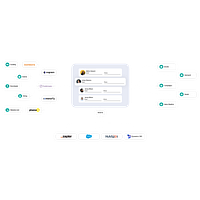
Every standard and custom field arrives verified.
AI proposes the map; you confirm before any record moves.
Parent–child, lookups, and ownership stay linked.
Calls, emails, meetings — with original timestamps.
Documents, uploads, and inline notes move with the record.
Why teams make this switch
Leaving
What's pushing teams away
Choosing
What's pulling them in
Object mapping
Each row shows how a Bento object lands in Pipedrive, including any object-level transformations, lookup resolution, or schema-design dependencies.
Typical mapping — final map is confirmed during the sample migration step.
Bento
Contact
Pipedrive
Person
1:1Bento Contacts map 1:1 to Pipedrive People. Standard properties (email, first name, last name, phone, created_at, updated_at) map directly to Pipedrive Person fields. We use email as the dedupe key during import to prevent duplicate Person records. Custom fields migrate as custom Person fields in Pipedrive, preserving data type (string, number, date, boolean, choice). Choice-type custom fields become Pipedrive drop-down options. Bento's contact creation timestamp migrates as a custom Person field since Pipedrive People do not have a native created_at equivalent.
Bento
Unsubscribed Contact
Pipedrive
Person (duplicate detection + suppression flag)
1:1Bento's unsubscribed list requires separate handling before active contacts import. We export unsubscribes as a dedicated CSV, then set the duplicate Detection flag on matching Pipedrive Person records (using email as the match key) before activating the full contact set. This prevents accidentally reactivating suppressed addresses during migration and protects sender reputation at the destination. The original unsubscribe timestamp is preserved in a custom Person field.
Bento
Bounced Contact
Pipedrive
Person (duplicate detection)
1:1Bounced addresses export from Bento as a separate suppression CSV. We apply the same duplicate Detection logic in Pipedrive, flagging bounced addresses so they cannot be reactivated for sending. Pipedrive does not have a dedicated bounced-status field equivalent to Bento's bounce flag; we simulate it using a custom Person field bounce_status and a duplicate Detection record that prevents the address from being imported as an active contact. Bounced addresses are held in a separate Pipedrive list for periodic review.
Bento
Tag
Pipedrive
Label
1:1Bento tags are flat label strings attached to contacts. We export the full tag taxonomy as a comma-separated property and re-apply them as Pipedrive Labels during import. Tags with hierarchical nesting (if any) are flattened to a label convention (e.g., source_region_usa, product_tier_premium) to match Pipedrive's flat label model. The original tag count and distribution are documented so the Pipedrive admin can audit label coverage post-migration.
Bento
Segment
Pipedrive
Filter (static rebuild)
lossyBento Segments are dynamic filter rules built from contact properties and Custom Events. Pipedrive has no equivalent dynamic segment engine; dynamic segments cannot be migrated as live filters. We export each Bento Segment definition as a structured rule document (property conditions, event conditions, AND/OR logic, time windows) and recreate them as Pipedrive Filters and static Lists. The filter logic is preserved in documentation for the customer's admin to validate and adjust based on Pipedrive's filter expression syntax. Segments with Custom Event conditions require additional scoping because Pipedrive does not track behavioral events natively.
Bento
Custom Event Schema
Pipedrive
Activity Notes (documentation only)
1:1Bento Custom Events define behavioral signals with specific property schemas that drive segment membership and automation triggers. Pipedrive does not have a Custom Event equivalent. We export the full event schema (event names, property names, property data types) as a schema brief. The brief is used to configure Pipedrive custom Activity types or custom Person fields that capture equivalent data points. Behavioral event logs per contact are not importable into Pipedrive's activity model; they are documented as background context for the sales team and referenced in the handoff brief for any future behavioral tracking setup.
Bento
Campaign
Pipedrive
Activity Note (metadata documentation)
1:1Bento Campaigns represent one-time sends with subject, content, send history, and performance stats (opens, clicks, unsubscribes). Pipedrive has no campaign object. We export campaign metadata (name, subject, send date, recipient count, open rate, click rate, bounce count) as structured records in a Campaign_History__c custom object in Pipedrive. The HTML content is exported and delivered as a separate file for use in rebuilding email templates in Pipedrive's email tool or a dedicated email marketing platform. Performance stats are preserved as reference data for the admin to use in reporting.
Bento
Automation Flow
Pipedrive
Automation Brief (no functional migration)
lossyBento Automations are behavioral trigger flows with conditions, delays, and action nodes built in a visual editor. Pipedrive Workflows are deal-stage-triggered automations with a different action model and no email journey builder. We export each Bento Automation as a structured migration brief including trigger conditions, delay settings, conditional branches, action types (send email, add tag, update field, trigger event), and screenshots of the visual flow. These briefs are delivered to the customer's admin as the specification for rebuilding equivalent logic in Pipedrive Automation or an external email marketing tool. Functional migration of automations is out of scope per FlitStack AI standard policy.
Bento
Transactional Email Config
Pipedrive
Configuration Export Brief (no functional migration)
lossyBento's transactional email uses drop-in SDKs (Rails, Laravel, Node, Python, Go, PHP) with API credentials, template IDs, sending domain configuration, and event webhooks. Pipedrive does not include transactional email sending. We export the full configuration (API keys, template IDs, sending domain, DKIM/SPF records, event webhook URLs) as a structured brief. The customer's engineering team uses this brief to re-establish the transactional email integration with their chosen replacement service (such as Postmark, SendGrid, or Amazon SES) post-migration. SDK code references are documented with the original Bento SDK language for accurate migration.
Bento
Connected Integrations
Pipedrive
Integration Brief (no functional migration)
lossyBento integrations (Shopify, WooCommerce, Zapier, WordPress, etc.) are listed in a configuration export that documents which integrations are active, what data they sync, and what the connection credentials are. Pipedrive has its own integration ecosystem (Salesforce, HubSpot, Zapier, Slack, Zoom, etc.) with different connection models. We deliver an Integration Handoff Brief that maps each active Bento integration to its Pipedrive equivalent or a Zapier-based alternative. The customer's admin uses this brief to re-establish integrations in Pipedrive. Active data sync connections do not transfer automatically between platforms.
Bento
Analytics / Reports
Pipedrive
Screenshot Archive and Summary Export
1:1Bento's analytics dashboards (open rates, click rates, bounce rates, revenue attribution, campaign performance) contain aggregate data that is not exportable at the record level. We preserve report screenshots as image archives and export summary statistics (aggregate open rate, click rate, bounce rate per campaign, overall list growth over time) as a CSV. These are delivered to the customer as reference data for reporting and for use in setting baseline expectations in Pipedrive's reporting module or a BI tool. Pipedrive's native reporting covers pipeline and activity metrics, not email campaign performance.
| Bento | Pipedrive | Compatibility | |
|---|---|---|---|
| Contact | Person1:1 | Fully supported | |
| Unsubscribed Contact | Person (duplicate detection + suppression flag)1:1 | Fully supported | |
| Bounced Contact | Person (duplicate detection)1:1 | Fully supported | |
| Tag | Label1:1 | Fully supported | |
| Segment | Filter (static rebuild)lossy | Fully supported | |
| Custom Event Schema | Activity Notes (documentation only)1:1 | Fully supported | |
| Campaign | Activity Note (metadata documentation)1:1 | Fully supported | |
| Automation Flow | Automation Brief (no functional migration)lossy | Fully supported | |
| Transactional Email Config | Configuration Export Brief (no functional migration)lossy | Mapping required | |
| Connected Integrations | Integration Brief (no functional migration)lossy | Fully supported | |
| Analytics / Reports | Screenshot Archive and Summary Export1:1 | Not supported |
Gotchas + challenges
Platform-specific issues from each side, plus the pair-specific challenges that don't show up on either platform's page on its own.
Bento gotchas
Unsubscribed and bounced contacts must be exported separately
Automation flows require manual recreation at destination
Custom Events schema may differ from destination event tracking
Email templates export as HTML only, without live preview data
Pipedrive gotchas
Custom field hash keys differ per account
Export access gated by visibility groups
Token-based API rate limits since December 2024
Sequences and Automations not exposed via REST API
Cost escalates via workflow caps and add-ons
Pair-specific challenges
Migration approach
Discovery and scoping
We audit the Bento account across contacts (total count, field inventory, tag taxonomy, custom field definitions and data types), suppression lists (unsubscribed count, bounced count, bounce reason if available), segments (count, rule complexity, Custom Event dependencies), campaigns (total count, template count, send history), automations (count, trigger types, action complexity), transactional email configuration (SDK language, template count, sending domain), and active integrations. We produce a written migration scope that defines the exact object mapping, import sequencing, and items that require manual rebuild or reconfiguration post-migration.
Data export and suppression split
We export Bento data in structured CSV files following Bento's export API format. The export is split immediately into three files: active contacts (all standard and custom properties, tags), unsubscribed contacts (email plus suppression timestamp), and bounced contacts (email plus bounce reason if available). We run a deduping pass across all three files to identify and flag duplicates within and across files. Any Bento Custom Event schema definitions are exported as a separate JSON schema file. Connected integration credentials and transactional email configuration are exported as structured configuration documents.
Pipedrive schema design and suppression pre-load
We configure the Pipedrive destination account before any data is imported. This includes pre-creating custom Person fields to match Bento's custom field definitions (preserving data types), creating a bounce_status custom field, creating an hs_original_lifecycle_custom_field to preserve any Bento lifecycle data, setting up the Label taxonomy based on the Bento tag export, and creating a Campaign_History__c custom object for campaign metadata. We then import the unsubscribed and bounced CSV files first, applying duplicate Detection flags to suppress those addresses before any active contact import begins.
Sandbox migration and reconciliation
We run a full migration into Pipedrive's demo or trial environment using production-like data volume. The customer's admin reviews record counts (People in, Labels applied, custom fields populated), spot-checks 25-50 random Person records against the Bento source, and validates that suppression flags are correctly set. Any field mapping corrections, custom field additions, or label taxonomy adjustments happen in this phase. We do not proceed to production migration until the admin signs off on the sandbox validation report.
Production migration in dependency order
We run production migration in the following sequence: suppression records (unsubscribed and bounced contacts first with duplicate Detection flags), then active contacts with all standard and custom properties and labels applied. Each import phase emits a reconciliation report showing record count, error count, and duplicate count. Any records rejected during import are held in a correction queue for the admin to review and resolve before the next phase. No automations or campaign content are imported as functional assets in this phase.
Cutover, validation, and rebuild handoff
We deliver the Migration Handoff Package which includes: the full contact and suppression import in Pipedrive, the Automation Brief (rule documentation for every Bento automation), the Campaign Brief (campaign metadata and HTML exports), the Transactional Email Configuration Brief, and the Integration Handoff Brief. The customer freezes Bento writes during a cutover window while we run a final delta import of any records modified during migration. We do not rebuild automations, re-establish integrations, or configure transactional email sending inside the migration scope; these are separate engagement items or internal admin tasks.
Platform deep dives
Bento
Source
Strengths
Weaknesses
Pipedrive
Destination
Strengths
Weaknesses
Complexity grading
Standard CRM migration. 3 of 8 objects need a mapping; the rest are 1:1.
Overall complexity
Standard migration
Derived from compatibility, mapping clarity, API constraints, and data volume across Bento and Pipedrive.
Object compatibility
3 of 8 objects need a mapping; the rest are 1:1.
Field mapping clarity
Field mapping is derived from defaults — final spec confirmed during the sample migration.
Timeline complexity
8-object category — typical timelines run 2–7 days end-to-end.
API constraints
Bento: Not publicly documented.
Data volume sensitivity
Bento doesn't expose a bulk API — REST + parallelization used for high-volume runs.
Estimator
Rule-based pricing — no per-record fees, no manual quotes. Migrations over 2M records are scoped individually.
Step 1
Pick a category, then your source and destination platforms.
Category
FAQ
Answers to the questions buyers ask most during Bento to Pipedrive migration scoping. Not seeing yours? Book a call.
Walk through your Bento to Pipedrive migration with a real engineer — 30 minutes, free, written quote within 24 hours.
Book a free 30 minute consultationAdjacent paths
Other ways to leave Bento
Other ways to arrive at Pipedrive








Popular CRM migrations








Ready when you are
Tell us record counts and timeline. We'll come back with a written quote inside 1 business day — no commitment, no sales pitch.


